Government Tokenization: Changpeng Zhao Reveals Pivotal Talks with Dozen Nations at Davos Summit
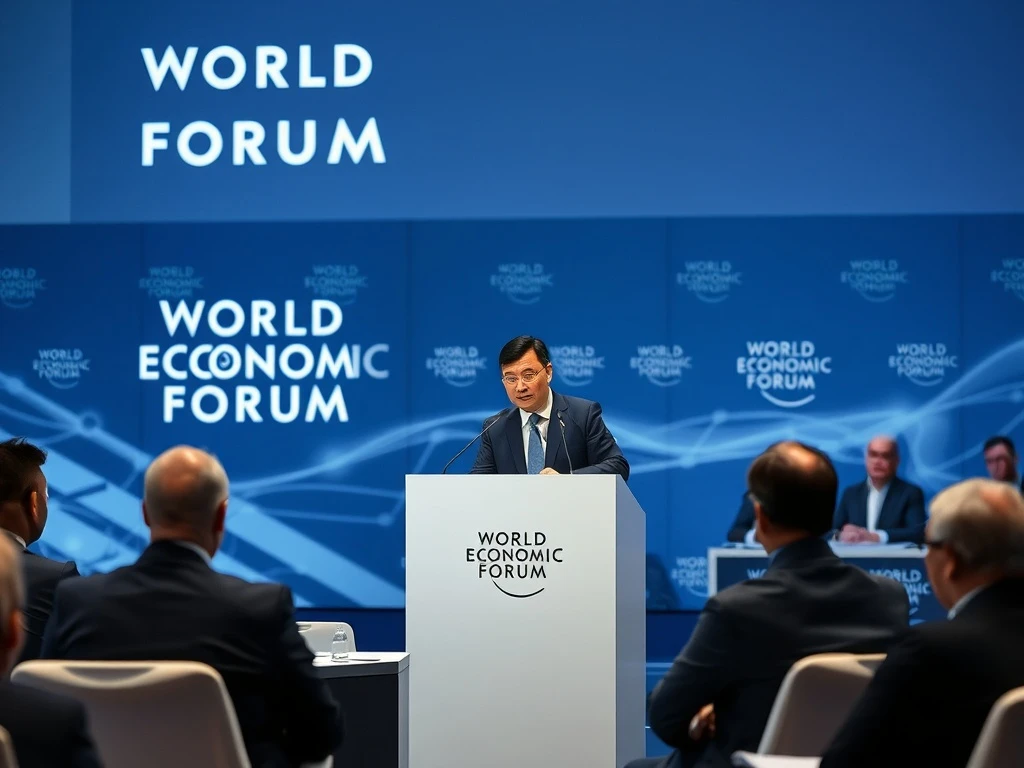
In a significant development at the World Economic Forum in Davos, Switzerland, former Binance CEO Changpeng “CZ” Zhao revealed on January 16, 2025, that he is actively advising approximately a dozen national governments on tokenizing state assets, marking a potential watershed moment for blockchain integration into sovereign finance.
Changpeng Zhao’s Government Tokenization Initiative
During a panel discussion at the prestigious global forum, Zhao disclosed his ongoing consultations with multiple unnamed governments. He emphasized that tokenization represents a “huge” and proven aspect of the cryptocurrency industry, alongside exchanges and stablecoins. Furthermore, Zhao explained the economic rationale behind government asset tokenization, stating this approach allows governments to realize financial gains first and subsequently use those resources to develop targeted industries.
The former Binance CEO’s involvement with national governments isn’t entirely new. He has previously worked directly with officials in Kyrgyzstan on their som-pegged stablecoin initiative. Additionally, the Pakistan Crypto Council appointed Zhao as an advisor following its establishment in March 2025. Malaysian government officials also reportedly discussed potential crypto regulatory frameworks with him earlier in January 2025.
The Expanding Landscape of Sovereign Digital Assets
Government interest in asset tokenization has accelerated significantly throughout 2024 and early 2025. Several nations have launched or explored central bank digital currencies (CBDCs), while others have considered tokenizing natural resources, real estate, or sovereign debt. This trend represents a fundamental shift in how governments approach asset management and public finance.
Tokenization involves converting rights to an asset into a digital token on a blockchain. For governments, this could mean creating digital representations of:
- Natural resources like minerals or energy reserves
- Infrastructure projects including roads, ports, and utilities
- Sovereign debt instruments for more efficient trading
- State-owned enterprise shares to increase liquidity
- Intellectual property and patents held by public institutions
Proponents argue that tokenization can increase liquidity, reduce transaction costs, enhance transparency, and create new investment opportunities. However, critics raise concerns about market volatility, regulatory challenges, and potential security vulnerabilities.
Zhao’s Unique Position in Global Finance
Changpeng Zhao brings particular credibility to government discussions despite his complex legal history. He served four months in prison during 2024 as part of a settlement with U.S. authorities regarding Anti-Money Laundering compliance failures at Binance. Subsequently, President Donald Trump granted Zhao a presidential pardon in October 2024, clearing potential obstacles to his advisory work.
Zhao’s experience building one of the world’s largest cryptocurrency exchanges provides practical insights into digital asset markets. His technical understanding of blockchain infrastructure, combined with his global regulatory experience, makes him a potentially valuable advisor for governments navigating this emerging field. Nevertheless, his involvement remains controversial in some policy circles.
Tokenization Versus Traditional Financial Systems
The movement toward asset tokenization represents more than technological adoption. It signals a potential transformation in how governments manage and monetize public assets. Traditional methods of financing public projects through taxation, bonds, or international loans could be supplemented or partially replaced by tokenized asset sales.
| Aspect | Traditional Methods | Tokenized Assets |
|---|---|---|
| Accessibility | Often limited to institutional investors | Potentially accessible to retail investors |
| Liquidity | Generally lower, especially for unique assets | Potentially higher through fractional ownership |
| Transaction Speed | Days or weeks for settlement | Minutes or hours on blockchain networks |
| Transparency | Varies by jurisdiction and asset type | Inherently transparent on public blockchains |
| Regulatory Framework | Well-established but fragmented globally | Emerging and rapidly evolving |
During his Davos appearance, Zhao also addressed the ongoing challenges with cryptocurrency payments. He noted that despite numerous attempts, the industry hasn’t successfully conquered everyday payments. Additionally, he observed a growing convergence between traditional payment systems and digital asset technologies.
The Global Regulatory Context in 2025
Government interest in tokenization coincides with significant regulatory developments worldwide. The European Union’s Markets in Crypto-Assets (MiCA) regulation has been fully implemented, providing a comprehensive framework for digital assets. Meanwhile, the United States has seen incremental regulatory clarity through a combination of legislation and enforcement actions.
Asian nations have taken varied approaches, with Singapore maintaining its progressive stance while China continues its restrictive policies with exceptions for certain blockchain applications. This regulatory patchwork creates both challenges and opportunities for governments considering asset tokenization initiatives.
International organizations like the Financial Stability Board and International Monetary Fund have issued guidance on crypto-assets and digital currencies. Their recommendations emphasize the importance of risk management, consumer protection, and financial stability considerations.
Practical Implementation Challenges
Governments exploring asset tokenization face several practical hurdles. Technical infrastructure requirements include secure blockchain networks, digital identity systems, and interoperability with existing financial systems. Legal frameworks must address property rights, investor protections, and cross-border enforcement.
Market development presents another challenge, as tokenized assets require sufficient liquidity and investor confidence to function effectively. Furthermore, governments must consider the political implications of selling public assets through novel mechanisms, particularly regarding wealth distribution and economic sovereignty.
Conclusion
Changpeng Zhao’s revelation at Davos 2025 highlights the accelerating interest in government asset tokenization worldwide. His consultations with approximately a dozen national governments suggest that blockchain technology is moving beyond speculative applications toward integration with sovereign finance. While significant challenges remain regarding regulation, implementation, and market development, the trend toward tokenization appears increasingly inevitable. As governments seek new approaches to public finance and economic development, digital asset technologies offer both unprecedented opportunities and novel risks that will shape global economics in the coming decade.
FAQs
Q1: What exactly does government asset tokenization involve?
Government asset tokenization converts rights to public assets into digital tokens on a blockchain. This process can include natural resources, infrastructure, sovereign debt, or state-owned enterprise shares. The tokens represent ownership or revenue rights and can be traded on digital platforms.
Q2: Why are governments interested in tokenizing their assets?
Governments seek to unlock liquidity in illiquid assets, reduce transaction costs, increase transparency, and create new investment opportunities. Tokenization allows fractional ownership, potentially broadening investor bases while providing governments with upfront capital for development projects.
Q3: Which countries is Changpeng Zhao advising on tokenization?
Zhao hasn’t named specific countries beyond mentioning Kyrgyzstan, Pakistan, and Malaysia as previous contacts. His Davos statement referenced “probably a dozen governments” without identifying them, suggesting ongoing confidential discussions with multiple nations.
Q4: How does tokenization differ from traditional government financing methods?
Traditional methods like bonds or loans create debt obligations, while tokenization often involves selling asset rights directly. Tokenization enables fractional ownership, potentially faster settlement, and different investor participation compared to conventional sovereign debt markets.
Q5: What are the main risks of government asset tokenization?
Key risks include market volatility affecting token prices, regulatory uncertainty across jurisdictions, cybersecurity vulnerabilities, potential for market manipulation, and political opposition to selling public assets. Additionally, technological failures or adoption challenges could undermine implementation.
Related Crypto News
- USDC's Strategic Vision: Circle CEO Reveals Neutral Infrastructure Role, Not Competition with Visa or Mastercard
- Bitwise ETF Launch: The Bold New Strategy Pairing Bitcoin with Gold for Currency Defense
- Solana DePIN Revolutionizes Autonomous Driving as Natix and Valeo Launch Groundbreaking World Foundation Model