Bitcoin vs Gold: Revealing Ratio Hits Historic Low as Safe-Haven Demand Surges

Global financial markets witnessed a significant milestone this week as the Bitcoin-to-gold ratio plummeted to 18.5 ounces per BTC, marking its lowest level since November 2023. This development signals a dramatic shift in investor preference toward traditional safe-haven assets amid escalating geopolitical tensions and economic uncertainty. The ratio’s decline represents a measurable indicator of capital flows diverging from digital assets toward precious metals, creating a pivotal moment for portfolio strategists and institutional investors worldwide.
Bitcoin Gold Ratio Reaches Critical Support Level
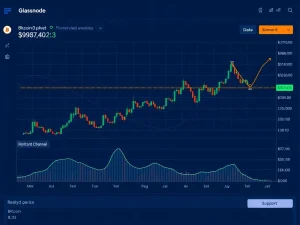
Market data reveals the Bitcoin-gold ratio has entered historically significant territory. Currently requiring just 18.5 ounces of gold to purchase one Bitcoin, this metric has declined substantially from previous cycles. The ratio serves as a crucial barometer for measuring relative strength between these two alternative asset classes. Historically, extreme readings in either direction have preceded significant market rotations.
Several factors contribute to this ratio compression. Gold prices reached unprecedented levels this week, touching $4,888 per ounce. Meanwhile, Bitcoin has consolidated within a defined range despite maintaining a valuation above $89,000. This divergence creates the mathematical compression observed in the ratio. Market analysts monitor this relationship closely because it reflects broader risk sentiment across global financial markets.
Gold’s Meteoric Rise Driven by Multiple Catalysts
Gold’s remarkable performance stems from converging macroeconomic and geopolitical factors. Central bank purchasing programs, particularly from the People’s Bank of China, have removed significant supply from global markets. China’s reserves now exceed 74 million ounces, representing sustained institutional accumulation. Furthermore, escalating Middle Eastern tensions and trade policy uncertainties have amplified traditional safe-haven demand.
Major financial institutions have published increasingly bullish gold forecasts. Citigroup analysts project a test of $5,000 per ounce, while Goldman Sachs has labeled gold its “strongest long bet” among commodities. ICBC Standard Bank offers even more aggressive projections, suggesting gold could reach $7,000 per ounce during this cycle. These institutional perspectives validate the current momentum behind precious metals.
Expert Analysis on Gold’s Secular Move
Nicky Shiels, strategist at MKS PAMP, provides crucial context about gold’s movement. “Last year represented a historic event in precious metals,” Shiels explains. “Gold appreciated approximately 60% while silver nearly doubled. Although we shouldn’t expect identical returns, $5,400 represents a solid 30% annual increase from current levels.” Shiels emphasizes this represents a secular trend rather than speculative commodity positioning.
Charles Edwards, founder of Capriole Investments, offers historical perspective through social media analysis. “Examining one hundred years of gold bull markets reveals consistent patterns,” Edwards notes. “If the current cycle resembles previous ones, average returns could approach +150%, potentially pushing gold above $12,000 within three to ten years.” This long-term view suggests gold’s momentum may have substantial runway remaining.
Bitcoin’s Position Amid Changing Risk Appetite
While gold captures headlines, Bitcoin maintains strategic positioning within institutional portfolios. The cryptocurrency’s weekly inflows, though modest at approximately $2 billion, demonstrate persistent institutional interest despite shifting risk parameters. Bitcoin’s fundamental characteristics—including its fixed supply and decentralized nature—continue attracting long-term investors seeking inflation-resistant assets.
The current market dynamic presents Bitcoin as a patient asset awaiting its next catalyst. Several analysts identify potential triggers that could reignite Bitcoin momentum. Regulatory clarity, spot ETF inflows, and macroeconomic policy shifts represent possible catalysts. Additionally, Bitcoin’s technological development continues progressing independently of price action, with network upgrades and layer-two solutions advancing steadily.
Crypto Analyst Perspectives on Ratio Extremes
Decode, a prominent crypto market analyst, offers technical perspective on the Bitcoin-gold relationship. “The BTC-GOLD ratio appears to be completing its fifth corrective wave,” Decode observes. “This doesn’t signal the end but rather the end of the end phase.” Historical analysis supports this interpretation, as previous ratio extremes have typically preceded substantial Bitcoin outperformance during subsequent periods.
Market cycles consistently demonstrate that extreme divergences between asset classes create rebalancing opportunities. The current Bitcoin-gold ratio sits approximately 65% below its 2021 peak, suggesting significant compression has already occurred. This compression may establish conditions favorable for mean reversion when market dynamics eventually shift.
Institutional Accumulation During Market Quiet Period
Strategic investors continue accumulating Bitcoin despite its relative underperformance. Public filings reveal that Strategy recently added 22,305 Bitcoins to its portfolio, representing substantial conviction during a period of market uncertainty. This accumulation pattern mirrors behavior observed during previous consolidation phases that preceded significant Bitcoin rallies.
Institutional positioning data reveals nuanced approaches to digital asset allocation. While some funds reduce exposure during risk-off environments, others increase positions at perceived valuation advantages. This divergence creates interesting market dynamics where sophisticated investors effectively trade against prevailing sentiment, potentially positioning for future rotations.
Potential Timeline for Market Rotation
Multiple analysts project a potential inflection point during early 2026. This timeline aligns with several macroeconomic factors, including potential Federal Reserve policy shifts, election cycle impacts, and traditional market seasonality. The first quarter of 2026 emerges as a frequently cited period when capital might rotate from gold toward more dynamic alternatives like Bitcoin.
This projected timeline considers multiple variables. Monetary policy normalization, diminishing geopolitical tensions, and improving risk appetite could collectively support such rotation. Additionally, Bitcoin’s quadrennial halving cycle will have completed its initial post-event phase by early 2026, potentially creating favorable supply dynamics for price appreciation.
Comparative Asset Characteristics Analysis
Bitcoin and gold share several fundamental characteristics while differing in crucial aspects. Both assets represent non-sovereign stores of value with limited supply inflation. However, Bitcoin offers superior portability, verifiability, and divisibility compared to physical gold. These technological advantages may become increasingly relevant as digital finance infrastructure expands globally.
The erosion of confidence in fiat currencies and sovereign debt instruments creates structural demand for both assets. Monetary easing policies and expanding government balance sheets provide macroeconomic tailwinds. While gold currently benefits from immediate safe-haven demand, Bitcoin’s longer-term value proposition as digital hard money remains intact despite short-term ratio compression.
Five Key Metrics Defining Current Market Dynamics
- Bitcoin Price: $89,920 with consolidation pattern
- BTC/Gold Ratio: 18.5 ounces per Bitcoin
- Gold Price: Historic record at $4,888 per ounce
- Gold Forecasts: $5,000-$7,000 range from major institutions
- Potential Rotation Window: Q1 2026 identified by multiple analysts
These metrics collectively paint a comprehensive picture of current market conditions. The ratio’s extreme reading suggests either gold is overextended or Bitcoin is undervalued relative to historical relationships. Market participants will monitor how these metrics evolve amid changing macroeconomic conditions throughout 2025.
Conclusion
The Bitcoin vs gold ratio reaching its lowest level since 2023 represents a significant market development with implications for portfolio construction and risk management. While gold currently dominates safe-haven flows amid geopolitical uncertainty, Bitcoin maintains its structural value proposition as digital hard money. Historical patterns suggest extreme ratio readings often precede substantial market rotations, potentially creating opportunities for strategic investors. The evolving relationship between these two alternative assets will continue providing valuable insights into broader risk sentiment and capital allocation trends throughout 2025 and beyond.
FAQs
Q1: What does the Bitcoin-gold ratio measure?
The ratio measures how many ounces of gold are required to purchase one Bitcoin, serving as a relative value indicator between these alternative assets.
Q2: Why has gold outperformed Bitcoin recently?
Gold has benefited from escalating geopolitical tensions, central bank accumulation, and traditional safe-haven demand during periods of market uncertainty.
Q3: What historical significance does the current ratio level hold?
The ratio at 18.5 ounces represents its lowest reading since November 2023, indicating extreme relative valuation that has historically preceded market rotations.
Q4: Are institutions still investing in Bitcoin during this period?
Yes, institutional accumulation continues with entities like Strategy adding substantial Bitcoin positions despite short-term underperformance relative to gold.
Q5: What factors could trigger a rotation from gold back to Bitcoin?
Potential catalysts include diminishing geopolitical risks, monetary policy normalization, improved risk appetite, and Bitcoin-specific developments like regulatory clarity or technological advancements.