Upbit ELSA Listing Sparks Major Trading Expansion: South Korean Exchange Adds Hey Elsa to KRW, BTC, and USDT Markets
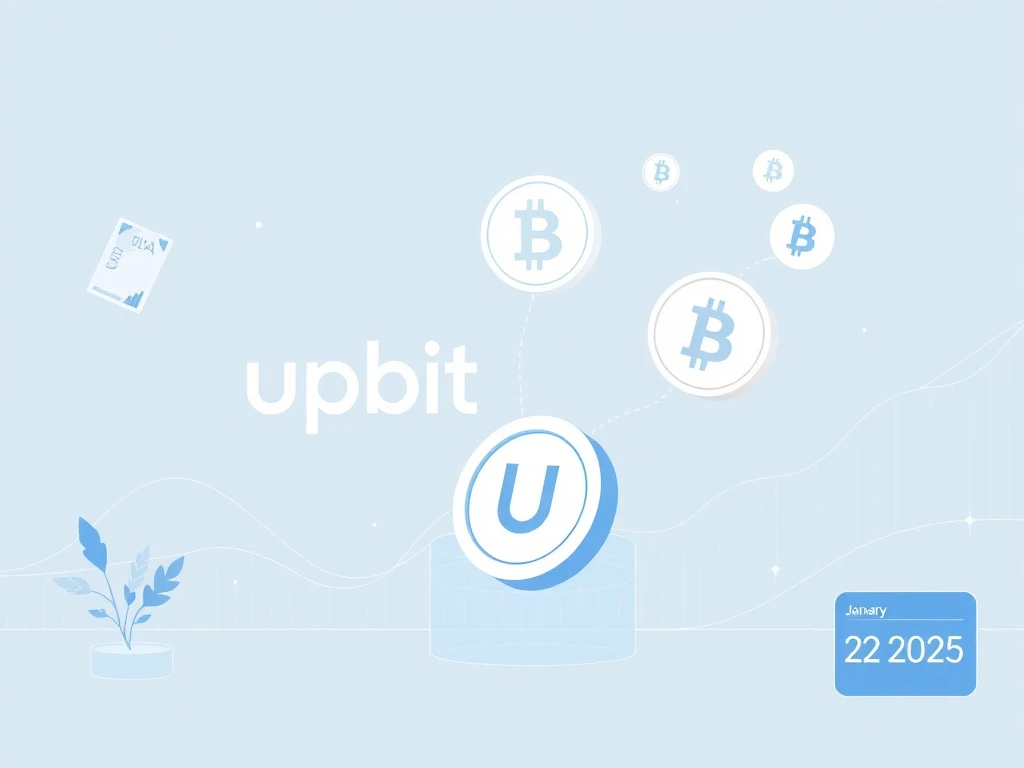
SEOUL, South Korea – January 22, 2025 – The South Korean cryptocurrency landscape receives a significant expansion today as Upbit, the nation’s premier digital asset exchange, announces the official listing of Hey Elsa (ELSA). Consequently, trading commences at precisely 7:30 a.m. UTC, introducing three distinct market pairs: ELSA/KRW, ELSA/BTC, and ELSA/USDT. This strategic move underscores Upbit’s ongoing commitment to diversifying its trading portfolio while providing Korean investors with broader access to emerging digital assets.
Upbit ELSA Listing Marks Strategic Exchange Expansion
Upbit’s decision to list the ELSA token represents a calculated expansion of its trading ecosystem. The exchange, operated by Dunamu Inc., maintains rigorous listing standards. Therefore, this inclusion signals that the Hey Elsa project has passed comprehensive due diligence checks. These checks typically evaluate technological security, regulatory compliance, and market viability. The listing immediately provides ELSA with exposure to Upbit’s substantial user base, which commands a dominant share of South Korea’s cryptocurrency trading volume. Moreover, the simultaneous launch across three pairing types offers traders maximum flexibility from the outset.
Industry analysts frequently monitor Upbit’s listing announcements as indicators of market trends. The exchange’s influence often triggers notable price volatility and increased trading activity for newly listed assets. Historically, tokens listed on major Korean exchanges experience significant liquidity injections. This pattern suggests the ELSA token could see heightened market attention throughout the Asian trading session and beyond.
Hey Elsa Cryptocurrency Project Background
The Hey Elsa project enters the market with a specific technological focus. While detailed project documentation defines its exact use case, listings of this nature typically involve platforms in decentralized finance (DeFi), gaming, or artificial intelligence sectors. The project’s native token, ELSA, presumably functions within its ecosystem for transactions, governance, or rewards. Upbit’s listing provides the project with critical infrastructure for price discovery and liquidity.
For retail and institutional investors, the listing simplifies the acquisition process. Previously, obtaining the token might have required using decentralized exchanges or international platforms. Now, verified Upbit users in South Korea can trade ELSA directly using Korean won. This accessibility is crucial because South Korean regulations often restrict direct fiat-to-crypto trading to approved domestic exchanges. The additional BTC and USDT pairs cater to international traders and those preferring to trade using major crypto assets.
Regulatory Context and Market Impact
South Korea maintains one of the world’s most structured regulatory frameworks for digital assets. The Financial Services Commission (FSC) and the Financial Intelligence Unit (FIU) enforce strict anti-money laundering (AML) and know-your-customer (KYC) policies. Upbit, as a registered Virtual Asset Service Provider (VASP), operates in full compliance with these mandates. Consequently, the ELSA listing implies the token and its underlying project meet current regulatory expectations for investor protection and operational transparency.
The market impact often follows a predictable trajectory. Initial listing announcements typically generate speculative trading. Subsequently, price stabilization depends on broader market conditions and project developments. Data from previous Upbit listings shows that tokens with multiple trading pairs often achieve more stable long-term liquidity. The following table illustrates the standard trading schedule for new Upbit listings:
| Phase | Time (UTC) | Activity |
|---|---|---|
| Deposit Open | Usually 1-2 hours prior | Users can deposit ELSA tokens to wallets |
| Trading Start | 07:30, Jan 22 | Market orders enabled for all three pairs |
| Initial Volatility | First 1-2 hours | Typically highest price fluctuation period |
| Normal Trading | After initial period | All order types (limit, stop-loss) available |
Investors should note several key risk factors associated with new listings:
- Price Volatility: New assets often experience extreme price swings.
- Liquidity Risk: Initial trading volumes may be thin, affecting order execution.
- Project Risk: The long-term value depends on the Hey Elsa project’s execution.
- Market Risk: Broader crypto market trends heavily influence individual token performance.
Analysis of KRW, BTC, and USDT Trading Pairs
Upbit’s multi-pair launch strategy serves distinct investor segments. The ELSA/KRW pair directly serves the domestic Korean market. It allows users to trade using the national fiat currency, which is a preferred method for local retail investors. This pairing is subject to South Korea’s specific financial regulations and banking partnerships. The ELSA/BTC pair appeals to cryptocurrency natives who benchmark assets against Bitcoin, the market’s dominant store of value. Meanwhile, the ELSA/USDT pair offers stability against a dollar-pegged asset, which is crucial for traders managing forex exposure and international arbitrage.
Offering three pairs simultaneously is a notable decision. It prevents fragmented liquidity across different exchanges or pairings. Furthermore, it provides immediate arbitrage opportunities, which help establish a more efficient global market price for ELSA. From a technical perspective, each pair will have separate order books on Upbit’s trading engine. However, price movements in one pair will quickly affect the others through cross-pair trading strategies employed by market makers and algorithmic traders.
Expert Perspectives on Exchange Listings
Financial technology analysts emphasize the importance of tier-one exchange listings for project credibility. A listing on a regulated exchange like Upbit involves rigorous technical audits and legal reviews. These processes assess the token’s smart contract security, tokenomics sustainability, and compliance with local laws. The approval suggests the Hey Elsa team has successfully navigated these hurdles. Additionally, the listing provides the project with a legitimate onboarding ramp for a massive, regulated investor base.
Market structure experts also highlight the timing. January often sees increased capital allocation in crypto markets following year-end portfolio rebalancing. Therefore, a listing at this time may benefit from renewed investor interest and fresh liquidity entering the ecosystem. The choice of 7:30 a.m. UTC aligns the launch with the overlap of the Asian afternoon and European morning trading sessions, maximizing initial participation.
Conclusion
The Upbit ELSA listing represents a significant milestone for both the Hey Elsa project and the South Korean trading community. By introducing ELSA/KRW, ELSA/BTC, and ELSA/USDT pairs, Upbit provides comprehensive market access and enhanced liquidity pathways. This development follows established regulatory protocols and reflects the ongoing maturation of the digital asset industry in one of its most active markets. As trading commences, market participants will closely watch the token’s adoption, trading volume, and price integration within the broader cryptocurrency landscape. The listing ultimately demonstrates the continuous evolution and diversification of offerings on major regulated exchanges.
FAQs
Q1: What is the exact trading start time for ELSA on Upbit?
The official trading start time is 7:30 a.m. UTC on January 22, 2025. Deposits for the ELSA token typically open on the exchange 1-2 hours before trading begins.
Q2: Which trading pairs will be available for Hey Elsa (ELSA)?
Upbit will launch three trading pairs simultaneously: ELSA/KRW (South Korean Won), ELSA/BTC (Bitcoin), and ELSA/USDT (Tether).
Q3: Why is the KRW trading pair significant?
The ELSA/KRW pair allows South Korean investors to trade directly using their national currency without first converting to Bitcoin or USDT. This simplifies the process and operates within the country’s specific regulatory framework for fiat-to-crypto transactions.
Q4: Does this listing mean ELSA is approved by South Korean regulators?
Upbit, as a registered Virtual Asset Service Provider (VASP), must conduct due diligence on all listed assets to ensure compliance with local regulations. The listing indicates the exchange believes the token meets current compliance standards, but it is not a direct government endorsement of the project.
Q5: What should investors consider before trading ELSA?
Investors should be aware of the high volatility typical of newly listed assets, conduct independent research on the Hey Elsa project’s fundamentals, understand the risks of the cryptocurrency market, and only invest capital they can afford to lose.