Lens Protocol’s Pivotal Handover: Aave Transfers Control to Mask Network in Strategic Crypto Shift
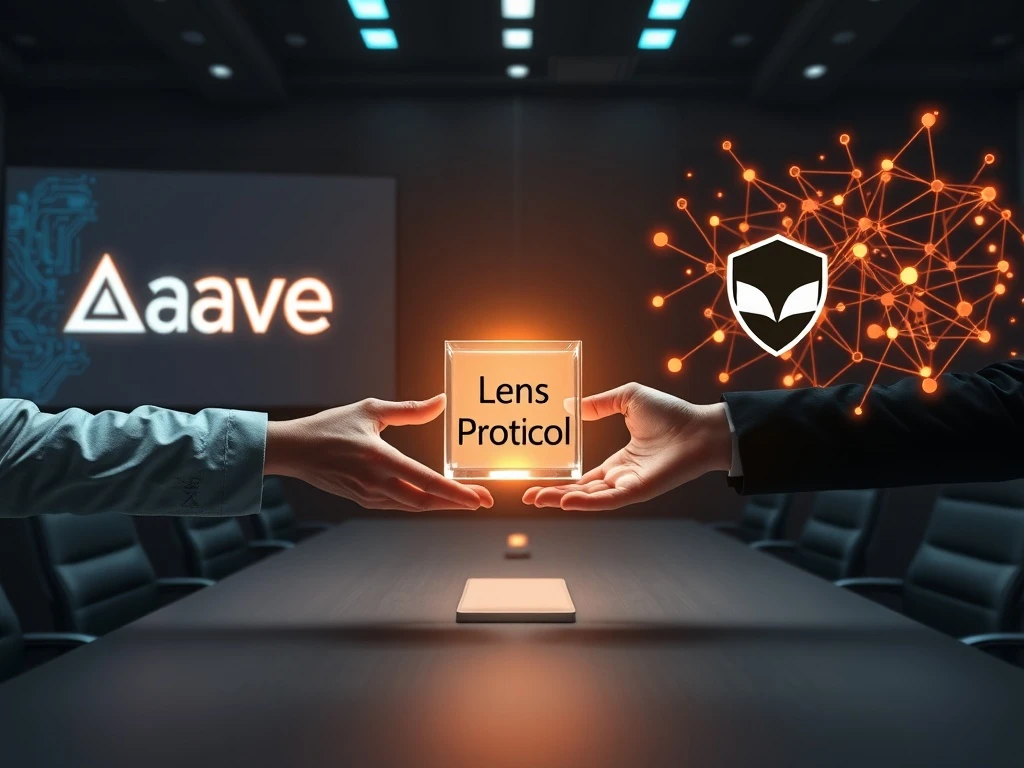
In a significant strategic realignment within the Web3 ecosystem, Aave has officially transferred operational control of the decentralized social network Lens Protocol to Mask Network. This pivotal move, first reported by Crypto News Insights, signals a major shift in development priorities for both leading protocols and could reshape the trajectory of decentralized social media, often called SocialFi. Consequently, the blockchain community is analyzing the long-term implications for user experience, governance, and innovation.
Lens Protocol Control Transfer: A Strategic Decentralization Move
The transfer of Lens Protocol’s operational reins from Aave to Mask Network represents more than a simple administrative change. Fundamentally, it underscores a strategic specialization within the rapidly maturing cryptocurrency sector. Under the new arrangement, Mask Network will assume primary responsibility for leading the development of social applications on the Lens Protocol. Meanwhile, Aave will transition into a technical advisory role, allowing its core team to refocus its expertise on its primary domain: decentralized finance (DeFi). This division of labor aims to leverage the distinct strengths of each organization.
Mask Network brings a proven track record in building bridges between traditional social media and the decentralized web. Its browser extension has historically allowed users to interact with Web3 applications directly on platforms like Twitter and Facebook. Therefore, its leadership in developing the Lens social graph—a user-owned social media protocol built on Polygon—appears to be a natural evolution. The protocol allows users to own their profiles, connections, and content as non-fungible tokens (NFTs).
Key elements of the handover include:
- Development Leadership: Mask Network now directs the roadmap, feature development, and ecosystem growth for Lens-based social applications.
- Technical Advisory: Aave Companies will provide ongoing technical guidance, ensuring the protocol’s infrastructure remains secure and scalable.
- Resource Allocation: Both entities can now concentrate their resources on their respective core competencies: social networking and financial protocols.
Background and Context of the Aave and Lens Relationship
To understand the magnitude of this transfer, one must examine the origins of Lens Protocol. Aave Companies, the development team behind the massively popular DeFi lending protocol Aave, originally incubated Lens. The project launched in 2022 with the ambitious goal of creating a decentralized alternative to mainstream social networks. From the outset, Lens Protocol garnered significant attention for its user-centric model, where social identity is portable and not locked into a single platform.
Ethereum founder Vitalik Buterin has previously praised the Lens project for its innovative approach to social networking. In various forums, Buterin has emphasized the importance of decentralized social media for censorship resistance and user sovereignty. His endorsement provided early credibility and highlighted the protocol’s alignment with core Web3 values. However, managing a cutting-edge social protocol alongside one of DeFi’s largest and most complex money markets presented operational challenges.
The following table outlines the core focus shift for both entities post-transfer:
| Entity | Pre-Transfer Primary Focus | Post-Transfer Primary Focus |
|---|---|---|
| Aave Companies | DeFi Lending & Lens Protocol Incubation | DeFi Innovation, Aave Protocol V4, GHO Stablecoin |
| Mask Network | Web3 Social Browser Extension & Integrations | Lens Protocol Development & Social Application Ecosystem |
Expert Analysis on the Web3 Specialization Trend
Industry observers view this move as part of a broader trend toward increased specialization in the blockchain space. As protocols grow in complexity and user expectation rises, focused teams often outperform generalists. “This is a mature and strategic decision,” notes a veteran blockchain analyst. “Aave’s dominance in DeFi requires constant vigilance and innovation, especially with new lending models and risk layers emerging. Similarly, building a compelling social experience demands dedicated, user-focused product teams. This handover allows both Lens and Aave to pursue excellence in their domains.”
Furthermore, the transfer may enhance Lens Protocol’s perceived neutrality. With its development now led by a team historically focused on social interoperability, rather than a DeFi giant, third-party developers may feel more confident building on the protocol. This could accelerate ecosystem growth and application diversity.
Implications for the Future of SocialFi and DeFi
The operational shift carries substantial implications for the future of both decentralized social media and finance. For the Lens ecosystem, Mask Network’s leadership could herald a new phase of user-friendly application development and broader integration. Mask’s experience in creating seamless user interfaces for mainstream social platforms may help bridge the gap for the next million Web3 social users. Potential outcomes include tighter integrations with existing Web2 platforms and more intuitive standalone applications.
For Aave, the transition to an advisory role frees its world-class engineering and security teams to tackle pressing challenges in the DeFi landscape. Priorities likely include the continued development of Aave V4, the expansion of its native GHO stablecoin, and research into new risk management frameworks for cross-chain lending. This focused effort is crucial as DeFi competes with evolving traditional finance (TradFi) integrations and new regulatory landscapes.
Critically, the handover also demonstrates a functional model for protocol stewardship and evolution. Instead of a project languishing or being abandoned, it can be strategically transferred to a team better positioned for its next growth chapter. This model of decentralized project continuity could become a blueprint for other ecosystems.
Conclusion
The transfer of Lens Protocol control from Aave to Mask Network marks a pivotal moment in the professionalization of the Web3 industry. This strategic decision allows two leading projects to deepen their expertise in their core domains: decentralized social media and decentralized finance. While Mask Network takes the helm to drive social application innovation on Lens, Aave can intensify its focus on the next generation of DeFi. Ultimately, this specialization promises to deliver more robust, user-centric, and secure products for the global blockchain community, potentially accelerating the adoption of both SocialFi and DeFi. The move underscores a maturing ecosystem where strategic focus and effective governance are paramount for long-term success.
FAQs
Q1: What is Lens Protocol?
Lens Protocol is a decentralized, user-owned social graph built on the Polygon blockchain. It allows users to own their social profiles, connections, and content as NFTs, enabling portability across different applications built on the protocol.
Q2: Why did Aave transfer control of Lens to Mask Network?
Aave transferred control to allow both entities to specialize. Mask Network has extensive experience in Web3 social integrations, making it ideal to lead Lens’s social app development. Aave can now focus its full resources on advancing its core DeFi lending protocol and related financial innovations.
Q3: What role will Aave play now?
Aave Companies will transition to a technical advisory role for Lens Protocol. This means it will provide guidance on security, architecture, and scalability but will not lead day-to-day development or product decisions for the social network.
Q4: How does this affect current Lens Protocol users?
For end-users, the transition should be seamless. The goal is for Mask Network’s leadership to result in faster development of new features, improved user applications, and a more vibrant ecosystem, ultimately enhancing the user experience.
Q5: Did Vitalik Buterin have a role in this decision?
No public information suggests Vitalik Buterin was involved in the operational decision. His previous praise for the Lens Protocol was related to its technical design and vision for decentralized social media, which remains unchanged under new leadership.