Bitcoin Institutional Demand Soars: CryptoQuant Reveals $53 Billion Accumulation Amid Market Volatility
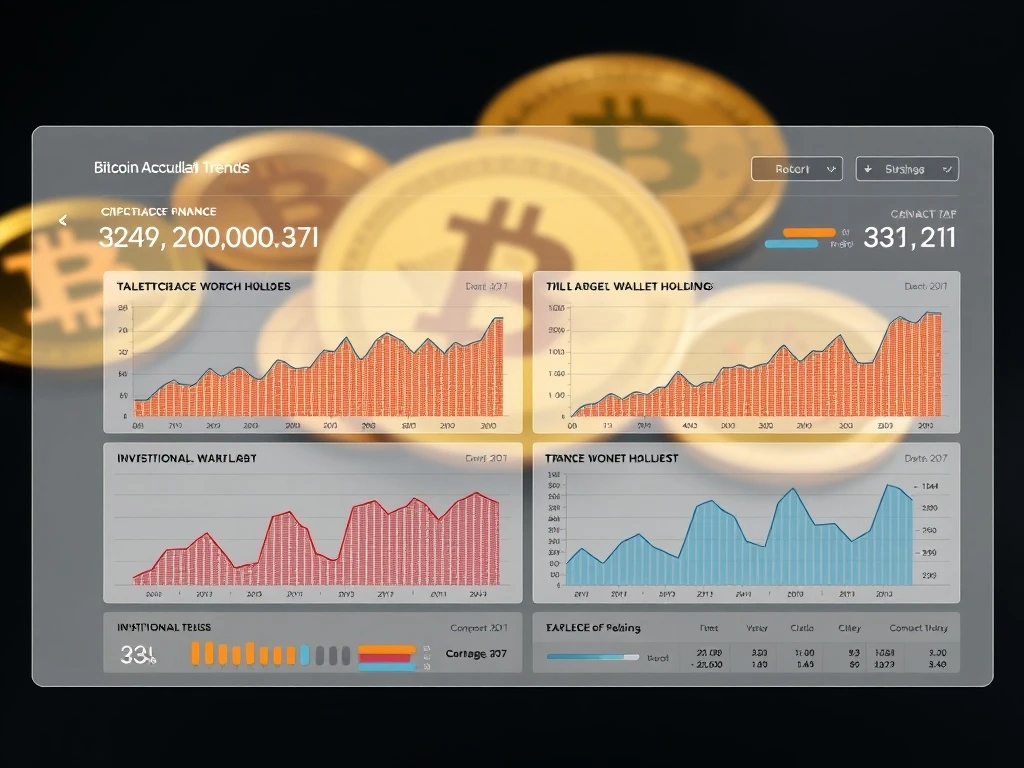
Despite recent market turbulence, institutional investors continue demonstrating remarkable confidence in Bitcoin, with CryptoQuant data revealing a staggering $53 billion accumulation in large custody wallets over the past 12 months. This substantial capital deployment, documented in June 2025, signals that sophisticated investors remain committed to cryptocurrency exposure even as retail sentiment fluctuates.
Bitcoin Institutional Demand Shows Remarkable Resilience
CryptoQuant’s comprehensive analysis reveals that wallets holding between 100 and 1,000 Bitcoin have accumulated approximately 577,000 BTC over the past year. This cohort, which notably includes exchange-traded fund vehicles, represents a crucial segment for measuring institutional participation. “Institutional demand for Bitcoin remains strong,” emphasized CryptoQuant founder Ki Young Ju during his Tuesday analysis. He further noted that capital “is still flowing in” to these substantial holdings, providing a clear indicator of continued institutional interest.
Significantly, this accumulation represents a 33% increase over the last 24 months, a period that coincides with the launch of the first spot Bitcoin ETFs in the United States. When excluding exchange and miner wallets from the analysis, this data provides what Ki Young Ju describes as “a rough read on institutional demand.” The sustained accumulation pattern suggests institutions view current price levels as attractive entry points despite macroeconomic uncertainties.
Spot Bitcoin ETF Performance and Market Context
United States spot Bitcoin ETFs have recorded aggregate inflows exceeding $1.2 billion year-to-date in 2025, according to recent tracking data. This institutional capital movement has occurred despite Bitcoin’s relatively modest 6% price appreciation during the same period. The divergence between institutional accumulation and price performance suggests sophisticated investors are taking a longer-term perspective, potentially anticipating future market developments.
The institutional accumulation trend becomes particularly noteworthy when contrasted with retail market sentiment. The Bitcoin Fear and Greed Index, which measures retail investor psychology, recently slipped back into “fear” territory with a rating of 32 out of 100. This sentiment shift occurred as Bitcoin prices retreated from last week’s high of $97,000 to below $92,000 on Tuesday morning. Market analysts attribute this price movement to escalating trade conflicts between the United States and Europe, highlighting how geopolitical tensions continue influencing cryptocurrency valuations.
Digital Asset Treasury Strategies Accelerate Accumulation
Beyond traditional institutional investors, corporate digital asset treasuries have significantly contributed to the accumulation trend. Led by Michael Saylor’s MicroStrategy, these entities have acquired approximately 260,000 Bitcoin since July, representing roughly $24 billion at current market valuations. Glassnode data indicates this marks a 30% increase over the past six months, outpacing new Bitcoin supply from mining activities.
Digital asset treasuries now collectively hold more than 1.1 million Bitcoin, establishing them as major participants in the institutional landscape. Their continued accumulation, even during periods of market uncertainty, demonstrates corporate confidence in Bitcoin’s long-term value proposition as a treasury reserve asset. This corporate adoption trend has evolved significantly since early 2020s, when only a handful of companies held Bitcoin on their balance sheets.
Historical Context and Future Projections
The current institutional accumulation phase represents the third major wave of institutional Bitcoin adoption since 2017. The first wave occurred during the 2017 bull market, followed by a more substantial institutional entry beginning in late 2020 after PayPal enabled cryptocurrency purchases. The current phase, accelerated by spot Bitcoin ETF approvals, represents the most sophisticated and capital-intensive institutional participation to date.
Political economist “Crypto Seth” offered perspective on this evolution, stating, “Institutions just began to invest in Bitcoin and Ethereum. I think this is just the beginning. Most people can’t imagine in 2030-2040.” This forward-looking assessment suggests that current institutional participation, while substantial, may represent only the initial phase of a much longer adoption cycle. The convergence of regulatory clarity, improved custody solutions, and growing institutional infrastructure has created conditions conducive to sustained institutional participation.
Market Structure Implications and Analysis
The divergence between institutional accumulation and retail sentiment creates interesting market dynamics. While retail investors exhibit caution amid price volatility, institutional players continue accumulating substantial positions. This behavior pattern suggests institutions may possess longer investment horizons and greater risk tolerance than retail participants. Additionally, institutional accumulation during periods of price consolidation or decline can provide underlying market support that may not be immediately apparent in short-term price action.
Several factors contribute to sustained institutional interest:
- Portfolio diversification: Bitcoin’s low correlation with traditional assets
- Inflation hedging: Perceived protection against currency devaluation
- Technological adoption: Recognition of blockchain’s transformative potential
- Regulatory clarity: Improved framework for institutional participation
The following table illustrates key accumulation metrics from recent institutional activity:
| Metric | Amount | Time Period | Source |
|---|---|---|---|
| Large Wallet Accumulation | 577,000 BTC | 12 months | CryptoQuant |
| Digital Treasury Acquisition | 260,000 BTC | 6 months | Glassnode |
| Spot ETF Inflows | $1.2B+ | 2025 YTD | Market Data |
| Total Treasury Holdings | 1.1M+ BTC | Current | Aggregate Data |
Conclusion
CryptoQuant’s analysis provides compelling evidence that Bitcoin institutional demand remains robust despite market volatility and retail uncertainty. The $53 billion accumulation in large custody wallets over 12 months demonstrates continued institutional confidence in Bitcoin’s long-term value proposition. This sustained capital deployment, combined with spot Bitcoin ETF inflows and corporate treasury acquisitions, suggests institutional participation has reached unprecedented levels. As market structures continue evolving and regulatory frameworks mature, institutional Bitcoin demand appears positioned for further growth, potentially establishing new foundations for cryptocurrency market development through the remainder of the decade.
FAQs
Q1: What does CryptoQuant’s data reveal about Bitcoin institutional demand?
CryptoQuant’s analysis shows wallets holding 100-1,000 Bitcoin accumulated 577,000 BTC worth approximately $53 billion over 12 months, indicating sustained institutional demand despite market volatility.
Q2: How have spot Bitcoin ETFs performed in 2025?
United States spot Bitcoin ETFs have recorded aggregate inflows exceeding $1.2 billion year-to-date in 2025, demonstrating continued institutional participation through regulated vehicles.
Q3: What role do corporate treasuries play in Bitcoin accumulation?
Corporate digital asset treasuries, led by MicroStrategy, have acquired approximately 260,000 Bitcoin since July 2024, representing a 30% increase in holdings over six months according to Glassnode data.
Q4: How does retail sentiment compare to institutional activity?
The Bitcoin Fear and Greed Index recently registered 32/100, indicating “fear” among retail investors, while institutions continue accumulating substantial positions, creating a notable sentiment divergence.
Q5: What factors drive sustained institutional Bitcoin demand?
Key drivers include portfolio diversification benefits, inflation hedging properties, technological adoption potential, and improving regulatory clarity for institutional participation frameworks.