Reverse Kimchi Premium Shocks Crypto Markets: Bitcoin and USDT Trade Below Global Rates on South Korean Exchanges
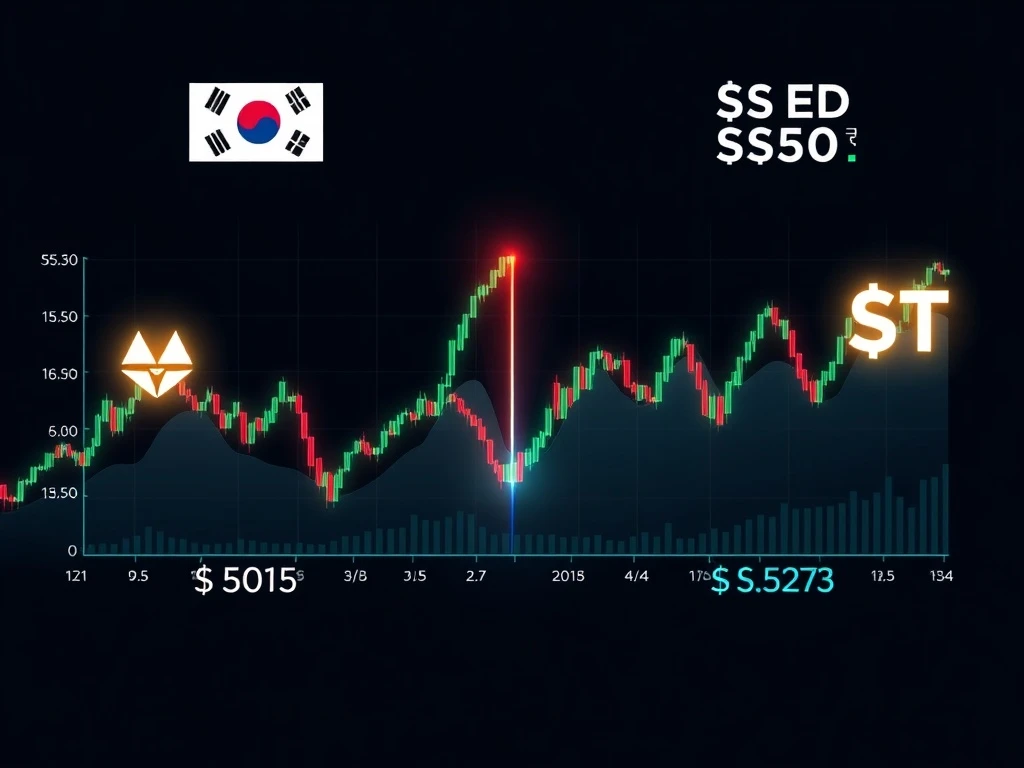
SEOUL, South Korea – December 2024 – A significant market anomaly has emerged in South Korea’s cryptocurrency ecosystem, with Bitcoin and Tether (USDT) now trading at a discount compared to global markets, marking a rare reversal of the famous “Kimchi premium” phenomenon that has characterized the nation’s crypto landscape for years.
Understanding the Reverse Kimchi Premium Phenomenon
For the first time in recent memory, a reverse Kimchi premium has appeared for major cryptocurrencies on South Korean exchanges. Specifically, USDT currently trades at 1,473 won on Upbit, South Korea’s largest exchange, while the official won-dollar exchange rate stands at 1,473.7 won. This represents a subtle but meaningful discount of approximately 0.05%. Meanwhile, Bitcoin exhibits a similar reverse premium of approximately -0.07% compared to international benchmarks.
This development marks a dramatic shift from historical patterns. Traditionally, cryptocurrencies have traded at significant premiums on South Korean exchanges due to several structural factors:
- Capital controls limiting international arbitrage opportunities
- High domestic demand from retail and institutional investors
- Limited supply of certain cryptocurrencies on local exchanges
- Regulatory barriers affecting cross-border capital movement
The current reversal suggests fundamental changes in market dynamics, capital flows, or investor sentiment within South Korea’s cryptocurrency ecosystem.
Historical Context of the Kimchi Premium
The term “Kimchi premium” entered cryptocurrency lexicon around 2017 when Bitcoin prices on South Korean exchanges regularly traded 10-30% above global averages. This premium became a barometer for measuring market isolation and domestic investor enthusiasm. At its peak during the 2017 bull market, the Kimchi premium reached extraordinary levels, with Bitcoin trading nearly 50% higher on South Korean exchanges compared to international platforms.
Several factors historically contributed to this premium:
| Factor | Impact | Current Status |
|---|---|---|
| Capital Controls | Limited arbitrage opportunities | Gradually easing |
| Exchange Regulations | Restricted international access | More open since 2023 |
| Banking Restrictions | Limited fiat withdrawal options | Improved infrastructure |
| Tax Policies | Affected trading volumes | Clarified in 2024 |
Market analysts have monitored the Kimchi premium as an indicator of South Korean market sentiment and capital flow restrictions. The premium typically expanded during bullish periods when domestic demand outpaced supply, while contracting or reversing during bear markets or periods of regulatory uncertainty.
Expert Analysis of Current Market Conditions
Financial analysts point to several converging factors that may explain the current reverse premium. First, South Korea’s monetary policy has maintained relatively high interest rates compared to other developed economies, potentially making traditional investments more attractive than cryptocurrency speculation. Second, regulatory clarity established in 2024 has reduced uncertainty premiums that previously inflated cryptocurrency prices.
Additionally, improved international arbitrage mechanisms now allow more efficient price discovery between South Korean and global exchanges. The development of sophisticated trading infrastructure and the entry of international market makers have gradually eroded the structural barriers that once sustained significant price differentials.
Market data reveals another crucial factor: trading volumes on South Korean exchanges have declined relative to global platforms during recent months. This reduction in domestic liquidity, combined with increased international integration, creates conditions where prices can temporarily dip below global benchmarks.
Implications for Traders and Investors
The emergence of a reverse Kimchi premium creates unique opportunities and risks for market participants. For international traders, South Korean exchanges now offer potential arbitrage opportunities, though regulatory and operational hurdles remain significant. Domestic investors face different considerations, as assets purchased at a discount could theoretically be sold at higher prices on international platforms.
However, several practical constraints limit arbitrage effectiveness:
- Withdrawal limits on cryptocurrency transfers from South Korean exchanges
- Verification requirements for international traders on local platforms
- Banking restrictions affecting fiat currency conversion and transfer
- Market liquidity constraints on large transactions
Despite these limitations, the reverse premium signals important market developments. It suggests that South Korea’s cryptocurrency market is becoming more integrated with global price discovery mechanisms. This integration reflects broader trends toward market maturity and regulatory normalization.
Broader Market Context and Global Comparisons
The reverse Kimchi premium emerges against a backdrop of shifting global cryptocurrency dynamics. While South Korea experiences this unusual discount, other regional markets show different patterns. Japanese exchanges, for instance, continue to exhibit modest premiums for certain cryptocurrencies due to specific regulatory and market conditions.
Global cryptocurrency prices have shown increased correlation with traditional financial markets throughout 2024, particularly regarding interest rate expectations and macroeconomic indicators. This increased correlation may reduce the isolation that previously allowed significant regional price divergences to persist.
Furthermore, the development of more sophisticated derivatives markets and cross-exchange trading mechanisms has improved price discovery globally. These technological and infrastructural advancements make sustained price differentials increasingly difficult to maintain across major trading jurisdictions.
Regulatory Developments and Market Integration
South Korea’s regulatory environment has evolved significantly since the initial cryptocurrency boom of 2017. The implementation of the Travel Rule in 2023, requiring exchanges to share transaction information for transfers above certain thresholds, initially created compliance challenges but ultimately improved market transparency.
Additionally, the establishment of clearer taxation guidelines for cryptocurrency transactions in 2024 reduced uncertainty for institutional participants. These regulatory developments, while creating short-term compliance costs, have contributed to market maturation and increased integration with global standards.
The Financial Services Commission (FSC) has also approved additional international cryptocurrency exchanges for operation in South Korea, increasing competition and improving access to global liquidity pools. This regulatory openness contrasts with earlier periods of protectionism and contributes to the normalization of price differentials.
Conclusion
The emergence of a reverse Kimchi premium for Bitcoin and USDT represents a significant milestone in South Korea’s cryptocurrency market development. This phenomenon signals increased market integration, improved arbitrage mechanisms, and evolving investor sentiment. While the current discount remains modest at approximately -0.07% for Bitcoin, its symbolic importance outweighs its immediate financial impact.
Market participants should monitor this development as an indicator of broader trends toward cryptocurrency market normalization and global price convergence. The reverse Kimchi premium demonstrates how regulatory evolution, technological advancement, and changing capital flows can transform even the most persistent market anomalies. As South Korea’s cryptocurrency ecosystem continues to mature, such price differentials may become increasingly rare, marking the end of an era characterized by significant market isolation.
FAQs
Q1: What exactly is a reverse Kimchi premium?
A reverse Kimchi premium occurs when cryptocurrencies trade at a discount on South Korean exchanges compared to global markets, opposite to the traditional premium that gave the phenomenon its name.
Q2: How significant is the current reverse premium for Bitcoin and USDT?
The current reverse premium is approximately -0.07% for Bitcoin and -0.05% for USDT relative to global benchmarks, representing a modest but symbolically important market shift.
Q3: What factors typically cause the Kimchi premium to appear or disappear?
Capital controls, regulatory restrictions, domestic demand-supply imbalances, banking limitations, and international arbitrage barriers historically sustained the premium, while their reduction or elimination contributes to its disappearance or reversal.
Q4: Can traders profit from the reverse Kimchi premium through arbitrage?
While theoretically possible, practical constraints including withdrawal limits, verification requirements, banking restrictions, and liquidity issues significantly limit profitable arbitrage opportunities for most traders.
Q5: Does the reverse premium indicate weakening cryptocurrency demand in South Korea?
Not necessarily. The reverse premium primarily reflects improved market integration and arbitrage mechanisms rather than diminished demand, though reduced trading volumes may contribute to the phenomenon.