Bitcoin Market Analysis: Three Critical Factors Driving Volatility This Week
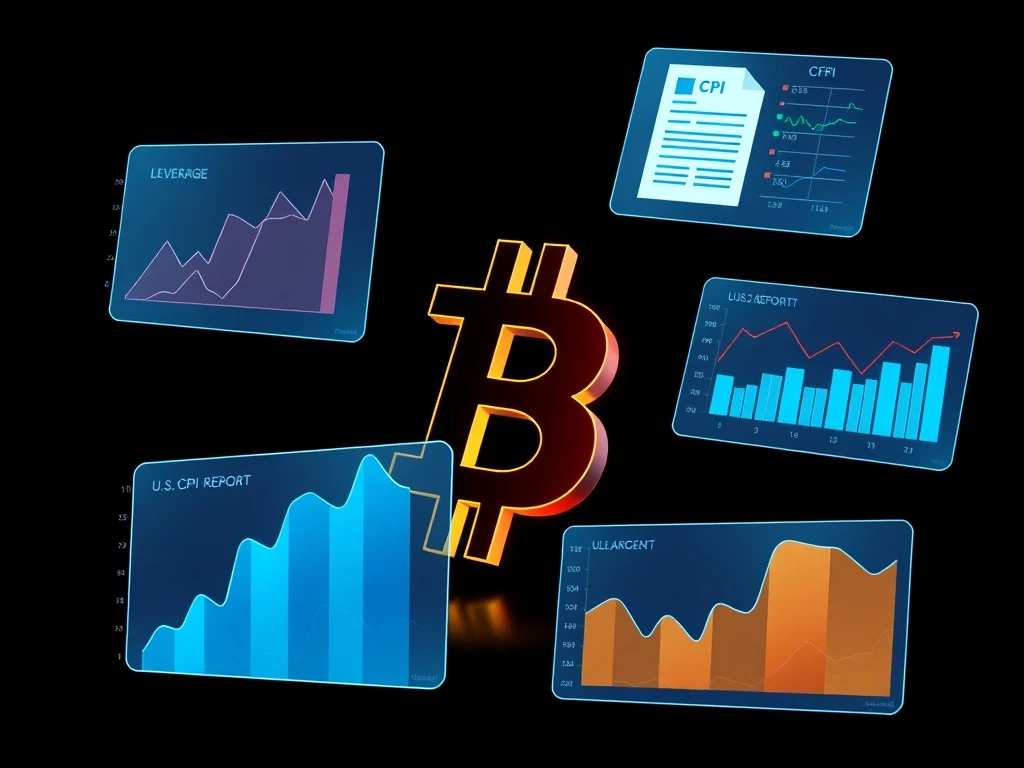
As Bitcoin enters a pivotal trading week in January 2025, market analysts identify three critical factors that could determine the cryptocurrency’s short-term trajectory. The digital asset, currently trading within a defined range, faces simultaneous pressures from derivatives markets, macroeconomic data, and institutional positioning shifts. Consequently, traders and investors must monitor these developments closely to navigate potential volatility.
Bitcoin Market Analysis: The Leverage Squeeze Dynamics
The cryptocurrency derivatives market currently exhibits elevated leverage levels across major exchanges. This situation creates a fragile environment where sudden price movements can trigger cascading liquidations. According to data from CryptoQuant and Bybit, the estimated leverage ratio for Bitcoin futures has remained elevated throughout December 2024. When excessive leverage builds in the system, even a moderate price swing can force the closure of overextended positions. This process, known as a leverage squeeze, often amplifies price movements in both directions.
Market mechanics explain this phenomenon clearly. For instance, a rapid 5% price drop can liquidate long positions that used high leverage. These forced sales then push prices lower, potentially triggering more liquidations. Conversely, a sharp upward move can squeeze short sellers, creating a short covering rally. Historical data from March 2024 and July 2023 shows similar leverage buildups preceded periods of heightened volatility. Therefore, monitoring funding rates and open interest becomes essential for gauging market stress.
Expert Insight on Derivatives Risk
Senior analysts from Glassnode and Arcane Research consistently highlight the correlation between leverage cycles and Bitcoin’s price stability. Their weekly reports note that sustained high funding rates often precede corrective events. The current market structure suggests that while leverage provides liquidity, it also increases systemic fragility. Traders should watch for sudden shifts in the estimated leverage ratio and futures open interest as leading indicators.
Macroeconomic Pressure: The December CPI Report
The U.S. Bureau of Labor Statistics will release the Consumer Price Index (CPI) data for December 2024 this week. This key inflation metric directly influences Federal Reserve policy expectations and, by extension, global risk assets like Bitcoin. Financial markets now treat Bitcoin as a barometer for liquidity conditions. A higher-than-expected CPI reading could strengthen the case for maintaining restrictive monetary policy. This scenario typically strengthens the U.S. dollar and pressures growth-oriented assets.
Conversely, a cooler inflation print might fuel speculation about earlier rate cuts, potentially boosting cryptocurrency valuations. The relationship between CPI data and Bitcoin has strengthened since 2022, as institutional adoption increased the asset’s correlation with traditional finance narratives. Analysts will compare the headline and core CPI figures against consensus forecasts. They will also scrutinize components like shelter and services inflation, which have shown persistent momentum.
Recent CPI and Bitcoin Performance Table
| Month | CPI Reading | Bitcoin 7-Day Performance | Market Reaction |
|---|---|---|---|
| Nov 2024 | +0.2% MoM | +8.3% | Positive (in-line data) |
| Oct 2024 | +0.4% MoM | -5.1% | Negative (hotter data) |
| Sep 2024 | +0.3% MoM | +2.7% | Neutral (as expected) |
Institutional Positioning: The Bitfinex Whale Watch
On-chain data reveals a notable reduction in the size of long positions held by large-scale investors, often called ‘whales,’ on the Bitfinex exchange. These entities, holding positions worth millions of dollars, often provide signals about institutional sentiment. A sustained drawdown in these positions can indicate profit-taking or a strategic shift towards risk management. Crypto News Insights reports that aggregate large long positions on Bitfinex have declined by approximately 18% over the past two weeks.
This activity warrants attention because Bitfinex has historically served a significant institutional and professional trader clientele. While exchange-specific data does not represent the entire market, it offers a valuable sentiment snapshot. Analysts cross-reference this data with flows into Bitcoin exchange-traded funds (ETFs) and holdings on other major platforms like Coinbase Institutional. The current trend suggests some large players are reducing directional exposure ahead of potential volatility catalysts.
Contextualizing Whale Behavior
Seasoned market observers note that whale position changes do not always predict immediate price direction. Sometimes, they reflect portfolio rebalancing or a move to cold storage. However, when combined with high leverage and a major macroeconomic event, the collective action becomes more significant. The reduction aligns with a period of decreased net inflows into U.S. spot Bitcoin ETFs, as reported by Farside Investors. This confluence of data points suggests a cautious institutional stance in the short term.
Conclusion
This week’s Bitcoin market analysis hinges on the interplay between technical derivatives pressure, macroeconomic data, and institutional behavior. The leverage squeeze creates a powder keg scenario, while the CPI report provides the potential spark. Meanwhile, whale position reductions on Bitfinex reflect a defensive posture among some large players. Navigating this environment requires monitoring real-time data, understanding historical correlations, and maintaining a disciplined risk framework. The convergence of these three factors will likely determine Bitcoin’s price action and set the tone for January 2025 trading.
FAQs
Q1: What is a leverage squeeze in cryptocurrency markets?
A leverage squeeze occurs when a price move forces the liquidation of overleveraged positions, amplifying volatility. High leverage makes the market fragile, as traders using borrowed funds must sell or buy to meet margin requirements, creating a feedback loop.
Q2: Why does U.S. CPI data affect Bitcoin’s price?
Bitcoin has become increasingly correlated with macroeconomic expectations. CPI data influences Federal Reserve interest rate policy, which impacts the U.S. dollar and global liquidity. Tighter monetary policy typically pressures risk assets, including cryptocurrencies.
Q3: How reliable is Bitfinex whale data for predicting market moves?
While not infallible, large position changes on major exchanges provide insight into institutional sentiment. It is one data point among many. Analysts combine it with ETF flows, futures data, and on-chain metrics for a more complete picture.
Q4: Can these three factors cause a major Bitcoin price crash?
Individually, each factor can increase volatility. Their convergence, however, raises the probability of significant price movement. A high CPI print during a high-leverage environment, with whales reducing exposure, could trigger a sharp correction. The opposite scenario could fuel a rally.
Q5: What should a retail investor monitor this week?
Key metrics include Bitcoin futures funding rates on major exchanges, the CPI report release time and consensus forecasts, and updates on aggregate exchange net position changes from analytics platforms like Glassnode or CryptoQuant.