MicroStrategy’s Staggering $12.4B Q4 Loss as Bitcoin Plunge Triggers 17% Stock Collapse

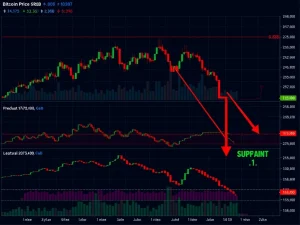
In a dramatic reflection of cryptocurrency market volatility impacting traditional finance, business intelligence firm MicroStrategy reported a net loss of $12.4 billion for the fourth quarter of 2025. The staggering figure, disclosed on Thursday, February 27, 2025, directly coincided with a 22% decline in the price of Bitcoin over the same period, triggering a 17% single-day drop in the company’s share price and raising urgent questions about corporate Bitcoin treasury strategies.
MicroStrategy’s Q4 Loss and the Bitcoin Price Correlation
The financial results reveal a direct and powerful correlation between MicroStrategy’s performance and Bitcoin’s market movements. The company, which has aggressively positioned itself as a corporate Bitcoin advocate, holds approximately 713,502 BTC. Consequently, Bitcoin’s descent from a quarterly high of $126,000 in early October to under $88,500 by December 31 created massive unrealized losses on its balance sheet. Furthermore, Bitcoin’s continued slide in early 2025 to around $64,500 placed the asset’s value significantly below MicroStrategy’s average acquisition cost of $76,052 per coin.
This accounting reality translated into a substantial net loss for the quarter. However, a critical distinction exists between paper losses and operational performance. MicroStrategy’s core business intelligence division demonstrated resilience, driving a 1.9% year-over-year increase in Q4 revenues to $123 million. This contrast highlights the company’s dual identity: a legacy software provider and a pioneering digital asset holder.
Market Reaction and Immediate Financial Impact
The market’s reaction was swift and severe. Following the earnings announcement, MicroStrategy’s stock (MSTR) closed down 17% at $107. This sharp decline mirrored Bitcoin’s own stumble to a low near $62,500 on the same day. The simultaneous movement underscores the heightened sensitivity of MSTR shares to Bitcoin’s price action, a relationship that has intensified as the company’s Bitcoin reserves have grown.
Analysts immediately scrutinized the company’s leverage and liquidity. The $12.4 billion loss, while primarily non-cash under accounting rules, significantly impacts shareholder equity and key financial ratios. It also brings intense focus on the company’s debt structure, particularly its $8.2 billion in convertible notes. The market’s primary concern centered on whether forced asset sales could become necessary if Bitcoin’s price decline persisted.
Executive Assurance and Strategic Defense
In response to these concerns, MicroStrategy’s leadership mounted a strong defense of the company’s financial position. Chief Financial Officer Andrew Kang emphasized the strength of the firm’s capital structure, describing it as a “digital fortress.” He pointed to strategic shifts, including a move toward “Digital Credit,” designed to align with the company’s “indefinite Bitcoin horizon.” This language signals a long-term commitment to the strategy despite short-term market turbulence.
CEO Phong Le directly addressed investor anxieties on the earnings call, stating unequivocally, “I’m not worried, we’re not worried, and no, we’re not having issues.” To support this confidence, executives highlighted several key financial buffers:
- Substantial Cash Reserves: The company boosted its cash and cash equivalents to $2.25 billion in Q4, which it states can cover 30 months of dividend obligations.
- Manageable Debt Maturities: No major debt is due until 2027, reducing near-term refinancing pressure.
- Conservative Leverage Ratio: The $8.2 billion convertible debt represents approximately 13% net leverage, which the company claims is below the average for S&P 500 firms.
- Enterprise Value Buffer: Le noted the company’s total enterprise value remains above the $45 billion carrying value of its Bitcoin holdings.
The Broader Context of Corporate Crypto Adoption
MicroStrategy’s quarterly results serve as a high-profile case study in the risks and rewards of corporate cryptocurrency adoption. The company’s strategy, initiated by former CEO Michael Saylor, has been both praised for its visionary approach and criticized for its concentration risk. The Q4 2025 loss represents one of the most significant financial events directly tied to crypto volatility for a publicly traded company.
This event occurs within a specific regulatory and macroeconomic climate. Notably, U.S. Treasury Secretary Bessent recently reiterated that the government would not “bail out” Bitcoin or related ventures, emphasizing the market’s independent and speculative nature. For other corporations considering digital asset adoption, MicroStrategy’s experience provides critical real-world data on balance sheet volatility and investor sentiment.
The situation also tests the “digital gold” thesis that underpins much of Bitcoin’s investment narrative. Proponents argue that short-term price volatility is acceptable for a long-term store of value, while detractors see the Q4 loss as evidence of the asset’s unsuitability for corporate treasuries. MicroStrategy’s ability to withstand this downturn without liquidating assets will be a closely watched indicator of the thesis’s practical validity.
Conclusion
MicroStrategy’s $12.4 billion Q4 loss starkly illustrates the profound financial impact of Bitcoin’s volatility on a corporate adopter. While the loss is substantial and triggered a severe 17% stock decline, the company’s leadership asserts a position of strength, backed by significant cash reserves and a manageable debt schedule. The episode moves beyond a simple earnings report to become a pivotal moment for evaluating the viability of large-scale corporate Bitcoin strategies. The market will now watch closely to see if MicroStrategy’s “digital fortress” can endure further crypto winter conditions or if the pressures of mark-to-market accounting and investor sentiment will force a strategic reconsideration. The coming quarters will determine whether this loss is a temporary setback or a fundamental challenge to the company’s core investment thesis.
FAQs
Q1: What caused MicroStrategy’s $12.4 billion loss in Q4 2025?
The loss was primarily a non-cash, unrealized accounting loss driven by a 22% decline in the price of Bitcoin during the quarter. MicroStrategy must mark the value of its 713,502 Bitcoin holdings to market, and the drop in BTC price created a massive reduction in the reported value of those assets on its balance sheet.
Q2: Is MicroStrategy at risk of going bankrupt due to this loss?
According to company executives, the risk is currently low. They emphasize a strong cash position of $2.25 billion, no major debt maturing until 2027, and a leverage ratio they describe as conservative. The loss is an accounting entry, not an immediate cash outflow, but sustained low Bitcoin prices could create future liquidity pressures.
Q3: Why did MSTR stock drop 17%?
The stock dropped due to investor concern over the massive quarterly loss and its implications for the company’s financial health. Furthermore, the drop mirrored Bitcoin’s own price decline on the same day, as MSTR has become a highly correlated proxy for Bitcoin in the equity markets.
Q4: What is MicroStrategy’s average cost per Bitcoin?
As of the end of Q4 2025, MicroStrategy’s average cost basis for its Bitcoin holdings was approximately $76,052 per BTC. With Bitcoin trading around $64,500, the company’s holdings are currently underwater on a per-coin basis.
Q5: Will MicroStrategy sell its Bitcoin to cover losses or debt?
The company states it has no plans to sell in the near term. Its debt maturity schedule provides a multi-year runway, and leadership has consistently framed its strategy as long-term. They have positioned their cash reserves to meet obligations without needing to liquidate Bitcoin holdings prematurely.