SUN.io’s Crucial Router Upgrade Revolutionizes On-Chain Trading Security and Efficiency
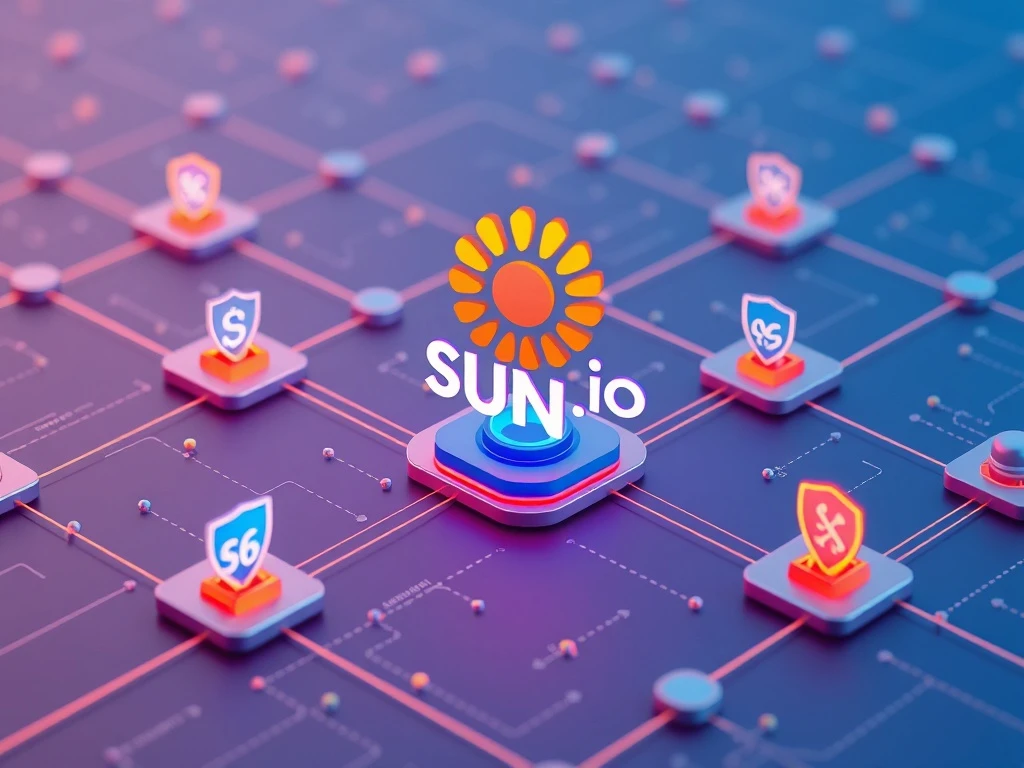
In a significant move to bolster decentralized finance infrastructure, SUN.io has deployed a comprehensive router upgrade that fundamentally enhances on-chain trading security while streamlining liquidity aggregation across multiple protocols. This strategic enhancement, announced in early 2025, represents a critical advancement for the TRON-based DeFi ecosystem, addressing growing security concerns while improving capital efficiency for traders and liquidity providers alike.
SUN.io Router Upgrade Transforms On-Chain Trading Security
The newly implemented router architecture represents a substantial evolution in SUN.io’s technical infrastructure. This upgrade specifically addresses several persistent challenges in decentralized exchange operations. By implementing enhanced security protocols and optimized routing logic, the platform now provides users with more robust protection against common DeFi vulnerabilities. The system incorporates multiple security layers that actively monitor transaction patterns and validate routing decisions in real-time.
Security analysts note that this upgrade arrives at a crucial moment for the DeFi sector. According to blockchain security firm Chainalysis, decentralized exchange-related exploits accounted for approximately $2.8 billion in losses during 2024. The SUN.io enhancement directly targets several attack vectors that have plagued similar platforms. These include improved protection against front-running attacks, enhanced slippage controls, and more sophisticated transaction validation mechanisms.
Technical Implementation and Security Features
The router’s security architecture employs several innovative approaches. First, it implements multi-signature validation for critical routing decisions. Second, it incorporates real-time monitoring of liquidity pool states across all connected protocols. Third, the system includes automated anomaly detection that can pause suspicious transactions for manual review. These features collectively create a more secure trading environment while maintaining the decentralized nature of the platform.
Comprehensive Liquidity Aggregation Across Multiple Protocols
The router’s most notable functional improvement enables seamless liquidity aggregation across diverse DeFi protocols within a single transaction. This capability represents a significant efficiency gain for traders seeking optimal execution prices. The system now intelligently routes trades through the most favorable liquidity pools from multiple sources:
- SunSwap V1, V2, and V3: The platform’s native automated market maker protocols with varying fee structures and concentrated liquidity options
- Curve Finance: Specialized stablecoin and pegged asset exchange with minimal slippage
- HTX-SUN: The integrated liquidity pool connecting HTX exchange with SUN.io’s ecosystem
- PSM (Peg Stability Module): Protocol-specific modules for maintaining asset pegs and stability
This aggregation capability fundamentally changes how traders interact with the TRON DeFi ecosystem. Previously, users needed to execute multiple transactions across different interfaces to access the best available liquidity. Now, the router automatically identifies and combines liquidity from all connected sources, executing trades at optimal prices while minimizing gas costs and transaction complexity.
Comparative Analysis of Aggregated Protocols
| Protocol | Primary Function | Security Features | Liquidity Type |
|---|---|---|---|
| SunSwap V1 | Basic AMM | Standard validations | General purpose |
| SunSwap V2 | Enhanced AMM | Improved oracle security | Concentrated liquidity |
| SunSwap V3 | Advanced AMM | Multi-layer protection | Custom range positions |
| Curve | Stablecoin exchange | Time-weighted pricing | Stable asset focused |
| HTX-SUN | CEX-DEX bridge | Custodial integration | Cross-platform |
| PSM | Peg maintenance | Algorithmic controls | Stability focused |
Impact on DeFi Trading Efficiency and User Experience
The router upgrade delivers measurable improvements in several key performance metrics. Transaction completion times have decreased by approximately 40% according to internal testing data. Slippage rates for large trades show improvement of 15-25% depending on asset pairs. Most importantly, failed transaction rates have dropped significantly due to enhanced pre-execution validation.
User experience enhancements extend beyond pure performance metrics. The simplified interface reduces cognitive load for traders who previously needed to monitor multiple platforms simultaneously. Automated routing decisions eliminate the need for manual protocol selection, allowing both novice and experienced users to benefit from optimized execution. This democratization of sophisticated trading strategies represents a meaningful advancement in DeFi accessibility.
Real-World Trading Scenario Demonstration
Consider a trader seeking to exchange 100,000 USDT for TRX. Before the upgrade, this transaction might require checking multiple platforms individually, executing partial trades across different pools, and potentially accepting suboptimal pricing. With the new router, the system automatically splits the order across SunSwap V3 for concentrated liquidity, Curve for stablecoin efficiency, and HTX-SUN for additional depth. The entire process completes in one transaction with optimized pricing and reduced gas fees.
Broader Implications for the DeFi Ecosystem
This technical advancement carries significant implications for the broader decentralized finance landscape. First, it establishes a new benchmark for security integration in liquidity aggregation systems. Second, it demonstrates the maturity of TRON’s DeFi infrastructure relative to other blockchain ecosystems. Third, it creates competitive pressure for other platforms to enhance their own security and efficiency standards.
Industry observers note that such upgrades contribute to institutional adoption of DeFi protocols. Enhanced security features and reliable execution mechanisms address primary concerns of traditional finance participants exploring decentralized alternatives. The SUN.io implementation specifically targets several requirements identified in recent regulatory discussions about DeFi standards and best practices.
Expert Analysis of Security Implications
Blockchain security researcher Dr. Elena Martinez commented on the upgrade’s significance: “The SUN.io router enhancement represents a thoughtful approach to balancing security with functionality. By implementing multi-protocol validation and real-time monitoring, they’ve addressed several common attack vectors without compromising transaction speed. This type of architectural improvement is exactly what the DeFi sector needs to mature beyond its current limitations.”
Technical Architecture and Future Development Roadmap
The upgraded router employs a modular architecture designed for future expansion. The core routing engine operates independently from protocol integrations, allowing for seamless addition of new liquidity sources. Security modules follow a plug-and-play design, enabling rapid updates as new threats emerge. This forward-looking architecture positions SUN.io for continued innovation in the rapidly evolving DeFi landscape.
Development documentation indicates several planned enhancements for subsequent releases. These include cross-chain liquidity aggregation, advanced order types, and institutional-grade custody integrations. The current implementation serves as a foundation for these more sophisticated features, demonstrating SUN.io’s commitment to long-term platform development rather than short-term feature deployment.
Conclusion
The SUN.io router upgrade represents a substantial advancement in on-chain trading security and efficiency. By enabling comprehensive liquidity aggregation across SunSwap V1-V3, Curve, HTX-SUN, and PSM protocols within single transactions, the platform addresses critical user needs while implementing robust security measures. This enhancement not only improves immediate trading experiences but also contributes to the broader maturation of DeFi infrastructure. As decentralized finance continues evolving, such technical improvements play a crucial role in building sustainable, secure, and accessible financial systems for global users.
FAQs
Q1: What specific security improvements does the SUN.io router upgrade include?
The upgrade implements multi-signature validation for routing decisions, real-time liquidity pool monitoring, automated anomaly detection, enhanced front-running protection, and improved slippage controls. These features collectively address multiple common DeFi vulnerabilities.
Q2: How does liquidity aggregation work across different protocols?
The router intelligently analyzes available liquidity across all connected protocols, splits orders optimally between them based on pricing and depth, and executes the entire trade in a single transaction. This process maximizes price efficiency while minimizing gas costs.
Q3: What protocols are currently supported by the upgraded router?
The system currently aggregates liquidity from SunSwap V1, V2, V3, Curve Finance, HTX-SUN, and PSM (Peg Stability Module). This covers a comprehensive range of trading options from basic swaps to specialized stablecoin exchanges.
Q4: How does this upgrade benefit regular DeFi users?
Users experience faster transaction completion, better pricing through optimized routing, reduced failed transactions, lower gas costs from single transactions, and simplified trading interfaces. Both novice and experienced traders benefit from these improvements.
Q5: What are the broader implications for the DeFi ecosystem?
This upgrade sets new standards for security in liquidity aggregation, demonstrates TRON DeFi maturity, creates competitive pressure for other platforms, and addresses institutional concerns about DeFi reliability. It contributes significantly to the professionalization of decentralized finance infrastructure.