Trump’s Strategic Crypto Policy: US Must Prevent China’s Digital Asset Dominance
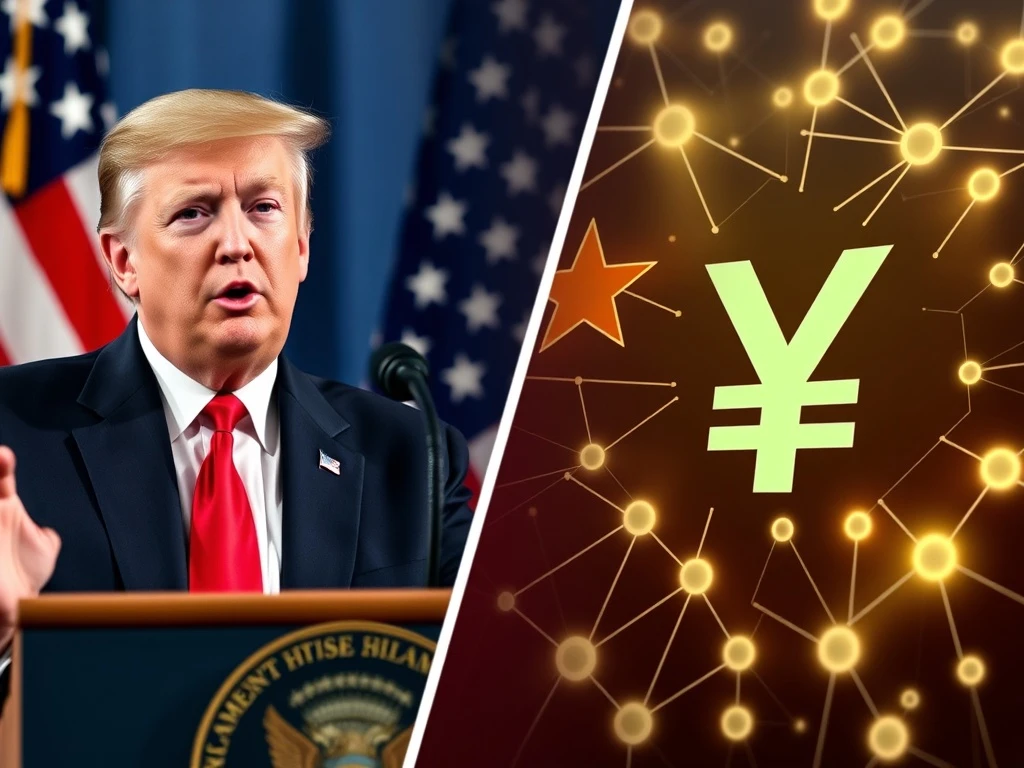
DAVOS, SWITZERLAND – January 2025: In a revealing address to global leaders, President Donald Trump framed United States cryptocurrency policy as a strategic imperative against China’s growing digital finance ambitions, marking a significant shift in how Washington views the crypto regulatory landscape. The President’s virtual speech at the World Economic Forum’s 2025 meeting explicitly connected domestic legislation to international competition, stating the US must “make it so that China doesn’t get the hold” of cryptocurrency markets. This declaration comes as both nations accelerate efforts to shape the future of digital assets, with profound implications for global financial systems and technological sovereignty.
Trump’s Davos Declaration on Crypto Competition
President Trump’s Wednesday address marked his second appearance before the World Economic Forum since taking office in January 2025. Speaking from Washington D.C., the President provided unprecedented insight into his administration’s motivations behind recent cryptocurrency legislation. While acknowledging the political popularity of crypto-friendly policies, Trump emphasized that strategic considerations regarding China represented the primary driver. “It is politically popular,” Trump stated regarding cryptocurrency regulation. “But it’s, much more importantly, we have to make it so that China doesn’t get the hold of it. And once they have that hold, we’re not going to be able to get it back.” This statement represents a clear articulation of how great power competition now extends into digital asset markets.
The President specifically referenced his July 2025 signing of the GENIUS Act, payment stablecoin-focused legislation that establishes federal regulatory frameworks for dollar-pegged digital currencies. Trump noted that China “wanted that market, too,” indicating awareness of Beijing’s parallel efforts to promote its digital yuan internationally. This acknowledgment comes amid growing concerns among US policymakers about China’s central bank digital currency (CBDC) potentially challenging dollar dominance in cross-border transactions. The administration’s approach suggests a calculated response to what many analysts describe as a new front in US-China technological rivalry.
Legislative Context and Implementation Timeline
The GENIUS Act, formally known as the Guaranteeing Essential New Infrastructure for United States Stability Act, represents the first major federal cryptocurrency legislation of the Trump administration. However, its implementation faces a complex regulatory timeline. The bill’s text requires agencies to approve implementing regulations within 120 days of enactment or 18 months from the July 2025 signing, whichever comes first. This extended timeline creates a window during which market participants must navigate uncertain regulatory waters while China continues advancing its digital yuan infrastructure.
Concurrently, the Senate continues considering the CLARITY Act (Creating Legal Accountability and Regulatory Integrity for Technology Years), a broader digital asset market structure bill that has faced recent delays. Trump’s Davos speech began with speculation that he could sign this legislation “very soon,” though the Senate Banking Committee postponed a scheduled markup earlier this month. The delay followed public reservations from Coinbase CEO Brian Armstrong, who stated he could not support the bill “as written” without specific modifications. These legislative developments occur against a backdrop of increasing Chinese digital currency initiatives that have captured Washington’s attention.
China’s Digital Yuan: Strategic Challenge to Dollar Dominance
China’s accelerated development of its central bank digital currency presents what many experts consider the most significant challenge to dollar-pegged stablecoins and, potentially, to broader US financial influence. The People’s Bank of China began allowing commercial banks to pay interest on digital yuan deposits in January 2025, creating a more attractive proposition for both domestic and international users. This move represents a strategic advancement in China’s efforts to internationalize its currency while maintaining strict capital controls and surveillance capabilities.
The digital yuan’s architecture differs fundamentally from decentralized cryptocurrencies and most stablecoins, operating as a directly issued liability of China’s central bank with programmable features that enable unprecedented monetary policy implementation. These technical characteristics, combined with China’s Belt and Road Initiative infrastructure, create potential pathways for increased international adoption, particularly in developing economies seeking alternatives to dollar-dependent payment systems. Financial analysts note several competitive advantages China’s approach offers:
- State-backed stability: Unlike privately issued stablecoins, the digital yuan carries full sovereign guarantee
- Integration with existing systems: Seamless connection to China’s extensive digital payment ecosystems
- Cross-border efficiency: Potential for faster, cheaper international settlements than traditional banking channels
- Programmable functionality: Ability to implement targeted monetary policies and usage restrictions
These features have prompted concern among US policymakers that without competitive domestic frameworks, China could establish early dominance in digital currency infrastructure that proves difficult to challenge later. The Trump administration’s emphasis on preventing Chinese “hold” over crypto markets reflects this strategic assessment.
Stablecoin Yield Controversy and Banking Opposition
A critical battleground in the US regulatory debate concerns whether third-party platforms and stablecoin issuers should be permitted to pay yields on digital dollar instruments. Many US banking groups continue advocating for language in the CLARITY Act that would prohibit such yields, arguing they could create systemic risks and unfair competition with traditional deposit accounts. This position contrasts sharply with China’s approach, where the central bank explicitly authorizes interest payments on digital yuan deposits.
Financial policy experts warn that without competitive yield mechanisms, dollar-pegged stablecoins might struggle against interest-bearing digital yuan offerings in international markets. This concern has created divisions within the US financial sector, with traditional banks generally opposing stablecoin yields while fintech companies and some crypto firms argue they’re essential for maintaining dollar relevance in digital finance. The resolution of this issue will significantly influence whether US-regulated stablecoins can effectively compete with China’s digital currency initiatives.
| Feature | US Dollar-Pegged Stablecoins | China Digital Yuan (e-CNY) |
|---|---|---|
| Issuing Authority | Private companies with federal oversight | People’s Bank of China (central bank) |
| Legal Status | Emerging regulatory frameworks (GENIUS/CLARITY Acts) | Official legal tender with full state backing |
| Interest/Yield | Currently prohibited by many banking proposals | Authorized and implemented since January 2025 |
| Cross-Border Focus | Market-driven international adoption | State-promoted as part of Belt and Road Initiative |
| Programmability | Limited by regulatory constraints | Extensive programmable features for policy implementation |
Industry Response and Legislative Outlook
Crypto industry leaders attending Davos events expressed mixed reactions to Trump’s framing of cryptocurrency policy through a geopolitical lens. While generally supportive of regulatory clarity, some executives cautioned against overly restrictive approaches that might hinder innovation. Coinbase CEO Brian Armstrong, who will participate in Davos discussions this week, previously emphasized the need for compromises in cryptocurrency legislation to ensure the US remains competitive globally. His concerns about the CLARITY Act’s current language highlight ongoing tensions between regulatory objectives and innovation priorities.
The Senate Banking Committee had not scheduled another markup for the CLARITY Act as of Wednesday, with some lawmakers and industry representatives suggesting it could be weeks before the bill returns for consideration. This delay creates uncertainty about the timeline for comprehensive digital asset legislation, even as the GENIUS Act moves toward implementation. The legislative process occurs alongside China’s continued digital yuan expansion, creating what some analysts describe as a “regulatory race” between the world’s two largest economies.
Financial technology experts note that the US maintains significant advantages in cryptocurrency innovation, particularly in decentralized finance (DeFi) ecosystems and blockchain development. However, China’s centralized, state-driven approach offers different benefits, including rapid scaling and integration with existing financial surveillance systems. The contrasting models represent fundamentally different visions for digital currency’s future, with the US emphasizing private sector innovation within regulatory frameworks and China prioritizing state control and monetary policy integration.
Global Implications and Third-Country Considerations
The US-China competition in digital currency development carries implications far beyond bilateral relations. Many developing nations are evaluating both approaches as they consider their own digital currency strategies. Some countries view China’s digital yuan as offering an alternative to dollar dependency, while others prefer the innovation potential of US-style crypto ecosystems. This global dimension adds complexity to Washington’s policy calculations, as decisions about stablecoin regulation and cryptocurrency frameworks will influence adoption patterns worldwide.
International financial institutions are closely monitoring these developments, with the International Monetary Fund and Bank for International Settlements both publishing research on cross-border implications of digital currencies. Their analyses generally emphasize the importance of interoperability between different digital currency systems, suggesting that despite competitive dynamics, some level of technical coordination will be necessary for efficient global payments. This reality creates potential areas for limited cooperation even amid broader strategic competition.
Historical Context and Policy Evolution
Trump’s Davos remarks represent a notable evolution in US cryptocurrency policy discourse. Previous administrations generally approached digital assets through domestic regulatory and consumer protection lenses, with limited explicit connection to international strategic considerations. The current administration’s framing reflects growing recognition that cryptocurrency and digital currency developments have become integral components of broader technological and financial competition between major powers.
This shift aligns with broader trends in US policy toward China across multiple technology sectors, including semiconductors, artificial intelligence, and telecommunications. The cryptocurrency dimension adds financial and monetary policy elements to this competition, touching on fundamental questions of economic sovereignty and global influence. Policy analysts note that while the Trump administration has accelerated this strategic framing, concerns about China’s digital currency ambitions existed during previous administrations, suggesting bipartisan recognition of the stakes involved.
The specific focus on preventing Chinese “hold” over cryptocurrency markets reflects assessments that early dominance in digital infrastructure can create enduring advantages through network effects and standard-setting. This perspective draws lessons from other technology sectors where first-mover advantages proved difficult to overcome. By explicitly connecting domestic cryptocurrency legislation to this strategic objective, the Trump administration has elevated digital asset policy within broader national security and economic competitiveness frameworks.
Conclusion
President Trump’s Davos address has clarified that US cryptocurrency policy now operates within a framework of strategic competition with China, particularly regarding digital currency development and stablecoin regulation. The administration’s support for the GENIUS Act and potential CLARITY Act reflects not only domestic political considerations but calculated responses to China’s advancing digital yuan initiatives. As both nations pursue contrasting models for digital currency development—the US emphasizing private innovation within regulatory frameworks, China prioritizing state-controlled systems—their approaches will influence global financial architecture for decades. The coming months will prove critical as US agencies implement the GENIUS Act and Congress considers broader digital asset legislation, with outcomes significantly affecting whether dollar-pegged stablecoins can effectively compete against China’s interest-bearing digital currency in international markets. This evolving landscape ensures cryptocurrency policy will remain at the intersection of financial innovation, regulatory development, and great power competition throughout 2025 and beyond.
FAQs
Q1: What is the GENIUS Act that President Trump referenced in his Davos speech?
The GENIUS Act (Guaranteeing Essential New Infrastructure for United States Stability Act) is payment stablecoin-focused legislation signed into law in July 2025. It establishes federal regulatory frameworks for dollar-pegged digital currencies and requires implementation within 120 days of agency approval or 18 months from enactment.
Q2: How does China’s digital yuan differ from US dollar-pegged stablecoins?
China’s digital yuan is a central bank digital currency (CBDC) directly issued by the People’s Bank of China with full state backing, while US dollar-pegged stablecoins are typically issued by private companies. The digital yuan pays authorized interest and features extensive programmability for policy implementation, whereas many US banking proposals would prohibit stablecoin yields.
Q3: Why does President Trump view cryptocurrency policy through competition with China?
The administration believes early dominance in digital currency infrastructure could create enduring advantages through network effects and standard-setting. With China actively promoting its digital yuan internationally, particularly through Belt and Road Initiative connections, Washington seeks to ensure dollar-pegged alternatives remain competitive in global markets.
Q4: What is the current status of the CLARITY Act mentioned in Trump’s speech?
The CLARITY Act (Creating Legal Accountability and Regulatory Integrity for Technology Years) is a broader digital asset market structure bill under Senate consideration. Its markup was delayed earlier this month following reservations from industry leaders like Coinbase CEO Brian Armstrong, and the Senate Banking Committee had not scheduled another markup as of late January 2025.
Q5: How might US cryptocurrency policy affect global adoption patterns?
Many developing nations are evaluating both US and Chinese digital currency approaches as they consider their own strategies. US policies that foster innovation while ensuring stability could encourage adoption of dollar-pegged systems, while restrictive regulations might push some countries toward China’s digital yuan, particularly if it offers more favorable terms for international settlements.