Bitcoin Price Surge: Trump’s Pivotal Crypto Bill Promise Sparks $90K Optimism
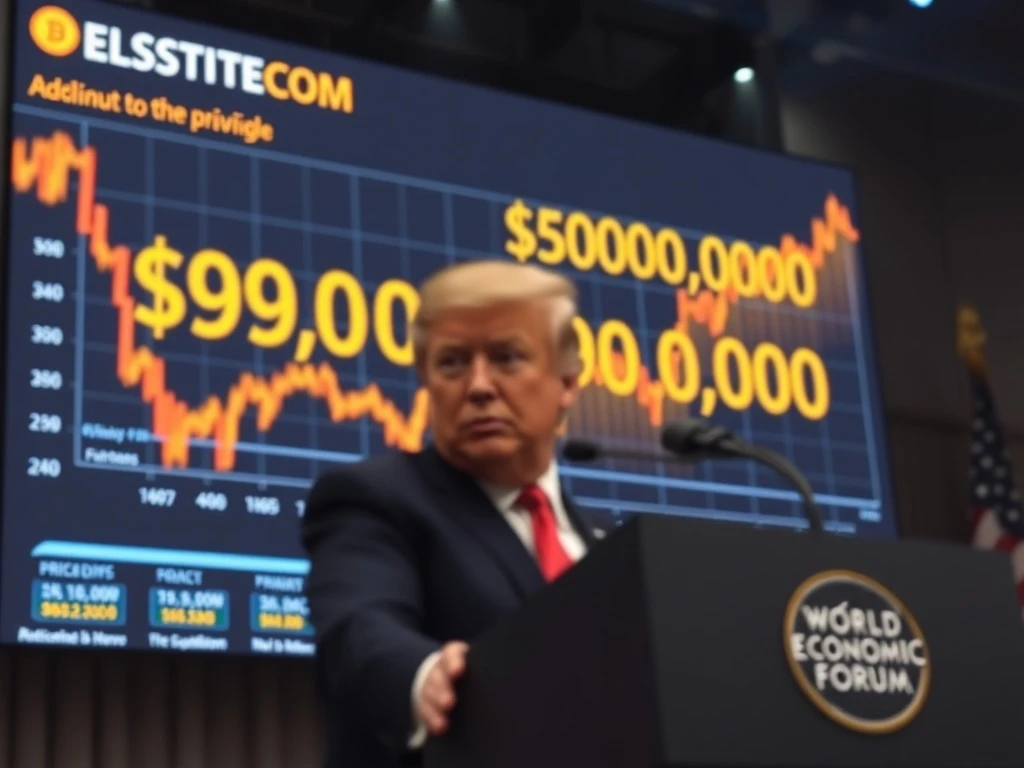
DAVOS, SWITZERLAND – January 21, 2026 – The cryptocurrency market experienced a notable uplift as Bitcoin (BTC) targeted the $90,000 threshold, a move directly catalyzed by U.S. President Donald Trump’s public commitment to sign pro-cryptocurrency market structure legislation “very soon.” This pivotal announcement, delivered during a special address at the World Economic Forum, injected fresh optimism into digital asset markets, which have been navigating a complex landscape of global macroeconomic pressures.
Trump’s Davos Declaration Fuels Bitcoin Momentum
President Trump’s speech at the World Economic Forum in Davos served as a key catalyst for Bitcoin’s price action. Consequently, BTC/USD recorded daily gains of approximately 1.7% around Wednesday’s Wall Street open, according to data from TradingView. Specifically, the President stated his administration is working to “ensure America remains the crypto capital of the world,” referencing the previously signed Genius Act. Moreover, he highlighted that Congress is actively working on comprehensive “crypto market structure legislation” covering “Bitcoin, all of them,” which he anticipates signing imminently to “unlock new pathways for Americans to reach financial freedom.” This explicit governmental endorsement represents a significant shift in regulatory posture, providing a clear bullish signal for institutional and retail investors alike.
Global Macroeconomic Crosscurrents Temper Enthusiasm
While Trump’s comments provided a clear positive impulse, broader financial markets presented a mixed picture. Simultaneously, traditional equity markets welcomed additional remarks from the President regarding geopolitical stability, with the S&P 500 rising 0.5%. Trump also predicted a doubling of the Dow Jones Industrial Average, forecasting it would reach 50,000. However, significant headwinds emerged from international bond markets. Notably, Japan’s fiscal situation drew intense scrutiny. After decades of ultra-low rates, the yield on 10-year Japanese Government Bonds (JGBs) climbed to around 2.29%, a level not seen since 1999. Trading firm QCP Capital detailed the concerning context in its ‘Asia Color’ update: government debt exceeds 240% of GDP, total debt nears ¥1,342 trillion, and debt servicing could absorb a quarter of fiscal spending in 2026. This surge in yields questions the sustainability of Japan’s public finances and acts as a traditional volatility catalyst for global risk assets, including cryptocurrencies.
Analyst Perspectives on Bitcoin’s Technical Foundation
Beyond the immediate news-driven bounce, analysts examined Bitcoin’s technical standing. The BTC/USD pair had recently completed a roundtrip in January, returning near its 2026 opening price. This action effectively closed a “gap” in the CME Group’s Bitcoin futures market, a phenomenon often watched by traders. Several market observers pointed to the $90,000 level and the yearly open as critical zones. For instance, trader CW noted the presence of a “solid buying wall,” indicating robust support. Meanwhile, analyst Daan Crypto Trades offered a contrarian perspective, suggesting that a brief “wick below” the 2026 opening price could ultimately be beneficial. He argued such a move would clean out weak leverage and establish a stronger foundation for a sustained rebound, turning a technical level of support into a proven launchpad for future gains.
The Legislative Landscape and Market Structure
The promise of imminent crypto legislation addresses a long-standing uncertainty in the United States. A clear federal regulatory framework for digital asset markets has been a persistent industry request. The proposed market structure legislation aims to define the roles of regulatory bodies like the SEC and CFTC, establish rules for trading platforms, and provide clarity on asset classification. This regulatory certainty is considered essential for broader institutional adoption. The potential bill’s passage could unlock new financial products, enhance consumer protections, and solidify the U.S.’s competitive position in the global fintech race. The market’s positive reaction underscores the high economic value placed on regulatory clarity.
Comparative Market Reactions and Historical Context
The interplay between geopolitical statements, traditional finance, and cryptocurrency is increasingly pronounced. The following table contrasts the market reactions to key elements from January 21, 2026:
| Market/Event | Reaction | Primary Driver |
|---|---|---|
| Bitcoin (BTC) | +1.7% (Targeting $90K) | Trump’s crypto bill signing promise |
| S&P 500 Index | +0.5% | Geopolitical stability remarks (Greenland) |
| Japanese Govt Bonds (JGBs) | Yield spike to ~2.29% | Fiscal sustainability concerns, rising debt |
| U.S. Dollar (DXY Index) | Contextual stability | Balanced between crypto optimism and global risk |
Historically, Bitcoin has demonstrated sensitivity to both regulatory news from major economies and shifts in global liquidity conditions, as indicated by bond market movements. The current scenario presents a tension between these two forces: a potent regulatory catalyst versus a looming macro risk factor from Japan’s debt market.
The Path Forward for Crypto Regulation
The journey from legislative promise to enacted law involves several steps. Congress must finalize the bill’s language, navigate committee approvals, and secure passage in both the House and Senate before it reaches the President’s desk for signature. The timeline implied by “very soon” suggests advanced negotiations, but market participants will closely monitor political developments. Furthermore, the substance of the legislation will be critical. Key areas to watch include:
- Clarity on Security vs. Commodity Status: Defining which digital assets fall under SEC or CFTC jurisdiction.
- Exchange and Custody Rules: Establishing operational standards for trading platforms and asset custodians.
- Consumer Protection Measures: Implementing safeguards against fraud and market manipulation.
- Tax Treatment: Providing clear guidelines for cryptocurrency taxation.
The ultimate impact on Bitcoin’s price will depend on both the speed of this process and the perceived friendliness of the final regulatory framework.
Conclusion
Bitcoin’s push toward $90,000 underscores a market responsive to concrete regulatory progress. President Trump’s commitment to signing crypto legislation provides a tangible bullish narrative, momentarily outweighing concerns stemming from Japan’s bond market turmoil. However, the sustainable trajectory for the Bitcoin price will likely depend on the successful translation of political promises into enacted law, coupled with the broader global macroeconomic environment. The coming weeks will be crucial for observing whether this optimism solidifies into a lasting trend or faces resistance from larger financial system volatilities. The interplay between policy and markets has never been more direct for the digital asset ecosystem.
FAQs
Q1: What exactly did President Trump say about cryptocurrency legislation?
In his World Economic Forum address, President Trump stated that Congress is working hard on “crypto market structure legislation” covering Bitcoin and other digital assets, and that he hopes to sign it “very soon” to unlock pathways to financial freedom.
Q2: Why are Japanese Government Bonds (JGBs) relevant to Bitcoin’s price?
Cryptocurrency markets are traditionally sensitive to global liquidity conditions. A significant rise in JGB yields signals potential tightening of financial conditions and increased volatility, which can negatively impact risk assets like Bitcoin, creating a counterbalance to positive news.
Q3: What is the significance of Bitcoin retesting its “yearly open” price?
The yearly open is a major psychological and technical level. Retesting it allows the market to confirm support. Some analysts believe a brief dip below this level can create a stronger long-term foundation by liquidating over-leveraged positions.
Q4: What is the “Genius Act” that Trump mentioned?
While not detailed in the speech, the context suggests the Genius Act is previously passed legislation related to innovation or technology. Trump referenced it to underscore his administration’s ongoing support for the crypto and tech sectors.
Q5: How does regulatory clarity in the U.S. benefit cryptocurrency markets?
Clear federal regulations reduce uncertainty for businesses and institutional investors. This can lead to increased adoption, the launch of new regulated financial products (like ETFs), better consumer protections, and greater overall market stability and growth.