Bank of Italy Chief Reveals Crucial Truth: Banks, Not Stablecoins, Will Anchor Future Digital Money
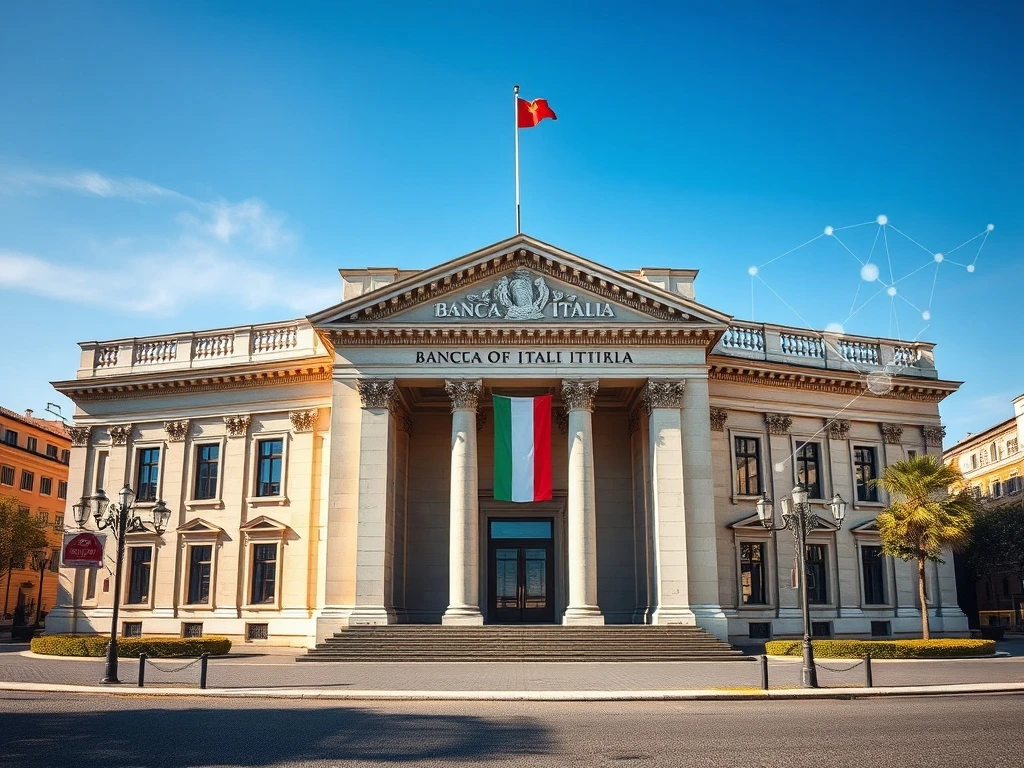
In a definitive statement that clarifies the European regulatory trajectory, Bank of Italy Governor Fabio Panetta has asserted that traditional banks and central banks, not privately issued stablecoins, will form the bedrock of the future digital monetary system. Delivered in Rome on Wednesday, October 15, 2025, this declaration signals a pivotal moment for digital finance policy across the European Union, emphasizing institutional primacy in an era of rapid technological change.
Bank of Italy Outlines the Future Digital Monetary Hierarchy
Governor Fabio Panetta addressed the executive committee of the Italian Banking Association with a clear vision. He stated that commercial bank money and central bank money will jointly anchor the monetary system as they digitize. Conversely, he assigned stablecoins a strictly complementary role. Panetta’s reasoning is foundational: the stability of a stablecoin is inherently derivative. It depends entirely on its peg to a traditional fiat currency like the euro or dollar. This dependency, he argued, fundamentally limits its capacity to function as an independent anchor. Consequently, the central bank views the digitalization of money as a long-term structural trend to be led by established financial institutions.
The Core Argument: Stability Through Institutional Backing
Panetta’s position is not merely philosophical; it is rooted in practical monetary mechanics. A central bank can act as a lender of last resort and manage monetary policy to ensure systemic stability. A private stablecoin issuer cannot replicate this function. The table below contrasts the foundational stability mechanisms:
| Feature | Digital Commercial/Central Bank Money | Privately-Issued Stablecoins |
|---|---|---|
| Source of Stability | Full faith and credit of the issuing bank or state, regulatory oversight, deposit insurance. | Quality and liquidity of reserve assets (e.g., cash, bonds), subject to issuer risk. |
| Legal Framework | Well-established banking, payment, and financial laws. | Evolving regulations (e.g., EU’s MiCA), often playing catch-up. |
| Systemic Role | Core infrastructure for payments, credit, and monetary policy transmission. | Primarily a payment and settlement layer, dependent on traditional systems. |
Geopolitics and Technology Reshape Banking’s Strategic Focus
Panetta embedded his digital money comments within a broader, urgent analysis of global shifts. He identified payments as a new strategic battleground for banks. This shift occurs because technology and geopolitics are reshaping the global economy in unprecedented ways. Panetta noted that traditional economic variables—investment, trade, interest rates—are increasingly influenced by political decisions rather than pure market forces. Furthermore, the center of gravity in the global economy is now driven significantly by technological power. This digital transformation, however, is unfolding in a less cooperative international environment than past industrial revolutions. For banks, digital finance has thus become a critical pressure point in a fragmenting world.
- Strategic Imperative: Banks must master digital payments to retain competitiveness.
- Geopolitical Lens: Financial infrastructure is now a tool of economic sovereignty.
- Tech-Driven Shift: Control over digital rails equates to economic influence.
Bank of Italy’s Cautious and Nuanced Stance on Stablecoins
Panetta’s speech reflects a consistent, cautious regulatory posture from the Bank of Italy. This stance was explicitly detailed just weeks earlier by Vice Director Chiara Scotti on September 19, 2025. Scotti focused on the specific risks of multi-issuance stablecoins—tokens issued across multiple jurisdictions under a single brand, like a global tech company’s offering. She warned these pose significant risks:
- Legal Risks: Conflicts between different national regulatory regimes.
- Operational Risks: Complex, cross-border management of reserves and redemption.
- Financial Stability Risks: Potential for contagion if a large stablecoin fails, undermining EU oversight.
Scotti advocated for strict containment measures. She proposed that such stablecoins should be restricted to jurisdictions with regulatory standards equivalent to the EU’s and be subject to rigorous reserve and redemption mandates. Importantly, she also acknowledged the potential benefits of stablecoins, such as lowering transaction costs and improving payment efficiency—a nuance that shows the bank’s analysis is balanced, not purely dismissive.
Connecting to the Broader European Regulatory Landscape
The Bank of Italy’s views are not isolated. They align with the principles underpinning the European Union’s Markets in Crypto-Assets (MiCA) regulation, which came fully into force in 2024. MiCA establishes a comprehensive framework for crypto-assets, with particularly stringent requirements for asset-referenced tokens (a category including major stablecoins). The regulation demands robust reserve backing, clear redemption rights, and strict issuer authorization. Panetta and Scotti’s comments reinforce the EU’s overarching policy direction: to harness innovation while ensuring it operates within a controlled, bank-centric financial system that prioritizes consumer protection and monetary sovereignty.
The Practical Implications for the Future of Finance
This policy direction has tangible consequences. It signals strong institutional support for the development of a digital euro as a public good and for the modernization of commercial bank payment systems. Investment and regulatory focus will likely flow toward:
- Central Bank Digital Currency (CBDC) Development: Accelerating pilot projects and design choices for a digital euro.
- Bank-Led Digital Infrastructure: Upgrading instant payment systems (like SEPA Instant) and exploring tokenized deposits.
- Stablecoin Regulation: Implementing MiCA with a focus on limiting systemic risk from large, global stablecoins.
For crypto-native firms, the message is clear: integration with the traditional banking system, not disruption of its core monetary functions, is the expected path within the EU. The role of stablecoins is being carved out as a niche for efficient, specific-use-case payments and settlements, operating under the umbrella of bank-issued money.
Conclusion
Bank of Italy Governor Fabio Panetta’s remarks provide a crucial blueprint for the future of digital money in Europe. By unequivocally stating that banks and central banks will remain the anchors of the monetary system, he affirms a future where digitization is led by trusted institutions. While stablecoins may offer complementary efficiency, their stability is seen as inherently tethered to the traditional fiat currencies issued by those very institutions. This perspective, shaped by geopolitical fragmentation and technological competition, will heavily influence the development of the digital euro and the regulatory environment for crypto-assets in the years to come, ensuring stability remains paramount in the evolving financial landscape.
FAQs
Q1: What did the Bank of Italy chief say about stablecoins?
Bank of Italy Governor Fabio Panetta stated that stablecoins can only play a complementary role in the monetary system. He argued their stability depends on their peg to traditional fiat currencies, limiting their ability to function as an independent anchor. The future digital system, he said, will be anchored by digital commercial bank money and central bank money.
Q2: Why does the Bank of Italy believe banks are better anchors than stablecoins?
The central bank’s view is based on the source of stability. Banks and central banks operate under comprehensive legal and regulatory frameworks, offer deposit insurance, and can provide lender-of-last-resort support. Stablecoins derive stability solely from the quality of their reserve assets, introducing issuer and redemption risks that make them unsuitable as a systemic foundation.
Q3: What are “multi-issuance stablecoins” and why are they a concern?
Multi-issuance stablecoins are tokens issued across multiple countries under a single brand (e.g., by a global technology company). Bank of Italy Vice Director Chiara Scotti warned they pose legal, operational, and financial stability risks due to conflicting regulations, complex cross-border management, and potential to evade EU oversight, which could lead to systemic issues.
Q4: How does this relate to the digital euro?
Panetta’s emphasis on central bank money as a future anchor directly supports the case for a digital euro. It positions the digital euro, a central bank digital currency (CBDC), as the core public infrastructure for the digital age, ensuring monetary sovereignty and stability, with private stablecoins and bank innovations operating in relation to it.
Q5: What is the strategic importance of payments according to the Bank of Italy?
Panetta framed payments as a core competitive battleground for banks. In a world where technology and geopolitics are reshaping markets, controlling efficient, secure, and sovereign digital payment infrastructure is a strategic imperative for economic influence and financial stability, elevating its importance beyond a mere utility service.