Gold Price Shatters Record at $4,739 as Bitcoin Stumbles to $90K Amid Escalating Geopolitical Tensions
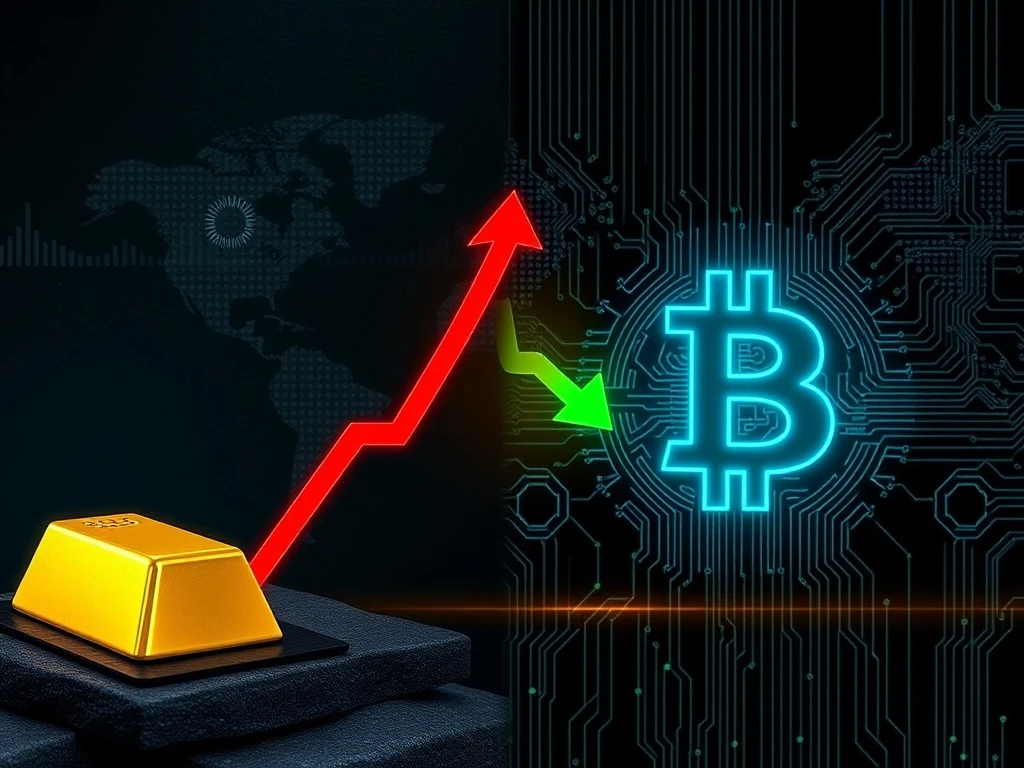
Global financial markets witnessed a dramatic divergence on January 20, 2026, as gold futures surged to an unprecedented $4,739 per ounce while Bitcoin retreated to approximately $90,929. This striking movement highlights how traditional and digital safe-haven assets respond differently to escalating geopolitical tensions and trade war fears. Investors globally are reassessing risk exposure amid renewed trade conflict announcements from the United States.
Gold’s Historic Rally and Safe-Haven Status
Gold’s remarkable ascent represents one of the strongest annual performances in financial history. The precious metal has surged more than 81% over the past twelve months, consistently attracting capital during periods of economic uncertainty. This sustained upward trajectory demonstrates gold’s enduring role as a primary store of value during turbulent times.
Silver has mirrored this movement, recently reaching $94.68 per ounce and achieving five separate record highs already in 2026. The synchronized rally across precious metals confirms a broad-based flight to traditional safety assets. Market analysts note that this momentum reflects deep-seated concerns about currency stability and long-term inflation pressures.
Geopolitical Triggers and Market Reactions
The immediate catalyst for recent market volatility emerged from Washington on January 19, 2026. President Donald Trump announced a 10% tariff on all goods imported from eight European nations, including Germany, France, and the United Kingdom. This policy is scheduled to take effect February 1, with potential escalation to 25% by June if diplomatic negotiations fail.
European leaders responded with emergency meetings and retaliatory measures, intensifying fears of a prolonged trade confrontation. These developments immediately reverberated through global markets, creating uncertainty that typically benefits defensive assets like gold while pressuring risk-sensitive investments.
Global Financial Market Impact
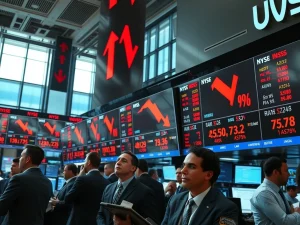
Equity markets worldwide reflected immediate concern about trade tensions. U.S. stock futures indicated substantial opening declines, with Dow Jones futures pointing to a 378-point drop. S&P 500 futures declined 0.9%, while Nasdaq 100 futures fell approximately 1.1%. Asian and European markets showed similar defensive positioning throughout the trading session.
Bond markets experienced significant volatility, particularly in Japan. The 40-year Japanese government bond yield climbed more than 5 basis points to 4%, reaching its highest level since issuance. Shorter-term bonds faced even steeper declines, with the 10-year yield rising over 6 basis points to 2.3%—levels not seen since 1999.
Cryptocurrency Market Volatility Analysis
Bitcoin’s decline to around $90,000 contradicts its occasional characterization as “digital gold.” This movement suggests that during acute geopolitical crises, investors still differentiate between established centuries-old stores of value and newer digital alternatives. The broader cryptocurrency market experienced similar pressures, with Ethereum falling more than 3% within 24 hours.
Additional major cryptocurrencies showed correlated declines:
- XRP dropped over 2% during the same period
- Solana declined more than 2% amid the sell-off
- Total cryptocurrency market capitalization decreased by approximately 3.5%
This widespread digital asset weakness indicates that cryptocurrency markets remain sensitive to traditional risk-off sentiment, despite their decentralized nature. The correlation between crypto volatility and geopolitical events has strengthened throughout 2025 and early 2026.
Historical Context and Market Psychology
The current market divergence between gold and Bitcoin reflects evolving investor psychology during crisis periods. Historically, gold has demonstrated consistent inverse correlation with equity markets during geopolitical turmoil. Bitcoin’s relationship with traditional risk assets has been less predictable, sometimes moving independently and other times correlating strongly.
Market analysts identify several factors influencing this dynamic:
| Factor | Impact on Gold | Impact on Bitcoin |
|---|---|---|
| Institutional Adoption | Established for centuries | Growing but incomplete |
| Regulatory Environment | Highly regulated globally | Evolving and uncertain |
| Market Liquidity | Extremely deep and global | Improving but fragmented |
| Perceived Store of Value | Universally recognized | Still establishing credibility |
Expert Perspectives on Asset Rotation
Prominent Bitcoin investor and commentator Lark Davis offered an alternative viewpoint, suggesting that gold’s momentum might eventually benefit digital assets. Davis observed that gold approaching the $5,000 level—a key Fibonacci extension point—could trigger investment rotation from precious metals into Bitcoin if the rally accelerates further.
This perspective highlights the interconnected nature of modern financial markets, where capital flows between asset classes can create unexpected correlations. Some analysts speculate that once gold stabilizes at new highs, adventurous capital might seek the higher potential returns available in cryptocurrency markets.
Long-Term Implications for Investors
The current market environment presents both challenges and opportunities for portfolio managers. Diversification strategies that worked during previous crises may require adjustment given Bitcoin’s evolving role. Financial advisors increasingly recommend considering both traditional and digital assets within balanced portfolios, though with appropriate risk weighting.
Several key considerations emerge for 2026 investment planning:
- Re-evaluate safe-haven allocations based on updated risk correlations
- Monitor trade policy developments for early warning signals
- Assess cryptocurrency volatility patterns during different crisis types
- Consider geographic diversification beyond asset class diversification
Market technicians note that gold’s breakout above $4,700 establishes new technical territory with limited historical resistance levels. Conversely, Bitcoin’s retreat toward $90,000 tests important psychological support that has held through previous corrections.
Conclusion
The dramatic divergence between gold prices reaching record highs and Bitcoin declining amid geopolitical tensions reveals complex dynamics in modern financial markets. While gold reaffirmed its traditional safe-haven status during the January 2026 trade conflict escalation, Bitcoin demonstrated continued sensitivity to broader risk-off sentiment. This gold price record at $4,739 alongside Bitcoin’s slip to $90K provides valuable insights into how different asset classes respond to geopolitical uncertainty. Investors must carefully analyze these relationships when constructing resilient portfolios for potentially turbulent times ahead.
FAQs
Q1: Why did gold prices reach a record high while Bitcoin declined?
A1: Gold traditionally strengthens during geopolitical uncertainty as investors seek established safe-haven assets. Bitcoin, while sometimes called “digital gold,” still exhibits higher correlation with risk assets during acute crises, leading to simultaneous declines with equities.
Q2: What specific geopolitical event triggered this market movement?
A2: The primary trigger was the January 19, 2026, announcement of 10% U.S. tariffs on goods from eight European countries, scheduled to begin February 1. This raised fears of a broader trade conflict, prompting defensive positioning across global markets.
Q3: How significant is gold’s 81% annual increase?
A3: An 81% annual gain represents one of gold’s strongest yearly performances in modern financial history. This exceptional rally indicates profound investor concern about currency stability, inflation, and geopolitical risks.
Q4: Could Bitcoin eventually behave more like gold during crises?
A4: Some analysts believe Bitcoin’s correlation with gold may increase as institutional adoption grows and regulatory clarity improves. However, as of early 2026, it still demonstrates different behavioral patterns during acute geopolitical events.
Q5: What should investors monitor following these developments?
A5: Key indicators include trade negotiation progress, central bank policy responses, gold’s ability to sustain prices above $4,700, Bitcoin’s support around $90,000, and broader market volatility indices for risk sentiment.