Crypto Security in 2025: Critical Trust Wallet and Ledger Breaches Expose Alarming Vulnerabilities – What Revolutionary Solutions Can Protect Your Assets?
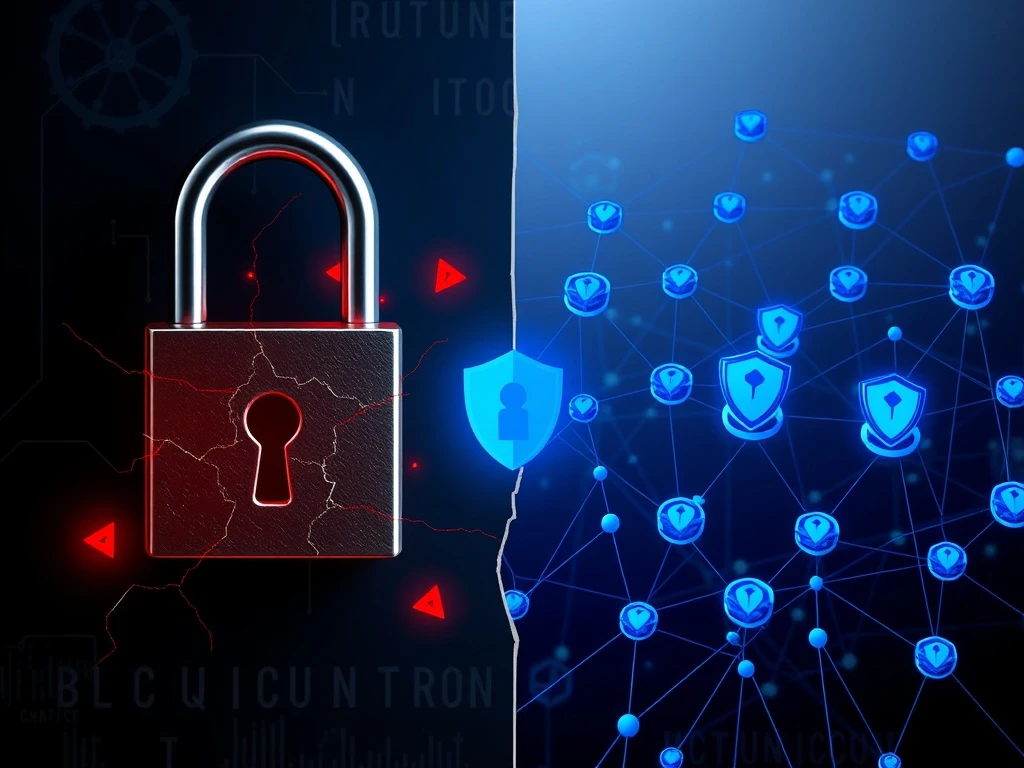
Two devastating cybersecurity incidents in late 2024 and early 2025 have fundamentally shaken user confidence in cryptocurrency storage solutions, exposing critical vulnerabilities in systems millions rely upon for asset protection. The Trust Wallet Chrome extension compromise and Ledger’s recurring data leaks highlight systemic weaknesses demanding immediate attention from both users and industry developers. These events occurred against a backdrop of escalating attacks targeting individual users rather than protocols, marking a significant shift in hacker strategies according to multiple security firms.
Trust Wallet’s $7 Million Chrome Extension Catastrophe
On December 24, 2025, a seemingly routine update to Trust Wallet’s Chrome extension (version 2.68) triggered one of the most sophisticated wallet compromises in recent history. Attackers successfully siphoned approximately $7 million across multiple blockchain networks through a malicious update that bypassed standard security protocols. On-chain investigator ZachXBT first identified the suspicious transactions, revealing a coordinated attack affecting hundreds of users who had imported their recovery phrases into the compromised extension.
Security analyses from firms including PeckShield and SlowMist uncovered the attack’s mechanics. The malicious code silently transmitted sensitive wallet data to a phishing domain (metrics-trustwallet.com), which attackers registered just days before the attack. Subsequently, stolen funds—approximately $3 million in Bitcoin and over $3 million in Ethereum—were systematically routed through centralized exchanges including ChangeNOW, FixedFloat, and KuCoin for laundering purposes.
Systemic Failure in Validation Processes
Trust Wallet CEO Eowyn Chen confirmed the attackers published the malicious extension using a compromised Chrome Web Store API key, completely bypassing internal validation processes. This single point of failure enabled the entire breach. Changpeng Zhao, co-founder of Binance (which owns Trust Wallet), announced full reimbursement for victims while suggesting possible involvement of a “nation-state actor” or insider threat. The incident demonstrates how centralized control points create catastrophic vulnerabilities even in reputable services.
Ledger’s Recurring Data Leak Through Third-Party Partner
In early January 2026, Ledger informed customers about another exposure of personal data following a breach at Global-e, its payment processor and e-commerce partner. Compromised information included names, email addresses, and postal addresses of specific buyers on ledger.com. While Ledger clarified its internal systems, hardware, and software remained unaffected, the breach revived serious concerns about persistent vulnerabilities in third-party relationships.
This incident represents the second major data exposure for Ledger customers since 2020, when a similar breach exposed information from over 270,000 customers. That earlier leak fueled persistent phishing campaigns and “wrench attacks”—targeted physical extortion attempts against cryptocurrency holders. According to an internal Ledger study, social engineering attacks increased by 40% in 2025 compared to 2024, with attackers increasingly exploiting stolen personal data to bypass traditional security measures.
The Core Problem: Vulnerable Centralized Architecture
These two incidents, while different in execution, share a fundamental vulnerability: dependence on single points of failure. At Trust Wallet, a single compromised API key enabled widespread malicious code injection. At Ledger, trust placed in an external vendor exposed customer data to persistent threats. According to the Chainalysis 2025 Crypto Crime Report, over $3.4 billion was stolen from the cryptocurrency ecosystem this year, with a sharp rise in attacks targeting individual users rather than protocols.
Security firm CertiK confirms this alarming trend: hackers are increasingly moving away from smart contract vulnerabilities to exploit human weaknesses and peripheral entry points. This strategic shift demands corresponding evolution in defensive approaches. Facing this reality, the blockchain cybersecurity industry is exploring fundamentally new architectures to overcome limitations of traditional security models.
Current Blockchain Security Solutions and Their Limitations
Several established players offer complementary approaches to securing the Web3 ecosystem, though each presents specific limitations in the evolving threat landscape:
- CertiK: The global leader in smart contract auditing protects over $300 billion in assets for 3,200 clients through its Skynet platform and formal verification tools. However, auditing remains a point-in-time snapshot that doesn’t cover post-deployment threats or infrastructure attacks.
- Hacken and Quantstamp: These firms offer recognized audit services with Proof-of-Reserves verification for exchanges. Bybit EU, for example, uses Hacken audits for transparency. Like CertiK, these audits don’t protect against evolving threats or real-time infrastructure compromises.
| Solution | Type | Coverage | Post-Quantum |
|---|---|---|---|
| CertiK | Point-in-time audit | Smart contracts | No |
| Hacken | Audit + Proof-of-Reserves | Smart contracts, reserves | No |
| Naoris Protocol | Decentralized mesh | Web2 + Web3 + infrastructure | Yes (NIST/NATO) |
Emerging Solution: Decentralized, Post-Quantum Cybersecurity
A radically different approach is emerging with protocols like Naoris Protocol, which transforms every connected device into a security validation node. Founded in 2018 by David Carvalho, the protocol deploys a decentralized “Trust Mesh” where devices continuously audit each other in real time, eliminating single points of failure. Unlike point-in-time audit solutions, Naoris operates through an innovative consensus mechanism called dPoSec (Decentralized Proof of Security), where each node validates the integrity of others continuously.
The platform integrates SWARM AI, a distributed artificial intelligence system that coordinates threat responses and instantly distributes defensive updates. What particularly distinguishes this approach is its post-quantum infrastructure. While current cryptographic algorithms (RSA, ECC) remain vulnerable to future quantum computers, Naoris uses standards aligned with NIST, NATO NCIA, and ETSI (notably Dilithium-5) to ensure long-term resilience.
Real-World Application and Validation
In September 2025, the protocol was cited in a U.S. SEC submission as a reference model for quantum-resistant blockchain infrastructure. The testnet, launched in January 2025, demonstrates impressive metrics: over 100 million post-quantum transactions processed, 3.3 million wallets, 1 million validator nodes, and 600 million threats neutralized. The project has raised $31 million from investors including Tim Draper and benefits from advisors with backgrounds at IBM, NATO, and the White House.
In the Trust Wallet case, a Trust Mesh architecture could have detected the abnormal behavior of the compromised extension—specifically data transmission to an external domain—before funds were drained. Every device in the network could have collectively alerted to the anomaly through continuous validation. For Ledger, dependence on a single vendor (Global-e) illustrates the limitations of centralized models. Decentralized validation of third-party system integrity would have reduced the attack surface and limited data exposure significantly.
Practical Implications for Crypto Asset Protection
The distributed “zero-trust” philosophy doesn’t just secure individual points—it makes entire ecosystems resilient against evolving threats. This approach applies not only to wallets but also to DeFi platforms, DAOs, and critical governance systems. Users must understand that traditional security models relying on centralized validation create inherent vulnerabilities that sophisticated attackers increasingly exploit.
Meanwhile, individuals should implement multi-layered security practices including hardware wallet usage for significant holdings, careful verification of browser extensions and applications, and ongoing education about emerging threats. The industry’s shift toward decentralized security architectures represents a necessary evolution as attack vectors become more sophisticated and targeted.
Conclusion
The Trust Wallet and Ledger security incidents of 2025-2026 expose fundamental vulnerabilities in current cryptocurrency protection models. These breaches highlight the urgent need for architectural shifts toward decentralized, post-quantum security solutions that eliminate single points of failure. As attackers increasingly target individual users rather than protocols, the industry must evolve beyond point-in-time audits toward continuous, distributed validation systems. Crypto security in 2025 demands revolutionary approaches that match the sophistication of emerging threats while protecting user assets against both current and future vulnerabilities.
FAQs
Q1: What exactly happened in the Trust Wallet Chrome extension hack?
The December 2025 attack involved a malicious update (version 2.68) that siphoned approximately $7 million by transmitting wallet data to a phishing domain. Attackers used a compromised Chrome Web Store API key to bypass validation processes.
Q2: How does the Ledger data leak differ from the Trust Wallet incident?
Ledger’s breach involved third-party vendor Global-e exposing customer personal data (names, emails, addresses), while Trust Wallet’s incident involved direct fund theft through compromised software. Both expose centralized architecture vulnerabilities.
Q3: What are post-quantum cryptographic standards mentioned in the article?
These are cryptographic algorithms resistant to quantum computer attacks, including NIST-approved standards like Dilithium-5. They protect against future threats that could break current encryption methods.
Q4: How does decentralized cybersecurity differ from traditional audit-based approaches?
Decentralized systems like Trust Mesh create continuous validation networks where devices audit each other in real-time, eliminating single points of failure that plague centralized architectures and point-in-time audits.
Q5: What immediate steps can users take to enhance their crypto security?
Users should employ hardware wallets for significant holdings, verify all browser extensions and applications meticulously, enable multi-factor authentication, and stay informed about emerging threats through reputable security sources.