USDC Transfer Stuns Market: $215 Million Whale Movement to Coinbase Reveals Critical Stablecoin Dynamics
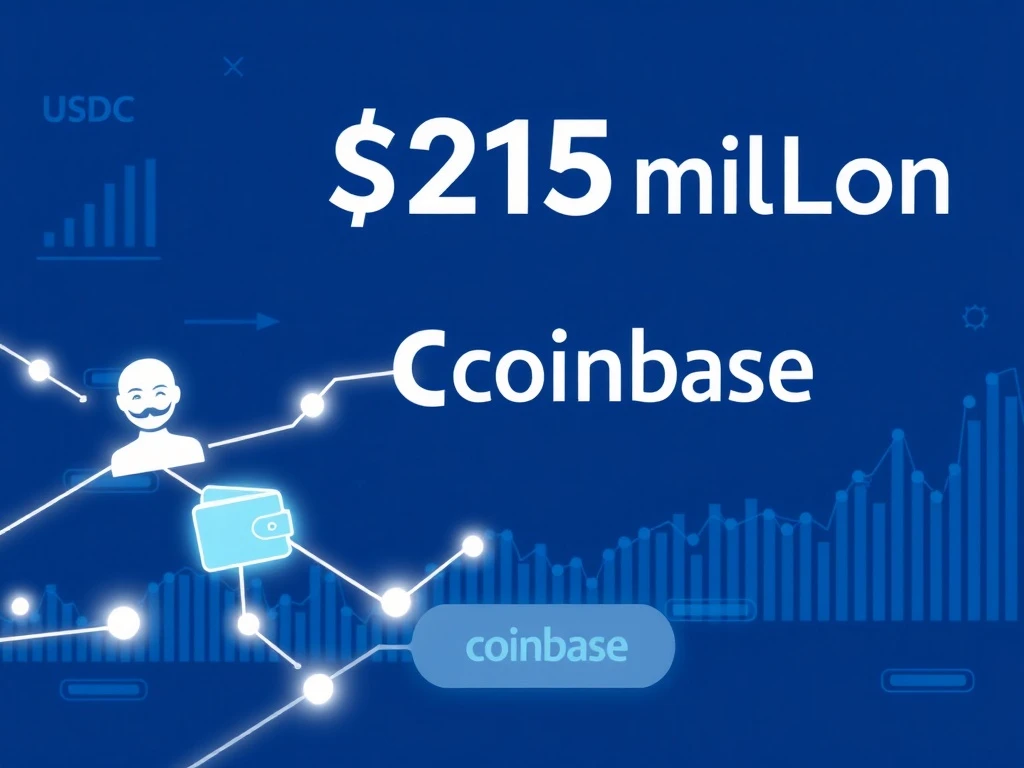
A staggering $215 million USDC transfer from an unknown wallet to Coinbase has captured the cryptocurrency community’s attention today, highlighting significant whale activity in the stablecoin market. This massive transaction, reported by blockchain monitoring service Whale Alert on February 15, 2025, represents one of the largest single stablecoin movements of the year and provides crucial insights into institutional cryptocurrency behavior.
USDC Transfer Analysis: Breaking Down the $215 Million Transaction
Blockchain data reveals that exactly 214,992,494 USDC moved from an unidentified wallet to Coinbase’s primary deposit address. Consequently, market analysts immediately began examining potential implications. The transaction occurred during Asian trading hours, typically a period of heightened cryptocurrency activity. Furthermore, the precise amount suggests careful planning rather than random transfer.
USDC, or USD Coin, maintains a 1:1 peg with the United States dollar. This stablecoin, issued by Circle and Coinbase, has become essential for cryptocurrency trading and decentralized finance. Notably, large transfers often precede significant market movements. However, this particular transaction’s destination—a major exchange—suggests potential preparation for trading activity rather than simple storage.
Understanding Whale Movements in Cryptocurrency Markets
Whale transactions consistently influence cryptocurrency markets substantially. These large holders, whether institutions or wealthy individuals, possess resources to impact prices directly. Typically, exchanges receive whale deposits before major trades. Alternatively, institutions might consolidate assets for operational purposes. Regardless, blockchain transparency allows real-time monitoring of these movements.
The cryptocurrency community tracks whale activity through several key indicators:
- Exchange inflows and outflows: Movements to and from trading platforms
- Wallet concentration: Distribution of assets among addresses
- Transaction timing: Coordination with market events or news
- Historical patterns: Comparison with previous whale behavior
Blockchain analytics firms like Chainalysis and Nansen provide additional context for these transactions. Their data helps determine whether addresses belong to exchanges, institutions, or individual whales. Moreover, they track fund sources and potential connections to known entities.
Expert Perspective: Institutional Cryptocurrency Strategy
Financial institutions increasingly utilize stablecoins for cryptocurrency operations. According to blockchain analysts, large USDC transfers often serve specific purposes. First, institutions might position for anticipated market volatility. Second, they could prepare for token purchases or sales. Third, they may rebalance portfolios across different platforms. Finally, regulatory considerations sometimes drive these movements.
Recent months have shown growing institutional adoption of USDC for several reasons. Its regulatory compliance surpasses many alternatives. Additionally, its integration with traditional finance systems continues expanding. Major financial institutions now use USDC for cross-border settlements and treasury management. This transaction likely reflects broader institutional cryptocurrency engagement.
Stablecoin Market Dynamics and USDC’s Evolving Role
The stablecoin sector has transformed significantly since 2023. USDC currently maintains its position as the second-largest stablecoin by market capitalization. Its fully reserved model and monthly attestations provide transparency advantages. Furthermore, its integration with traditional payment systems distinguishes it from competitors.
| Stablecoin | Market Cap | Issuer | Primary Use Cases |
|---|---|---|---|
| USDT (Tether) | $108.2B | Tether Limited | Trading, DeFi, Remittances |
| USDC | $32.8B | Circle | Institutional, Payments, DeFi |
| DAI | $5.4B | MakerDAO | DeFi, Decentralized Stablecoin |
USDC’s market position remains strong despite competitive pressures. Its regulatory clarity attracts institutional users particularly. Recent developments include expanded European availability and enhanced yield products. These advancements make USDC increasingly attractive for sophisticated investors.
Coinbase’s Growing Institutional Infrastructure
Coinbase has developed comprehensive services for institutional clients extensively. Its Prime platform offers trading, custody, and staking solutions. Additionally, its institutional research provides market insights. This infrastructure makes Coinbase a natural destination for large cryptocurrency movements.
The exchange’s compliance framework supports regulatory requirements globally. Its licensing across multiple jurisdictions facilitates institutional operations. Moreover, its insurance coverage and security protocols address risk concerns. These features explain why institutions choose Coinbase for significant transactions.
Recent quarterly reports show Coinbase’s institutional segment growing steadily. Trading volume from institutional clients now represents a substantial percentage of total volume. This growth reflects broader cryptocurrency adoption among traditional financial entities. The $215 million USDC transfer aligns with this institutional trend.
Transaction Timing and Market Context Analysis
This transaction occurred during a period of relative cryptocurrency market stability. Bitcoin and Ethereum have traded within narrow ranges recently. However, several macroeconomic factors suggest potential volatility ahead. Federal Reserve policy decisions and geopolitical developments could impact markets significantly.
Historically, large stablecoin movements to exchanges often precede increased trading activity. Sometimes they indicate preparation for token accumulation. Other times they signal impending sales. The anonymous nature of this transfer prevents definitive conclusions. Nevertheless, market participants monitor such movements carefully.
Blockchain Transparency and Market Surveillance
Public blockchains provide unprecedented transaction visibility. Services like Whale Alert automatically detect large transfers and share them publicly. This transparency creates a unique market surveillance environment. Anyone can monitor significant movements in real time.
However, blockchain anonymity presents challenges simultaneously. While transactions are visible, participant identities often remain hidden. Advanced analytics sometimes reveal connections between addresses. Regulatory developments may increase identification requirements eventually. Currently, large transfers from unknown wallets remain common.
The cryptocurrency industry continues developing better analytics tools. These tools help distinguish between different types of whale activity. They identify exchange wallets, institutional addresses, and individual holdings. Improved analytics provide deeper market understanding for all participants.
Regulatory Implications of Large Stablecoin Transfers
Regulators increasingly focus on large cryptocurrency transactions. Anti-money laundering (AML) requirements now apply to many cryptocurrency services. The Travel Rule mandates information sharing for significant transfers. These regulations affect how institutions handle large stablecoin movements.
USDC’s regulated status provides compliance advantages. Circle, its issuer, maintains relationships with traditional financial institutions. It follows strict know-your-customer (KYC) and AML procedures. These practices make USDC suitable for regulated entity use. Consequently, large USDC transfers typically involve compliant participants.
Future regulations may require additional transparency for large transactions. Proposed rules could mandate identity disclosure above certain thresholds. The cryptocurrency industry generally supports reasonable regulation. However, it also values privacy and efficiency. Balancing these priorities remains an ongoing challenge.
Conclusion
The $215 million USDC transfer to Coinbase demonstrates stablecoin’s growing importance in cryptocurrency markets. This transaction highlights institutional engagement with digital assets. Moreover, it showcases blockchain’s transparency advantages. Market participants will monitor subsequent developments closely. Ultimately, such movements provide valuable insights into cryptocurrency market dynamics. The USDC transfer represents more than just a large transaction—it reflects evolving financial infrastructure and institutional adoption patterns.
FAQs
Q1: What does a large USDC transfer to Coinbase typically indicate?
Large USDC transfers to exchanges often signal preparation for trading activity. Institutions might position for token purchases, sales, or market-making operations. Alternatively, they could consolidate assets for operational efficiency.
Q2: How do analysts track whale movements in cryptocurrency?
Analysts use blockchain explorers and monitoring services like Whale Alert. They examine transaction sizes, timing, and wallet patterns. Advanced analytics identify address clusters and entity relationships.
Q3: Why is USDC popular for large institutional transfers?
USDC offers regulatory clarity and transparency advantages. Its monthly attestations verify dollar reserves. Integration with traditional finance systems facilitates institutional operations.
Q4: Can the sender of this transaction be identified?
Blockchain addresses don’t automatically reveal real-world identities. However, analytics might connect addresses to known entities. Regulatory compliance often requires identity verification for institutional participants.
Q5: How does this transaction affect USDC’s market position?
Large transactions demonstrate USDC’s utility for significant transfers. They reinforce its role in institutional cryptocurrency operations. However, single transactions rarely impact market capitalization substantially.