Powell Investigation Triggers Crucial Risk Premia for Bitcoin as Political Pressure Mounts
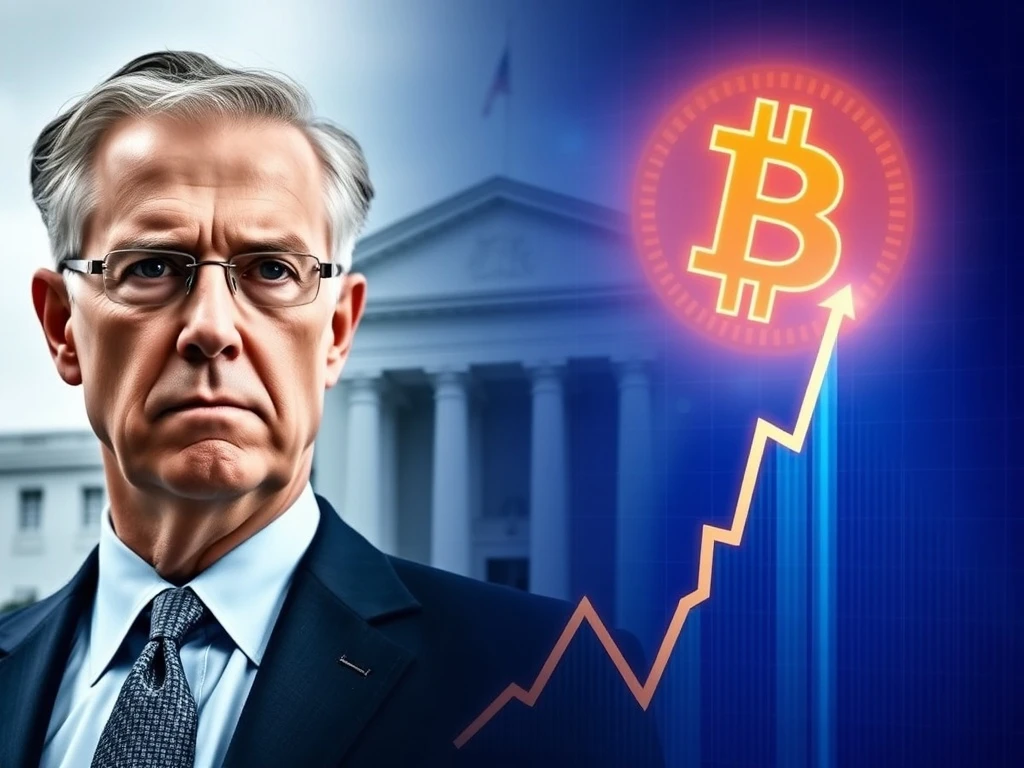
WASHINGTON, D.C., March 2025 – A criminal investigation into Federal Reserve Chair Jerome Powell has sent shockwaves through financial markets, potentially creating a significant risk premia for Bitcoin as investors reassess political interference in monetary policy. This development directly challenges the perceived independence of the world’s most influential central bank. Consequently, analysts now scrutinize Bitcoin’s evolving role as a non-sovereign risk asset during periods of institutional uncertainty.
Powell Investigation and Bitcoin Risk Premia Analysis
Federal prosecutors recently opened a criminal investigation concerning testimony Chair Powell provided to a Senate committee. The testimony addressed renovations to Federal Reserve buildings. Powell responded publicly, stating the probe results from the Fed setting rates based on public service, not presidential preferences. This statement highlights deepening tensions between the central bank and the executive branch. President Donald Trump has repeatedly criticized Powell for refusing interest rate cuts. Such political pressure introduces immediate headwinds for traditional risk assets like U.S. equities.
However, cryptocurrency analysts identify a potential structural shift. “When confidence in dollar credibility and central bank independence is questioned, decentralized assets tend to receive narrative-driven risk premia,” explained analysts from crypto exchange Bitunix. A risk premia refers to the additional return investors demand for holding a risky asset compared to a risk-free one. For Bitcoin, this premia could manifest as higher valuations if investors perceive it as a hedge against political risk within traditional finance.
Bitcoin’s Non-Sovereign Narrative Gains Traction
Bitcoin’s foundational value proposition centers on its decentralization and lack of a central issuing authority. This non-sovereign characteristic becomes critically relevant during investigations into central bank leadership. “This environment is literally what Bitcoin was created for,” commented prominent Bitcoin analyst Will Clemente. He noted concurrent factors: a president challenging the Fed chair, record-high stock markets, and rising geopolitical risk. These elements collectively strengthen Bitcoin’s alternative narrative.
Market data provides immediate context. Bitcoin’s price showed modest gains, rising 0.85% over 24 hours during the news cycle. Meanwhile, privacy-focused cryptocurrencies like Monero (XMR) and Zcash (ZEC) saw more substantial increases of 18% and 6.5% respectively. This divergence suggests investors may be seeking assets perceived as further removed from traditional financial surveillance, alongside Bitcoin’s macro hedge role.
Expert Perspective on Long-Term Implications
The long-term impact depends on whether political influence becomes structural. Bitunix analysts argue sustained interference would fundamentally reinforce Bitcoin’s position. Historically, assets gain risk premia when they provide unique exposure to an uncorrelated risk factor. For Bitcoin, that factor is its separation from sovereign monetary policy. The investigation into Powell, therefore, acts as a real-world stress test for this thesis.
Comparative analysis with other asset classes is instructive. The table below outlines typical investor responses to political-central bank tension:
| Asset Class | Typical Reaction to Political Pressure on Central Bank | Reasoning |
|---|---|---|
| U.S. Equities | Negative/Sell-off | Fears of policy instability, inflation, or reduced Fed credibility harm corporate earnings outlook. |
| U.S. Treasury Bonds | Volatile/Bidirectional | Could see safe-haven flows, but also sell-offs if debt sustainability concerns arise from erratic policy. |
| Gold | Positive/Rally | Traditional non-sovereign store of value benefits from currency debasement fears. |
| Bitcoin | Potential Positive/Risk Premia | Digital, non-sovereign asset gains appeal as a hedge against systemic trust erosion in fiat systems. |
Diverging Signals in Crypto Investor Sentiment
Broader cryptocurrency market sentiment presents a complex picture. Data from Matrixport indicates a gradual improvement. Their Greed & Fear Index’s moving average is forming a base, a condition historically coinciding with Bitcoin’s price bottoming phases. This suggests the broader market may be finding a floor after recent volatility.
Conversely, on-chain data reveals caution among sophisticated traders. Intelligence platform Nansen tracks “smart money” wallets. These entities held a net short position on Bitcoin perpetual futures totaling $127 million, adding $1.6 million in shorts recently. This activity indicates expectations for a short-term price decline. However, the same cohort was net long on Ether (ETH) and XRP, signaling differentiated views across crypto assets.
This divergence underscores a key market dynamic: while the Powell investigation provides a potent long-term narrative for Bitcoin, short-term trading remains influenced by technical factors and liquidity conditions. The narrative-driven risk premia may take time to be fully priced into the market, often manifesting after initial volatility subsides.
Historical Context and Precedent
Political pressure on central banks is not unprecedented, but its public nature and escalation to a criminal investigation are notable. Historically, events that challenge institutional credibility—like the U.S. leaving the gold standard or the European debt crisis—have catalyzed interest in alternative assets. Bitcoin’s entire existence post-dates the 2008 financial crisis, which was a crisis of trust in centralized institutions. Therefore, its design philosophy is inherently responsive to such events.
The current situation tests whether Bitcoin can function as a “digital gold” in a modern context where the threat is not just economic mismanagement but perceived political coercion of monetary policy institutions. Analyst commentary consistently returns to this theme, suggesting the market is actively evaluating Bitcoin through this new lens.
Conclusion
The criminal investigation into Fed Chair Jerome Powell represents more than a political scandal; it is a catalyst for re-evaluating asset risk in the digital age. This event directly introduces the potential for a new risk premia for Bitcoin, rooted in its non-sovereign attributes. While short-term market signals are mixed, the long-term narrative for Bitcoin as a hedge against political interference in monetary policy receives substantial reinforcement. As the situation develops, market participants will closely watch for sustained shifts in capital allocation towards decentralized assets, potentially marking a new chapter in Bitcoin’s integration into the global financial landscape.
FAQs
Q1: What is a “risk premia” in the context of Bitcoin?
A risk premia is the extra potential return investors require to hold a risky asset like Bitcoin instead of a risk-free asset. The Powell investigation could increase Bitcoin’s premia if investors see it as a necessary hedge against new political risks in traditional finance.
Q2: How does the Powell investigation relate to Bitcoin’s “non-sovereign” narrative?
Bitcoin is “non-sovereign” because no government or central bank controls it. The investigation questions the independence of the U.S. Federal Reserve, a key sovereign institution. This contrast makes Bitcoin’s decentralized nature more appealing to some investors.
Q3: Are other cryptocurrencies affected by this news?
Yes, the news impacts the entire crypto market narrative. Privacy coins like Monero and Zcash saw significant gains, possibly due to heightened desire for financial privacy. Ether and XRP also showed unique smart money flows, indicating varied reactions across the asset class.
Q4: What does “smart money” being net short on Bitcoin mean?
It means experienced, often institutional, traders tracked by platforms like Nansen are betting on Bitcoin’s price falling in the very near term using derivatives. This suggests they see short-term technical or liquidity pressures outweighing the long-term narrative shift for now.
Q5: Could this investigation actually hurt Bitcoin if it causes a broad market crash?
Potentially, yes. In a severe “risk-off” event, all speculative assets, including Bitcoin, can sell off initially as investors seek cash. However, the thesis is that after such a sell-off, Bitcoin could recover faster and stronger if the event permanently damages trust in traditional central banking.