Bitcoin Surges Past $90,000 as US Stocks Rally Following Trump’s Surprising Greenland Tariff Reversal

Financial markets breathed a collective sigh of relief on Wednesday, February 12, 2025, as former President Donald Trump’s unexpected decision to cancel impending tariffs linked to Greenland negotiations sparked cautious optimism across both traditional and digital asset markets. The S&P 500 climbed significantly while Bitcoin broke through the psychologically important $90,000 barrier, creating a rare moment of alignment between conventional equities and cryptocurrency valuations.
Trump’s Greenland Tariff Reversal Sparks Market Optimism
Former President Donald Trump announced through his Truth Social platform that he had reached a “framework of a future deal” regarding Greenland and the broader Arctic region with NATO Secretary General Mark Rutte. Consequently, he declared the cancellation of tariffs scheduled for February 1st that would have targeted eight European nations: Denmark, Norway, Sweden, the United Kingdom, France, Germany, the Netherlands, and Finland. Market analysts immediately noted the decision’s potential to reduce transatlantic trade tensions that have periodically rattled global markets since 2018.
Financial institutions had been preparing for potential disruptions to European supply chains and retaliatory measures. The tariff cancellation therefore removed a significant near-term uncertainty. “Trade policy volatility has been a persistent headwind for risk assets,” noted financial strategist Marcus Chen in a Bloomberg interview. “Any reduction in that uncertainty typically gets priced in quickly, especially when it involves major economic partners.” Historical data shows that previous Trump tariff announcements correlated with average S&P 500 declines of 1.8% in the following week, making Wednesday’s positive reaction particularly noteworthy.
Crypto Stocks Show Mixed Reactions Despite Broader Gains
While major cryptocurrencies posted uniform gains, publicly traded cryptocurrency companies displayed divergent performance following Trump’s announcement. Michael Saylor’s MicroStrategy (MSTR), known for its substantial Bitcoin treasury, closed Wednesday’s session up 2.23%. Conversely, Coinbase Global (COIN) shares slipped 0.35% despite the broader crypto market appreciation. This divergence highlights how different crypto equities respond to macroeconomic developments based on their specific business models and exposures.
Crypto mining stocks presented an even more fragmented picture. Riot Platforms (RIOT) declined 4.70% while Marathon Digital Holdings (MARA) gained 1.83%. This inconsistency suggests investors are making nuanced distinctions between miners based on energy costs, geographic concentration, and hedging strategies rather than viewing the sector monolithically. The varied performance underscores that while cryptocurrency prices may move in relative unison, related equities face additional company-specific and regulatory pressures.
Historical Context of Political Events and Crypto Markets
Political announcements have increasingly influenced cryptocurrency markets as digital assets gain mainstream adoption. A 2024 Cambridge Centre for Alternative Finance study found that major US policy announcements now generate immediate cryptocurrency volatility comparable to traditional forex markets. However, the study also noted that crypto markets typically recover from political shocks faster than conventional markets, suggesting different investor psychology and valuation mechanisms.
Previous tariff threats during Trump’s presidency created temporary crypto sell-offs followed by rapid recoveries. For instance, August 2023 tariffs against Chinese goods correlated with a 7% Bitcoin decline that reversed within 48 hours. “Cryptocurrency markets have developed a pattern of overreacting to political headlines initially, then correcting as traders assess actual fundamentals,” explained blockchain analyst Dr. Sarah Jensen. “Wednesday’s movement suggests markets are becoming more sophisticated in distinguishing between political theater and substantive policy changes.”
Major Cryptocurrencies Post Modest but Meaningful Gains
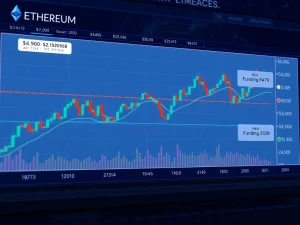
Following Trump’s announcement, leading digital assets recorded measurable appreciation. Bitcoin (BTC) rose 1.64% to reach $90,010, breaking through a key resistance level that had persisted for two weeks. Ethereum (ETH) gained 3.03% while Solana (SOL) increased 2.36%. These movements occurred despite generally negative sentiment in the crypto fear and greed index, which registered an “Extreme Fear” score of 20 on Thursday, down four points from Wednesday.
The simultaneous price increases across major cryptocurrencies suggest a macro-driven rather than asset-specific movement. When geopolitical developments affect crypto markets, top assets by market capitalization typically move directionally together, though with varying magnitudes based on their perceived risk profiles. Bitcoin’s status as “digital gold” often makes it less volatile than smaller-cap assets during political events, yet Wednesday’s movement saw it underperform Ethereum slightly, possibly indicating renewed interest in smart contract platforms.
| Asset | Price Change | New Price | Market Cap Change |
|---|---|---|---|
| Bitcoin (BTC) | +1.64% | $90,010 | +$23.8B |
| Ethereum (ETH) | +3.03% | $4,850 | +$14.2B |
| Solana (SOL) | +2.36% | $185 | +$1.9B |
Market Sentiment Diverges From Price Action
A fascinating dichotomy emerged between cryptocurrency price movements and investor sentiment indicators. While prices increased, the Crypto Fear & Greed Index dropped to 20, indicating “Extreme Fear.” This divergence suggests that traders remain cautious despite positive price action, possibly anticipating volatility or viewing the gains as temporary. Sentiment analysis platform Santiment noted similar patterns in October 2023 when markets blamed Trump’s proposed tariffs for declines that had more complex causes.
“Retail cryptocurrency traders frequently seek simple narratives for complex market movements,” observed Santiment’s lead analyst David Thompson. “When prices drop, they often blame the most prominent political headline, whether or not it’s the actual cause. Conversely, when prices rise on political news, they may remain skeptical, fearing a reversal.” This psychological dynamic creates opportunities for sophisticated investors who can separate signal from noise in political market reactions.
The Greenland Context and Its Economic Implications
Greenland has emerged as a geopolitical focal point due to its strategic position in the Arctic and untapped mineral resources. The island possesses substantial deposits of rare earth elements crucial for electronics, renewable energy technologies, and defense applications. Previous US administrations have expressed interest in Greenland’s resources, but Trump’s public tariff linkage represents a novel approach to Arctic negotiations.
Financial markets particularly welcomed the inclusion of “all NATO nations” in Trump’s proposed framework, suggesting a collaborative rather than confrontational approach to Arctic development. A cooperative Arctic policy could stabilize shipping routes, resource extraction projects, and telecommunications infrastructure—all factors that reduce uncertainty for multinational corporations and, by extension, their stock valuations. The tariff cancellation may therefore reflect broader diplomatic progress beyond the immediate Greenland discussion.
Broader Stock Market Responds Positively to Reduced Uncertainty
The S&P 500 closed Wednesday up 1.16%, representing its strongest single-day performance in three weeks. Technology stocks led the gains, with the Nasdaq Composite rising 1.8%. European markets also responded positively in Thursday trading, with the STOXX Europe 600 up 0.7% in early sessions. This synchronized movement across Atlantic markets indicates investors view the tariff cancellation as genuinely reducing trade conflict risks rather than merely postponing them.
Banking and industrial sectors showed particular strength, suggesting investors anticipate increased cross-border investment and trade flows. “When trade barriers lower, capital-intensive industries with international supply chains typically benefit first,” explained Morgan Stanley equity strategist Rebecca Torres. “Wednesday’s sector rotation patterns align with expectations of smoother US-Europe commerce, though the sustainability depends on the actual Greenland agreement details.”
Key factors driving the stock market response include:
- Reduced near-term uncertainty for multinational corporations
- Potential for improved US-Europe relations beyond the Greenland issue
- Positive implications for technology companies with European operations
- Lower probability of retaliatory tariffs affecting US exporters
- Improved sentiment toward cyclical stocks sensitive to trade policy
Conclusion
The simultaneous rise of US stocks and major cryptocurrencies following Trump’s Greenland tariff reversal demonstrates how interconnected global markets have become in responding to geopolitical developments. Bitcoin’s breakthrough above $90,000 alongside a 1.16% S&P 500 gain highlights that both traditional and digital asset investors value reduced trade policy uncertainty. However, the mixed performance of crypto equities and declining sentiment indicators suggest underlying caution persists. As markets await details of the proposed Arctic framework, investors should monitor whether this optimism translates into sustained gains or proves temporary. The episode reinforces that in today’s interconnected financial ecosystem, political developments can create unexpected correlations between asset classes that once moved independently.
FAQs
Q1: Why did Trump link tariffs to Greenland negotiations?
Trump connected tariffs to Greenland discussions as leverage in negotiations over Arctic resources and strategic positioning. Greenland possesses valuable rare earth minerals and occupies a crucial geographic position for shipping and defense. By threatening tariffs against European nations, particularly Denmark (which governs Greenland’s foreign policy), Trump created economic pressure to advance US interests in the region.
Q2: How significant was Bitcoin breaking $90,000?
Bitcoin surpassing $90,000 represents both a psychological milestone and a technical breakthrough. The $90,000 level had served as resistance for multiple trading sessions, so breaking through suggests renewed buying pressure. Historically, Bitcoin has shown increased volatility after breaking round-number thresholds, though the tariff news provided fundamental justification for the move beyond technical factors.
Q3: Why did crypto stocks react differently than cryptocurrency prices?
Crypto equities face additional factors beyond cryptocurrency prices, including regulatory concerns, company-specific news, and traditional equity market influences. While Bitcoin and Ethereum prices reflect pure cryptocurrency demand, companies like Coinbase and mining firms must also contend with earnings reports, management decisions, and sector rotation within stock markets. This creates frequent divergences between crypto prices and related stocks.
Q4: What is the Crypto Fear & Greed Index and why did it decline?
The Crypto Fear & Greed Index aggregates multiple sentiment indicators including volatility, social media sentiment, market momentum, and surveys to produce a 0-100 score measuring investor psychology. Its decline to “Extreme Fear” (20) despite price increases suggests traders remain cautious about sustainability, anticipate volatility, or respond to other negative factors beyond the tariff news.
Q5: Could this tariff reversal have longer-term market implications?
Yes, if the Greenland framework develops into substantive policy reducing US-Europe trade tensions, it could support sustained market gains. However, if negotiations stall or other trade conflicts emerge, Wednesday’s gains may prove temporary. Longer-term implications depend on whether this represents a genuine diplomatic shift or merely a tactical pause in ongoing trade disputes.