Trump Tariffs Axed: Strategic Greenland Framework Prompts Major Trade Policy Reversal
In a significant reversal of trade policy, President Donald Trump announced the cancellation of tariffs scheduled for February 1, a decision directly linked to a newly established framework for a future agreement concerning Greenland. This pivotal development, first reported by Walter Bloomberg from Washington, D.C., on January 31, 2025, follows high-level discussions with NATO Secretary General Mark Rutte and immediately alters the landscape of transatlantic economic relations.
Trump Tariffs Cancelled Amidst Geopolitical Shift
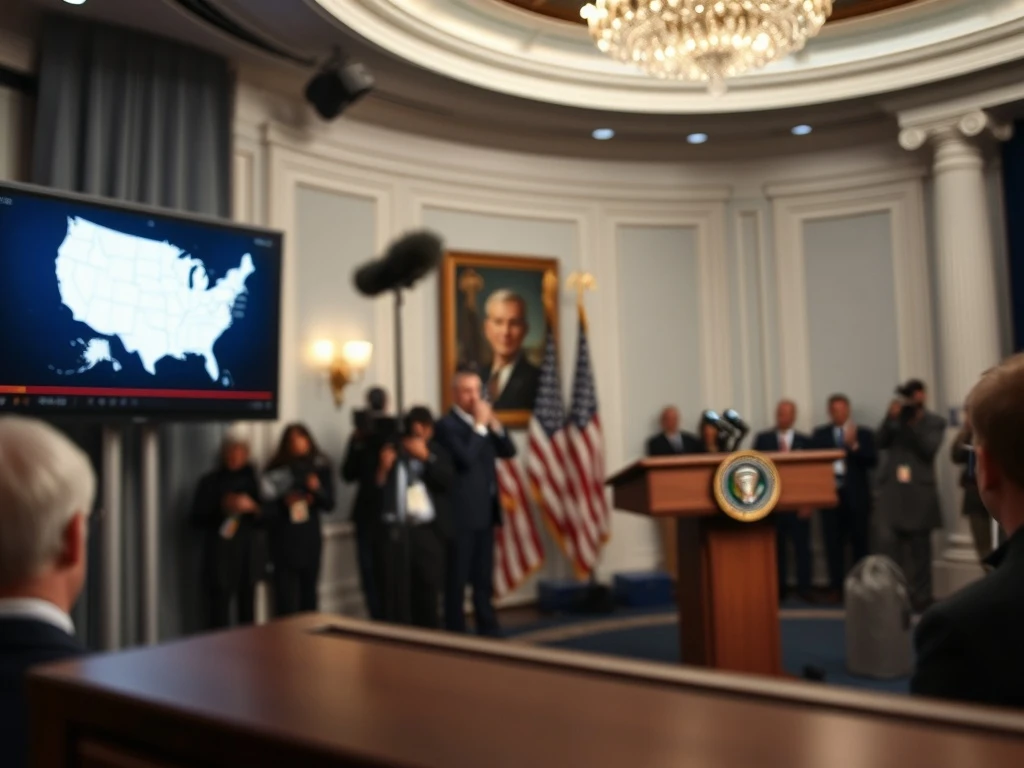
President Trump formally suspended the impending tariff package during a press conference at the White House. Consequently, the administration will not impose the planned duties on a range of European goods. The President explicitly connected this decision to a diplomatic breakthrough. Specifically, he cited a foundational framework for a future U.S.-Greenland agreement achieved during talks with NATO’s Mark Rutte. This move starkly contrasts with previous warnings of escalated trade measures.
Furthermore, the cancelled tariffs were part of a broader strategy addressing long-standing trade imbalances. The scheduled February 1 measures targeted key industrial and agricultural sectors. Now, businesses on both sides of the Atlantic can avoid immediate financial disruption. However, analysts quickly noted the decision trades short-term economic pressure for long-term strategic positioning in the Arctic region.
The Greenland Agreement Framework Explained
The referenced framework establishes preliminary principles for future U.S. engagement with Greenland, an autonomous territory within the Kingdom of Denmark. Crucially, the discussions occurred under the NATO umbrella, highlighting the alliance’s evolving role. The framework reportedly covers several key areas of mutual interest. These areas likely include scientific research, resource development, and security cooperation. Importantly, the agreement does not constitute a final deal but sets a formal pathway for negotiation.
Greenland possesses vast natural resources and growing geopolitical significance due to Arctic shipping routes. Therefore, securing a stable partnership there aligns with multiple U.S. strategic goals. For instance, the framework may facilitate American investment in rare earth mineral projects. These minerals are essential for modern technology and green energy solutions. Simultaneously, it reinforces U.S. commitment to its NATO allies by addressing shared concerns through dialogue rather than unilateral economic actions.
Expert Analysis on the Tariff Decision
Trade policy experts point to the tactical nature of this reversal. Dr. Elena Vance, a senior fellow at the Center for Strategic Trade, stated, “Leveraging tariffs as a negotiating tool is not unprecedented. However, explicitly linking them to a geopolitical framework concerning Greenland is a novel approach. This suggests the administration views Arctic influence as a priority equal to traditional trade deficits.” Her analysis underscores the multifaceted reasoning behind the policy shift.
Historical context is also vital. Previous administrations have shown interest in Greenland, but formal frameworks were elusive. The current development signals a more pragmatic and structured outreach. Moreover, by working through NATO channels, the U.S. mitigates potential friction with Denmark. This diplomatic finesse was necessary to advance discussions beyond mere aspiration. The resulting framework provides a tangible, though initial, achievement.
Immediate Impacts and Global Reactions
The immediate market reaction was positive yet measured. European stock indices saw modest gains, particularly in sectors previously threatened by tariffs. American importers and consumers also received relief from anticipated price increases. Secretary General Rutte welcomed the decision, calling it “a constructive step for alliance solidarity and economic stability.” Other NATO members echoed this sentiment cautiously, emphasizing the need for continued dialogue.
Conversely, some trade analysts warn of potential volatility. The cancellation removes a clear, if negative, market expectation. Now, uncertainty surrounds the future of U.S.-EU trade talks. Will other disputes be resolved through similar strategic bargains? The Greenland framework sets a complex precedent. Additionally, global competitors are closely watching the U.S.’s deepened Arctic engagement. Russia and China have increased their activities in the region in recent years. Therefore, this framework is a clear signal of American intent to counter their influence.
Conclusion
President Trump’s decision to cancel the February 1 tariffs marks a strategic pivot, directly exchanging short-term economic leverage for a long-term geopolitical foothold via the Greenland agreement framework. This action underscores the increasing interconnection of trade policy with broader national security and strategic competition, particularly in the Arctic. The development stabilizes immediate transatlantic trade relations while opening a new, consequential chapter in U.S.-Greenland engagement. The success of this gambit will ultimately depend on the subsequent negotiations to transform the framework into a substantive and lasting agreement.
FAQs
Q1: What tariffs did President Trump cancel?
The President cancelled a package of tariffs on various European goods that were scheduled to take effect on February 1, 2025. The specific goods were not detailed in the initial announcement but were part of ongoing trade discussions.
Q2: What is the “Greenland agreement framework”?
It is a set of preliminary principles agreed upon by the U.S. and NATO allies to guide future formal negotiations on U.S. cooperation with Greenland. It is not a final treaty but establishes the scope and topics for future deals, covering areas like research, resources, and security.
Q3: Why is Greenland strategically important to the United States?
Greenland is geopolitically significant due to its location in the Arctic, which is becoming more accessible due to climate change. It offers new shipping routes, access to valuable rare earth minerals, and is an area of increasing strategic competition with nations like Russia and China.
Q4: How does NATO fit into this trade decision?
NATO Secretary General Mark Rutte was directly involved in the talks that produced the Greenland framework. By working through the NATO alliance, the U.S. framed the issue as a matter of collective transatlantic security and interest, helping to facilitate the agreement and justify the tariff cancellation.
Q5: What happens next after this tariff cancellation?
Attention will shift to two tracks: the formalization of the U.S.-Greenland agreement based on the new framework, and the resumption of broader U.S.-EU trade talks. The cancellation has created a temporary window of goodwill for these complex negotiations to proceed.