BlackRock’s Strategic Pivot: Embracing Cryptocurrency and Tokenization as Dominant 2026 Investment Themes

In a significant move that signals deepening institutional adoption, global asset management giant BlackRock has formally identified cryptocurrencies and the tokenization of real-world assets as pivotal investment themes for 2026. This strategic outlook, detailed in the firm’s latest thematic investment report sourced by CoinDesk, positions digital assets alongside transformative trends like artificial intelligence. Consequently, this endorsement from the world’s largest asset manager, managing over $10 trillion, provides substantial validation for the entire digital asset ecosystem. The report specifically underscores Bitcoin’s enduring market influence and names Ethereum as a primary infrastructure beneficiary of the growing tokenization wave.
BlackRock’s 2026 Thematic Outlook: A Framework for the Future
BlackRock’s thematic investment reports serve as critical roadmaps for institutional capital allocation. The firm’s analysts meticulously identify long-term, structural shifts that promise to reshape economies and generate alpha. Traditionally, these reports have focused on mega-trends like demographic change and technological disruption. Therefore, the explicit inclusion of cryptocurrency and tokenization marks a profound evolution in mainstream finance’s narrative. While artificial intelligence and energy infrastructure command significant attention, the report asserts that digital assets remain a powerful, market-driving force. This analysis moves beyond speculative hype, framing crypto and tokenization as fundamental components of a broader financial market architecture shift.
Decoding the Institutional Mindset
BlackRock’s approach is inherently evidence-based and client-focused. The firm’s decision to elevate these themes follows a clear trajectory of engagement, most notably with the launch of its spot Bitcoin ETF (IBIT) in January 2024, which rapidly accumulated billions in assets. This practical experience in regulated product development informs their 2026 outlook. The report does not exist in a vacuum; it reflects extensive dialogue with clients, regulatory developments, and observable on-chain data. For instance, the growing institutional participation in Bitcoin’s network and the measurable expansion of tokenized treasury products on public blockchains provide concrete backing for their thematic conviction.
The Dual Pillars: Cryptocurrency and Real-World Asset Tokenization
BlackRock’s report delineates two interconnected but distinct themes within the digital asset space. Firstly, it acknowledges cryptocurrencies like Bitcoin as a persistent and prominent investment theme. Secondly, it highlights the tokenization of real-world assets (RWA) as a parallel revolution in market access and efficiency.
Cryptocurrency as a Market Driver: The report notes that cryptocurrencies continue to demonstrate a unique value proposition. Bitcoin, often referenced as “digital gold,” is recognized for its characteristics as a scarce, decentralized asset. Its performance, particularly in periods of macroeconomic uncertainty, has cemented its status in institutional portfolios as a potential hedge and return generator. Meanwhile, the broader crypto ecosystem, including smart contract platforms, facilitates innovation in finance, a concept BlackRock terms “digital disruption.”
The Tokenization of Everything: Tokenization refers to the process of representing ownership of a physical or financial asset—such as real estate, government bonds, or private equity—as a digital token on a blockchain. BlackRock posits that this shift will fundamentally alter how investors access and trade assets. The potential benefits are substantial:
- Enhanced Liquidity: Tokenizing illiquid assets like real estate can fractionalize ownership, enabling smaller investments and creating secondary markets.
- Operational Efficiency: Blockchain-based settlement can reduce intermediaries, lower costs, and accelerate transaction times from days to minutes.
- Increased Transparency: Immutable ledgers provide a clear, auditable record of ownership and transaction history.
- Programmability: Smart contracts can automate complex processes like dividend payments and compliance checks.
Ethereum’s Strategic Role in the Tokenization Ecosystem
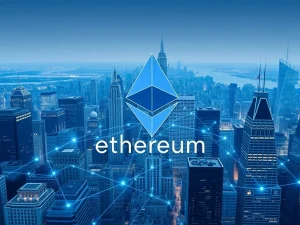
In a particularly noteworthy statement, BlackRock’s report identifies Ethereum as a potential key beneficiary of the tokenization trend. This assessment is grounded in Ethereum’s established position as the leading smart contract platform for decentralized finance (DeFi) and its ongoing technical upgrades. The network’s security, developer community, and existing standards for token creation (like ERC-20 and ERC-721) make it a natural hub for institutional tokenization experiments. BlackRock’s own exploration of tokenized funds on the Ethereum blockchain, such as its BUIDL fund for tokenized U.S. Treasuries, exemplifies this practical alignment.
Context and Implications for the Broader Market
BlackRock’s endorsement carries immense weight and is likely to have several immediate and long-term effects on the financial landscape.
Legitimization and Capital Inflows: For many traditional investors, BlackRock’s analysis serves as a crucial signal of legitimacy. This can accelerate capital allocation from pensions, endowments, and other institutional entities that rely on BlackRock’s research. The firm’s outlook effectively provides a “permission slip” for more conservative capital to engage with the asset class.
Accelerated Product Development: Expect a proliferation of new financial products. Following the success of spot Bitcoin ETFs, the industry may see increased demand for ETFs tracking other cryptocurrencies, tokenized asset funds, or structured products that blend traditional and digital assets. BlackRock itself is poised to be a leader in this space.
Regulatory and Infrastructure Focus: For regulators, BlackRock’s prominent stance adds urgency to creating clear, coherent frameworks for digital assets. Simultaneously, it will drive further investment in the necessary custody, trading, and compliance infrastructure to support institutional-scale participation.
The following table contrasts the traditional and tokenized models for asset investment:
| Aspect | Traditional Model | Tokenized Model |
|---|---|---|
| Access & Minimums | High barriers, large minimum investments | Fractional ownership, lower minimums |
| Settlement Time | T+2 or longer (days) | Near-instant (minutes) |
| Market Hours | Limited to exchange operating hours | Potential for 24/7/365 trading |
| Intermediaries | Multiple (custodians, transfer agents, brokers) | Reduced, with automation via smart contracts |
| Transparency | Opaque, periodic reporting | Real-time, on-chain verification |
Conclusion
BlackRock’s identification of cryptocurrency and tokenization as key 2026 investment themes represents a watershed moment for digital assets. This move transcends mere trend-spotting; it is a strategic acknowledgment of blockchain technology’s capacity to reshape finance. By framing Bitcoin as a enduring market force and Ethereum as a vital engine for tokenization, the report provides a clear, institutional-grade thesis for the future. Ultimately, BlackRock’s outlook will likely catalyze further innovation, attract substantial capital, and solidify the integration of blockchain-based solutions into the global financial system. The era of digital asset experimentation is giving way to an era of strategic implementation, guided by the world’s most influential asset managers.
FAQs
Q1: What exactly does BlackRock mean by “tokenization” in their report?
A1: In this context, tokenization refers to the process of creating a digital representation (a “token”) on a blockchain that signifies ownership of a real-world asset. This can include financial instruments like bonds and equities, as well as physical assets like real estate or commodities. The token can be traded or held, potentially making markets more liquid and accessible.
Q2: Why is BlackRock’s report so important for cryptocurrency?
A2: BlackRock is the world’s largest asset manager, and its research carries immense influence with institutional investors worldwide. Its endorsement lends significant credibility and legitimacy to the asset class, signaling to pensions, insurers, and other large institutions that cryptocurrencies and tokenization are serious, long-term investment themes worthy of strategic consideration.
Q3: How does Ethereum benefit from the tokenization trend, according to BlackRock?
A3: The report suggests Ethereum’s robust smart contract functionality, extensive developer ecosystem, and established token standards position it as a leading platform for building tokenized asset applications. BlackRock’s own tokenized money market fund (BUIDL) operates on the Ethereum network, demonstrating practical use of its infrastructure for institutional-grade products.
Q4: Does this mean BlackRock is only focused on Bitcoin and Ethereum?
A4: While the report specifically names Bitcoin and Ethereum due to their market leadership and specific roles, the broader themes of “cryptocurrencies” and “tokenization” encompass a wider ecosystem. The analysis implies a positive view on the underlying blockchain technology and its applications, which could benefit other credible projects and networks that facilitate these functions.
Q5: What are the potential risks associated with these investment themes?
A5: As with any emerging trend, risks remain. These include regulatory uncertainty across different jurisdictions, technological risks related to blockchain security and scalability, market volatility (especially for cryptocurrencies), and the nascent stage of infrastructure for tokenizing and trading real-world assets at scale. BlackRock’s analysis likely incorporates these risk factors into its thematic framework.