Altcoin Season Index Surges to 28, Sparking Crucial Market Momentum Debate
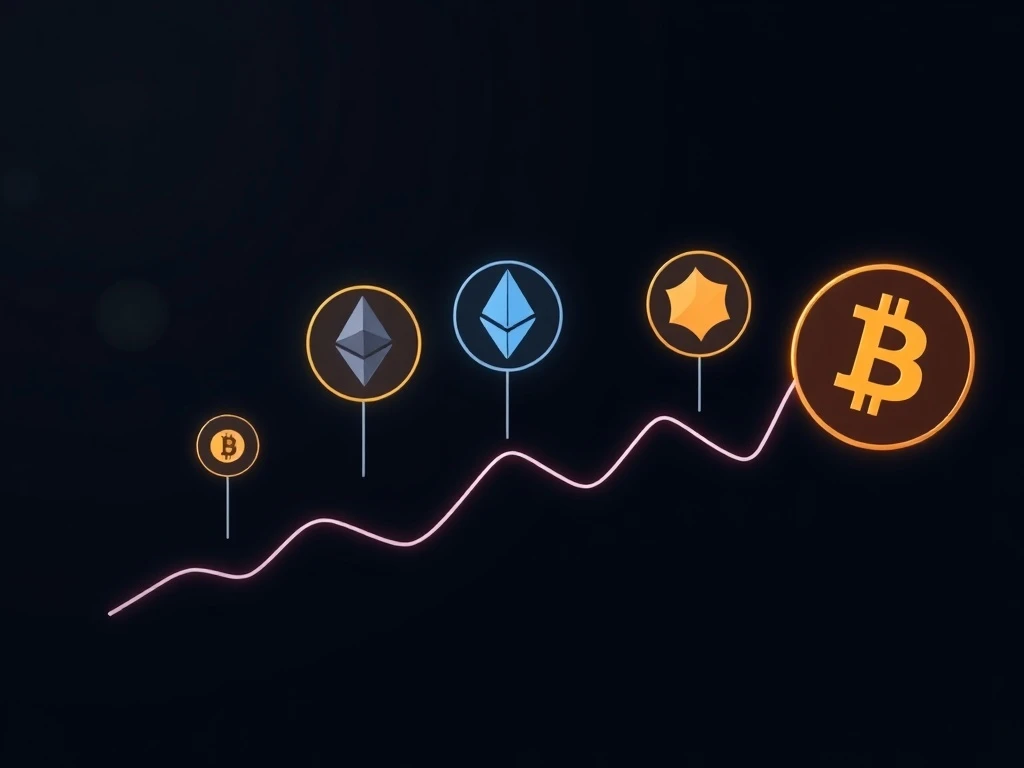
A key market indicator has just flashed a notable signal, potentially foreshadowing a significant shift in cryptocurrency dynamics. The Altcoin Season Index, a closely watched metric from CoinMarketCap, has risen to 28, marking a two-point increase from the previous day. This movement, while still below the threshold for a formal declaration, injects a fresh wave of analysis and scrutiny into the digital asset landscape as traders and analysts assess whether this is the beginning of a broader trend. Historically, sustained climbs in this index have preceded periods where alternative cryptocurrencies, or altcoins, significantly outperform the market leader, Bitcoin.
Decoding the Altcoin Season Index Rise to 28
CoinMarketCap’s Altcoin Season Index serves as a quantitative barometer for market sentiment and capital rotation. The platform calculates this figure by comparing the 90-day price performance of the top 100 cryptocurrencies, deliberately excluding stablecoins and wrapped tokens, against Bitcoin’s performance over the same period. Consequently, the index provides a clear, data-driven snapshot of relative strength. A reading of 28 indicates that 28% of the tracked altcoins have outperformed Bitcoin over the last quarter. The critical threshold for an official “altcoin season” is 75, meaning three-quarters of major altcoins must beat Bitcoin’s returns. Therefore, the current rise to 28 represents a measurable, though early, shift in momentum.
Market analysts immediately contextualized this move. For instance, the increase follows a period of relative stability in Bitcoin’s dominance, which often sees capital flow into larger altcoins when Bitcoin’s price action becomes less volatile. Furthermore, this specific two-point gain occurred amidst renewed developer activity and protocol upgrades across several major blockchain networks, including Ethereum and Solana. These fundamental developments can drive investor interest independently of Bitcoin’s price, contributing to the index’s upward trajectory.
The Mechanics Behind the Metric
Understanding the index’s construction is essential for interpreting its signal. The 90-day window smooths out short-term volatility and speculative pumps, focusing instead on sustained trends. By excluding stablecoins—whose value is pegged to fiat—and wrapped tokens—which represent another asset on a different blockchain—the index hones in on the pure performance of native, volatile cryptocurrencies. This methodology ensures the metric reflects genuine investor preference and risk appetite for growth assets beyond Bitcoin. A move from 26 to 28, while seemingly small, can be statistically significant if it reflects broad-based strength across multiple sectors like decentralized finance (DeFi), non-fungible tokens (NFTs), and layer-1 platforms.
Historical Context and Market Cycle Implications
Examining past data reveals patterns that give the current index reading of 28 its weight. Previous crypto market cycles have often shown a sequence: a powerful Bitcoin rally is typically followed by capital flowing into altcoins as investors seek higher returns. The Altcoin Season Index acts as a gauge for this capital rotation. For example, in the lead-up to the pronounced altcoin season of 2021, the index spent weeks climbing from similar levels into the 40s and 50s before decisively breaking past 75. This historical precedent suggests that early movements, like the recent rise to 28, warrant close monitoring for confirmation of a strengthening trend.
Several concurrent factors provide real-world context for this shift. Firstly, regulatory clarity in major jurisdictions has gradually improved for certain altcoin projects, reducing a key overhang. Secondly, institutional investment products focusing on altcoins, such as ETFs for Ethereum, have gained traction, legitimizing the asset class. Finally, on-chain data shows an increase in active addresses and transaction volumes for several top altcoins, indicating growing network usage—a fundamental driver of long-term value. These elements combine to create a foundation upon which altcoin momentum can build.
| Index Reading | Typical Market Interpretation | Historical Precedent |
|---|---|---|
| Below 25 | Bitcoin dominance is strong; altcoin rally unlikely. | Prolonged periods in late 2022 and 2023. |
| 25 – 50 | Early momentum phase; watch for sustained increase. | Observed in Q4 2020 and Q3 2023. |
| 50 – 75 | Strong altcoin momentum; season is likely approaching. | Early 2021 and mid-2021 periods. |
| Above 75 | Official “Altcoin Season” declared. | Peak phases in 2017 and 2021. |
Expert Analysis on the Current Crypto Landscape
Financial analysts specializing in digital assets emphasize a cautious yet observant approach. “An index reading of 28 is not a buy signal in isolation,” notes a report from a major crypto research firm, “but it is a vital piece of diagnostic data. It tells us that money is beginning to explore opportunities beyond Bitcoin, which is a necessary first step for any broad-based altcoin rally.” Experts point to the need for corroborating evidence, such as increasing trading volumes across altcoin pairs and positive funding rates in perpetual swap markets. The consensus view is that the rise to 28 opens a conversation, but sustained movement above 50 over the coming weeks would be required to signal a high-probability shift in the market regime.
Simultaneously, the performance divergence within the altcoin universe itself is critical. The current increase could be driven by a handful of major assets like Ethereum or BNB, rather than a widespread “season.” True altcoin seasons are characterized by a “rising tide lifts all boats” phenomenon, where even smaller-cap projects see significant inflows. Analysts are therefore scrutinizing breadth indicators—how many different altcoins are participating in the uptick—to assess the health of the move. This nuanced analysis separates simple market noise from a genuine change in trend.
Impact on Investor Strategy and Portfolio Allocation
For portfolio managers and individual investors, the rising Altcoin Season Index triggers a review of allocation models. A common strategy involves dynamically adjusting the weight of altcoins relative to Bitcoin based on such momentum indicators. The move to 28 might prompt a slight rebalancing or increased research into fundamentally strong altcoin projects that have yet to see major price appreciation. However, risk management remains paramount. Seasoned investors often use these early signals not to chase performance, but to prepare a watchlist and define clear entry and exit criteria, understanding that false starts are common in volatile crypto markets.
Conclusion
The Altcoin Season Index’s rise to 28 represents a meaningful data point in the evolving cryptocurrency narrative. It signals a nascent but measurable shift in capital flows and relative performance against Bitcoin. While far from confirming an official altcoin season, this movement provides crucial context for understanding market phase transitions. Investors and observers should interpret this development as a call for heightened due diligence, monitoring for sustained index growth, broadening participation across altcoins, and supportive on-chain fundamentals. The index remains a vital tool for navigating the complex rhythms of the crypto market, and its latest climb to 28 marks a chapter worth watching closely as the 2025 market landscape continues to unfold.
FAQs
Q1: What does an Altcoin Season Index of 28 actually mean?
An index reading of 28 means that 28% of the top 100 cryptocurrencies (excluding stablecoins and wrapped tokens) have outperformed Bitcoin over the past 90 days. It indicates early but not yet dominant momentum for altcoins.
Q2: At what level is an “altcoin season” officially declared?
An official altcoin season is declared when the Altcoin Season Index sustains a reading above 75. This signifies that at least 75% of the top altcoins have outperformed Bitcoin over the preceding 90-day period.
Q3: Is the index’s rise to 28 a guaranteed signal to buy altcoins?
No, it is not a guaranteed buy signal. The rise to 28 is an early momentum indicator that requires confirmation from other factors like trading volume, market breadth, and fundamental developments. It suggests increased attention on altcoins but does not guarantee immediate profits.
Q4: How often is the Altcoin Season Index updated?
CoinMarketCap updates the Altcoin Season Index daily, providing a near real-time gauge of the changing performance relationship between Bitcoin and major alternative cryptocurrencies.
Q5: Can the index fall back down after reaching 28?
Absolutely. The cryptocurrency market is highly volatile. The index can easily retreat if Bitcoin experiences a strong rally or if altcoins face a collective sell-off. The trend’s sustainability is more important than any single day’s reading.