RedStone’s Strategic Acquisition Unlocks Crucial RWA Data for the Booming $60B Tokenization Market
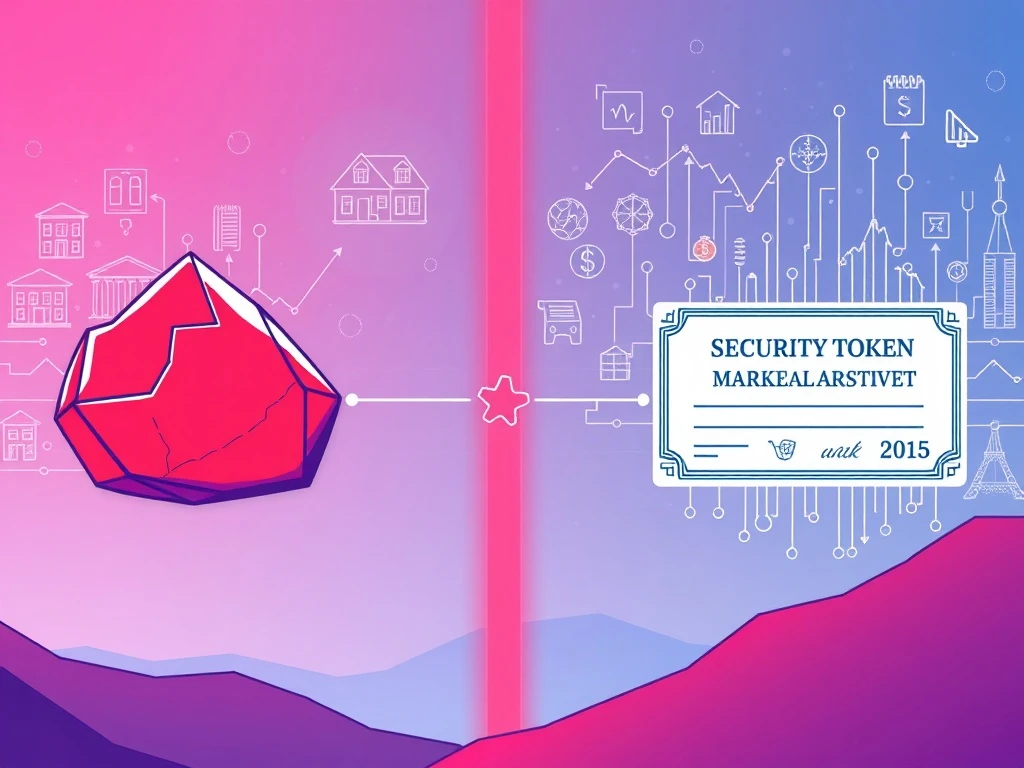
In a significant consolidation move within the blockchain infrastructure sector, modular oracle provider RedStone has strategically acquired Security Token Market (STM) and its flagship TokenizeThis conference. This acquisition, announced on March 25, 2025, fundamentally enhances RedStone’s data capabilities by integrating a vast, seven-year historical dataset covering over 800 tokenized real-world assets (RWAs). Consequently, the deal positions RedStone as a pivotal data gateway for the rapidly expanding institutional tokenization landscape, which now exceeds $60 billion in total value.
RedStone Acquisition Expands Oracle Data to Real-World Assets
The core transaction delivers immediate strategic value. RedStone, a provider of price and reference data feeds for decentralized applications, now controls STM’s extensive dataset. This dataset meticulously tracks tokenized products across multiple asset classes, including equities, real estate, debt instruments, and fund structures. Furthermore, RedStone assumes ownership of the TokenizeThis conference brand, a key networking hub for banks, asset managers, and blockchain infrastructure firms. As part of the transition, STM founder Herwig Konings will join RedStone as an adviser and head of TokenizeThis, while STM COO Jason Barraza will focus on institutional business development.
RedStone’s existing oracle network secures over $6 billion in onchain value. Its data feeds support critical functions like pricing, collateral valuation, and risk management for major protocols including Securitize, Ethena, and Compound. The integration of STM’s RWA data directly addresses a major pain point identified by Marcin Kazmierczak, RedStone’s co-founder. “Institutions have struggled finding trustworthy, comprehensive datasets on tokenized RWAs,” Kazmierczak stated. “STM’s 7-year tracking of 800+ products gives us that unified view.”
The Surging Institutional Demand for Asset Tokenization
This acquisition occurs against the backdrop of explosive growth in the tokenization of real-world assets. Tokenization involves creating digital representations of traditional assets—like bonds, real estate, or commodities—on a blockchain. This process enables fractional ownership, enhances liquidity, and allows for 24/7 settlement. The market activity now spans both public, permissionless blockchains and private, permissioned institutional networks, creating a complex but fertile environment for data providers.
Current market distribution highlights this dual-track evolution:
- Public Blockchains: Ethereum remains the dominant public chain for RWA issuance, hosting approximately $13 billion in tokenized value, or about 60% of the public blockchain total according to RWA.xyz.
- Permissioned Networks: The majority of institutional activity, however, occurs on private, regulated networks. The Canton Network has emerged as a leading venue, with participants like the Depository Trust & Clearing Corporation (DTCC) planning to bring U.S. Treasury securities onchain.
This bifurcation necessitates robust, cross-network data oracles. Oracles act as bridges, supplying reliable off-chain information to on-chain smart contracts. For complex RWAs, accurate and timely data on underlying asset performance, legal status, and market price is non-negotiable for institutional adoption.
Data as the Foundation for Institutional Trust
The true value of the STM dataset lies in its longevity and comprehensiveness. In a nascent market, historical performance data is scarce. A seven-year record covering hundreds of products provides an unparalleled foundation for analytics, risk modeling, and benchmarking. This historical advantage allows RedStone to offer more than just spot prices; it can provide context, trends, and verifiable histories. This depth is critical for asset managers, banks, and insurers requiring audit trails and compliance-grade information before deploying significant capital into tokenized products.
Canton Network and the Future of Regulated Tokenization
While public blockchain activity is substantial, the long-term institutional narrative is increasingly centered on permissioned networks like Canton. Designed for interoperability between financial institutions, Canton enables assets and applications to work across independently governed networks while maintaining privacy and regulatory compliance. Landmark developments underscore its trajectory:
- In January 2025, Temple Digital Group launched a private institutional trading platform on Canton, featuring a central limit order book.
- The DTCC, which processed $3.7 quadrillion in securities transactions in 2024, is actively developing its onchain Treasury initiative on the network.
The native token of the Canton Network, CC, has reflected this institutional momentum. Data from CoinGecko shows the token gained over 20% in the 30 days preceding this announcement, signaling strong market confidence in the network’s institutional adoption path.
Conclusion
The RedStone acquisition of Security Token Market and TokenizeThis represents a strategic data consolidation at a pivotal moment for financial markets. By merging a leading oracle network with the most comprehensive historical dataset on tokenized real-world assets, RedStone is building essential infrastructure for the next phase of institutional blockchain adoption. This move directly addresses the critical need for trustworthy, unified data across both public and private blockchain environments. As tokenization evolves from a niche concept to a mainstream financial practice, the entities that provide the foundational data layer will undoubtedly play a decisive role in shaping the market’s efficiency, transparency, and ultimate scale.
FAQs
Q1: What did RedStone acquire in this deal?
RedStone acquired Security Token Market (STM), including its multi-year dataset on over 800 tokenized real-world assets, and the TokenizeThis conference brand. This adds deep historical RWA data to RedStone’s modular oracle network.
Q2: Why is data on tokenized real-world assets (RWAs) so important?
Accurate, historical data is foundational for institutional adoption. It enables proper pricing, risk assessment, collateral valuation, and regulatory compliance for tokenized assets like real estate or bonds, which lack long-term onchain performance histories.
Q3: What is the difference between public and permissioned blockchain tokenization?
Public blockchains (e.g., Ethereum) are open and permissionless. Permissioned networks (e.g., Canton Network) are private, require approval to join, and are designed for regulated institutions to tokenize assets while meeting strict compliance and privacy standards.
Q4: What role does the Canton Network play in tokenization?
The Canton Network is a “network of networks” enabling interoperability between financial institutions. It is becoming a key venue for major players like the DTCC to tokenize regulated assets, facilitating 24/7 trading and settlement within a compliant framework.
Q5: How does this acquisition benefit the broader tokenization ecosystem?
By creating a unified, trustworthy source of RWA data, the acquisition reduces a major barrier to entry for traditional finance institutions. It provides the reliable information infrastructure needed to build more sophisticated and secure onchain financial products at scale.