Solayer Ecosystem Fund Unleashes $35 Million to Fuel On-Chain Innovation
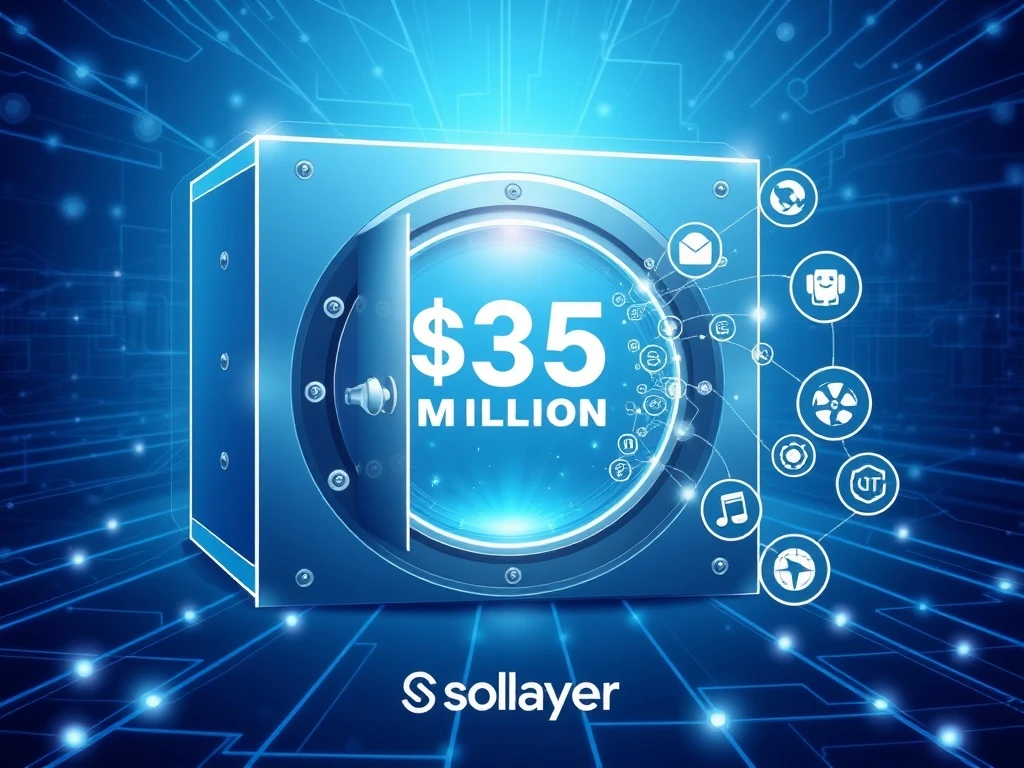
In a strategic move poised to reshape the blockchain development landscape, the Layer 1 protocol Solayer has officially launched a substantial $35 million ecosystem fund. This initiative, first reported by industry outlet Unfolded, directly targets the acceleration and support of innovative on-chain applications built on its network. Consequently, this fund represents a significant commitment to fostering the next generation of decentralized technology. The announcement, made in early 2025, arrives at a critical juncture for blockchain scalability and utility.
Solayer Ecosystem Fund Aims for Strategic Growth
The newly unveiled Solayer ecosystem fund is a dedicated capital pool designed explicitly for developer grants, investments, and technical support. Its primary objective is to attract and nurture projects that leverage Solayer’s underlying architecture. Therefore, the fund will provide crucial resources for teams building decentralized finance (DeFi) platforms, non-fungible token (NFT) marketplaces, gaming ecosystems, and enterprise solutions. Moreover, this initiative follows a proven model previously employed by other successful Layer 1 networks to bootstrap their communities.
Industry analysts often view such funds as vital catalysts for network effects. By financially backing promising applications, the protocol increases its overall utility and user adoption. For instance, similar funds launched by competitors like Solana and Avalanche in prior years demonstrably accelerated their respective ecosystems. The Solayer fund’s $35 million war chest is competitively sized to make a tangible impact. It will likely be disbursed through a structured application process managed by the Solayer Foundation or designated venture partners.
Understanding the Layer 1 Protocol Landscape
To fully appreciate this announcement’s significance, one must understand the competitive Layer 1 sector. A Layer 1 protocol is the foundational blockchain network, such as Ethereum or Bitcoin, that processes and finalizes transactions on its own chain. Solayer operates within this space, competing to offer superior scalability, security, and cost-efficiency. The “blockchain trilemma”—balancing these three attributes—remains a core challenge for all Layer 1s.
Solayer differentiates itself through its unique consensus mechanism and architectural approach. While technical details are complex, the protocol emphasizes high throughput and low transaction fees. This focus makes it particularly attractive for developers building applications requiring frequent user interactions. The launch of this ecosystem fund is a direct response to the need for more diverse and high-quality applications to validate and stress-test the network’s capabilities.
Expert Analysis on Fund Deployment and Impact
Blockchain strategists emphasize that the success of such a fund depends on its deployment strategy. “A mere announcement is not enough,” notes Dr. Anya Sharma, a research fellow at the Digital Asset Governance Institute. “The key metrics will be the quality of the selection committee, the transparency of the grant process, and the post-funding support provided to teams. Strategic capital must be paired with strategic mentorship.”
Historical data from other ecosystems suggests funds often target specific verticals. A potential allocation breakdown for the Solayer fund could include:
- Infrastructure & Core Tools (40%): Wallets, oracles, indexers, and developer SDKs.
- DeFi & Payments (30%): Decentralized exchanges, lending protocols, and stablecoins.
- Gaming & NFTs (20%): Game studios, NFT platforms, and metaverse projects.
- Community & Education (10%): Hackathons, educational content, and ambassador programs.
This targeted approach ensures the fund addresses both immediate technical needs and long-term ecosystem growth.
The Broader Context of On-Chain Application Development
The push for more on-chain applications is central to the evolution of Web3. On-chain applications, or “dApps,” run on a blockchain network rather than centralized servers. This design offers inherent benefits like censorship resistance, transparency, and user-owned data. However, development hurdles include navigating new programming paradigms, managing gas fees, and achieving mainstream-usability standards.
The Solayer ecosystem fund directly tackles these hurdles by lowering the financial barrier to entry for developers. Furthermore, it signals to the broader market that the Solayer network is ready for serious development activity. This can create a positive feedback loop: funding attracts developers, who build applications, which attract users, which in turn attracts more developers. The $35 million injection is essentially a bet on kickstarting this virtuous cycle.
Timeline and Expected Outcomes for 2025
The fund’s launch initiates a multi-phase timeline. The immediate next steps will involve publishing detailed grant guidelines and opening the application portal. Typically, the first funded projects could be announced within one quarter. By the end of 2025, the ecosystem should see its first wave of funded applications moving from testnet to mainnet deployment.
Measurable outcomes will include an increase in the number of active developers on the Solayer network, a rise in total value locked (TVL) within its DeFi apps, and growth in daily active addresses. These metrics are closely watched by both the project’s community and external investors. Success here would validate Solayer’s technical proposition and strengthen its position in the crowded Layer 1 market.
Conclusion
The launch of Solayer’s $35 million ecosystem fund is a decisive and calculated move to secure its future in the blockchain industry. By strategically deploying capital to support on-chain application development, Solayer is investing directly in its own network’s utility and longevity. This fund addresses critical developer needs while positioning the protocol for accelerated growth throughout 2025. Ultimately, the success of this Solayer ecosystem fund will be measured by the innovative applications it brings to life and the users they attract to this evolving Layer 1 platform.
FAQs
Q1: What is the Solayer ecosystem fund?
The Solayer ecosystem fund is a $35 million capital pool established by the Solayer protocol to provide grants, investments, and support to developers building applications on its Layer 1 blockchain network.
Q2: Who can apply for funding from the Solayer fund?
While specific criteria will be published by Solayer, the fund typically targets development teams, startups, and individual builders proposing projects that contribute to the Solayer ecosystem’s growth, such as DeFi protocols, gaming platforms, or core infrastructure tools.
Q3: How does this fund compare to other blockchain ecosystem funds?
The $35 million size is competitive, aligning with mid-to-large-scale ecosystem funds launched by other Layer 1 protocols in their growth phases. Its impact will depend on effective management and strategic allocation, similar to historical funds from networks like Solana and Polygon.
Q4: Why are ecosystem funds important for Layer 1 blockchains?
Ecosystem funds are crucial for attracting developer talent, financing early-stage projects that might not secure venture capital, and strategically filling gaps in a blockchain’s application suite. They help bootstrap network effects and increase the overall utility of the protocol.
Q5: What does this mean for the future of Solayer?
The fund represents a major commitment to growth. If executed well, it should lead to a more robust and diverse range of applications on Solayer, increasing its user base, transaction activity, and standing within the broader cryptocurrency and blockchain industry.