CFTC Crypto Oversight Revolution: Mike Selig’s Bold Future Proof Initiative Aims to Transform Digital Asset Regulation
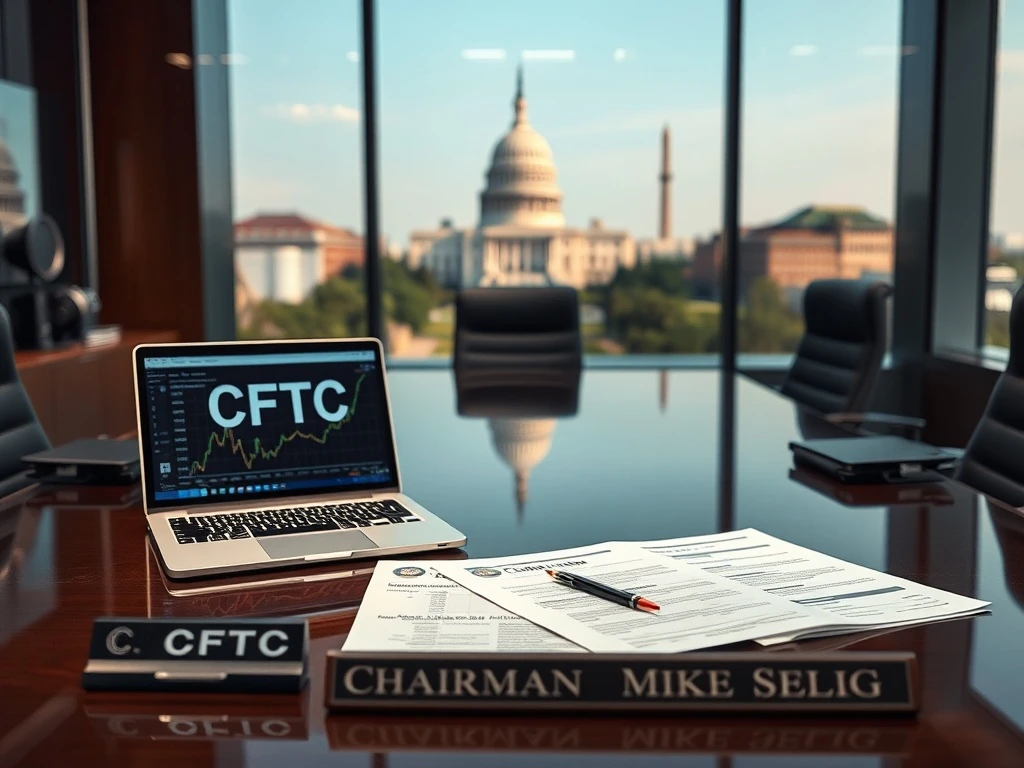
WASHINGTON, D.C. – March 2025: The U.S. Commodity Futures Trading Commission embarks on a transformative journey today as newly appointed Chairman Mike Selig unveils his ambitious Future Proof initiative. This comprehensive reform program specifically targets the agency’s approach to cryptocurrency oversight. Selig’s announcement, made through official channels including The Washington Post and social media platform X, signals a pivotal shift toward institutionalizing supervision of digital assets through formal rulemaking processes. The initiative arrives at a critical juncture for cryptocurrency markets seeking regulatory clarity.
CFTC Crypto Oversight Enters New Era with Future Proof
Chairman Mike Selig’s Future Proof initiative represents a deliberate move to modernize the CFTC’s regulatory framework. The program aims to establish structured oversight for innovative financial sectors, with cryptocurrency markets receiving particular attention. According to official statements, Selig plans to announce specific policy changes in the coming weeks. This development follows years of evolving cryptocurrency regulation discussions within U.S. financial agencies. The CFTC has historically asserted jurisdiction over cryptocurrency derivatives while navigating complex jurisdictional questions with the Securities and Exchange Commission.
Industry observers note the timing coincides with increasing institutional cryptocurrency adoption. Major financial firms now offer cryptocurrency products to clients. Consequently, regulatory certainty becomes essential for market stability. The Future Proof initiative seeks to address this need through transparent rulemaking rather than enforcement actions alone. This approach could provide clearer compliance pathways for cryptocurrency businesses operating in U.S. markets.
Historical Context of Cryptocurrency Regulation
Understanding the Future Proof initiative requires examining the CFTC’s historical cryptocurrency engagement. The agency first declared Bitcoin a commodity in 2015. Since then, it has pursued numerous enforcement actions against fraudulent cryptocurrency schemes. However, comprehensive rulemaking for spot cryptocurrency markets remained incomplete. Previous chairs emphasized case-by-case enforcement over systematic regulation. This created uncertainty for legitimate cryptocurrency enterprises seeking compliance guidance.
The regulatory landscape features overlapping jurisdictions between multiple agencies. The SEC typically handles securities offerings while the CFTC oversees commodities and derivatives. Cryptocurrency tokens often exhibit characteristics of both categories. This jurisdictional complexity has slowed comprehensive regulatory development. Chairman Selig’s initiative appears designed to clarify the CFTC’s specific role within this ecosystem. His public statements emphasize creating sustainable frameworks rather than reactive measures.
Expert Perspectives on Regulatory Evolution
Financial regulation experts highlight several potential impacts from the Future Proof program. First, formal rulemaking could reduce regulatory arbitrage where cryptocurrency businesses exploit jurisdictional gaps. Second, institutional investors may gain confidence from clearer oversight structures. Third, international coordination might improve as U.S. agencies establish definitive positions. Former CFTC officials note that successful implementation requires balancing innovation protection with consumer safeguards.
Academic researchers emphasize the technical challenges in regulating decentralized technologies. Traditional financial oversight relies on identifiable intermediaries. Many cryptocurrency systems operate without centralized control points. The CFTC must therefore develop novel supervisory approaches. Selig’s references to “innovative financial sectors” suggest awareness of these technical complexities. His background in financial technology regulation provides relevant expertise for this task.
Comparative Analysis of International Approaches
The United States joins other nations actively developing cryptocurrency regulatory frameworks. The European Union recently implemented its Markets in Crypto-Assets regulation. Singapore and the United Kingdom have also established comprehensive digital asset rules. These international developments create pressure for coherent U.S. policies. American cryptocurrency businesses compete globally while navigating domestic regulatory uncertainty.
The table below illustrates key regulatory approaches:
| Jurisdiction | Primary Regulatory Body | Key Legislation/Framework | Cryptocurrency Classification |
|---|---|---|---|
| United States | CFTC/SEC | Future Proof Initiative (Proposed) | Commodity/Security (Context Dependent) |
| European Union | European Securities and Markets Authority | Markets in Crypto-Assets (MiCA) | Crypto-Asset (Unified Category) |
| United Kingdom | Financial Conduct Authority | Financial Services and Markets Act 2023 | Regulated Financial Instrument |
| Singapore | Monetary Authority of Singapore | Payment Services Act | Digital Payment Token |
This comparative context shows the CFTC operating within a global regulatory race. Effective cryptocurrency oversight now influences financial innovation leadership. Countries establishing clear rules attract cryptocurrency investment and talent. The Future Proof initiative could position the United States competitively if implemented effectively.
Potential Market Impacts and Industry Responses
Cryptocurrency market participants have expressed cautious optimism about the Future Proof announcement. Industry associations generally welcome regulatory clarity while emphasizing the need for balanced rules. Key considerations include:
- Compliance Costs: Smaller cryptocurrency firms worry about expensive compliance requirements
- Innovation Preservation: Developers seek assurance that regulatory oversight won’t stifle technological experimentation
- Consumer Protection: Advocacy groups emphasize fraud prevention and disclosure standards
- Market Stability: Institutional investors prioritize predictable regulatory environments
Market data shows cryptocurrency valuations often respond to regulatory developments. Clear frameworks typically reduce volatility by decreasing uncertainty. The CFTC’s formal rulemaking process involves public comment periods and economic analysis. These transparent procedures could reassure market participants about regulatory intentions. However, the timeline for implementation remains uncertain as the initiative begins.
Technological Considerations for Modern Oversight
Effective cryptocurrency regulation requires understanding blockchain technology’s unique characteristics. Distributed ledger systems enable transparent transaction recording while preserving participant pseudonymity. Regulatory agencies must develop monitoring capabilities for these systems. The CFTC likely will enhance its technological resources alongside rulemaking efforts. Previous agency reports mention exploring artificial intelligence for market surveillance.
Another challenge involves decentralized finance platforms operating without traditional corporate structures. These systems execute financial transactions through smart contracts rather than centralized intermediaries. Regulating such systems requires novel legal and technical approaches. Chairman Selig’s public statements acknowledge these complexities while emphasizing consumer protection priorities. Successful oversight may involve collaboration with technology experts and academic researchers.
Conclusion
Chairman Mike Selig’s Future Proof initiative marks a significant development in CFTC crypto oversight evolution. The program aims to transition cryptocurrency regulation from reactive enforcement to proactive rulemaking. This approach could provide clearer guidelines for market participants while maintaining consumer protections. The initiative’s success will depend on careful implementation balancing innovation encouragement with risk management. As global cryptocurrency regulation advances, the CFTC’s actions will influence United States competitiveness in digital asset markets. Market observers now await specific policy details that Selig promises in coming announcements.
FAQs
Q1: What is the CFTC Future Proof initiative?
The Future Proof initiative is Chairman Mike Selig’s comprehensive program to reform CFTC cryptocurrency oversight through formal rulemaking processes, aiming to institutionalize supervision of digital assets and innovative financial sectors.
Q2: How does CFTC cryptocurrency regulation differ from SEC oversight?
The CFTC typically regulates cryptocurrency as commodities and derivatives, while the SEC oversees cryptocurrency offerings classified as securities. The jurisdictional boundary depends on specific token characteristics and transaction contexts.
Q3: What prompted this cryptocurrency regulatory initiative?
Increasing institutional cryptocurrency adoption, market growth, international regulatory developments, and historical enforcement-focused approaches created need for clearer, systematic oversight frameworks in the United States.
Q4: How might the Future Proof initiative affect cryptocurrency markets?
Clearer regulatory frameworks could reduce uncertainty, potentially decreasing volatility while increasing institutional participation. Implementation details will determine specific market impacts across different cryptocurrency sectors.
Q5: What timeline should we expect for these regulatory changes?
Chairman Selig announced forthcoming policy details but didn’t specify exact timelines. Formal CFTC rulemaking typically involves proposal publication, public comment periods, and final rule adoption spanning several months at minimum.