Solana Defies $130 Dip: Unshakeable Whale Confidence Signals Imminent Bullish Surge
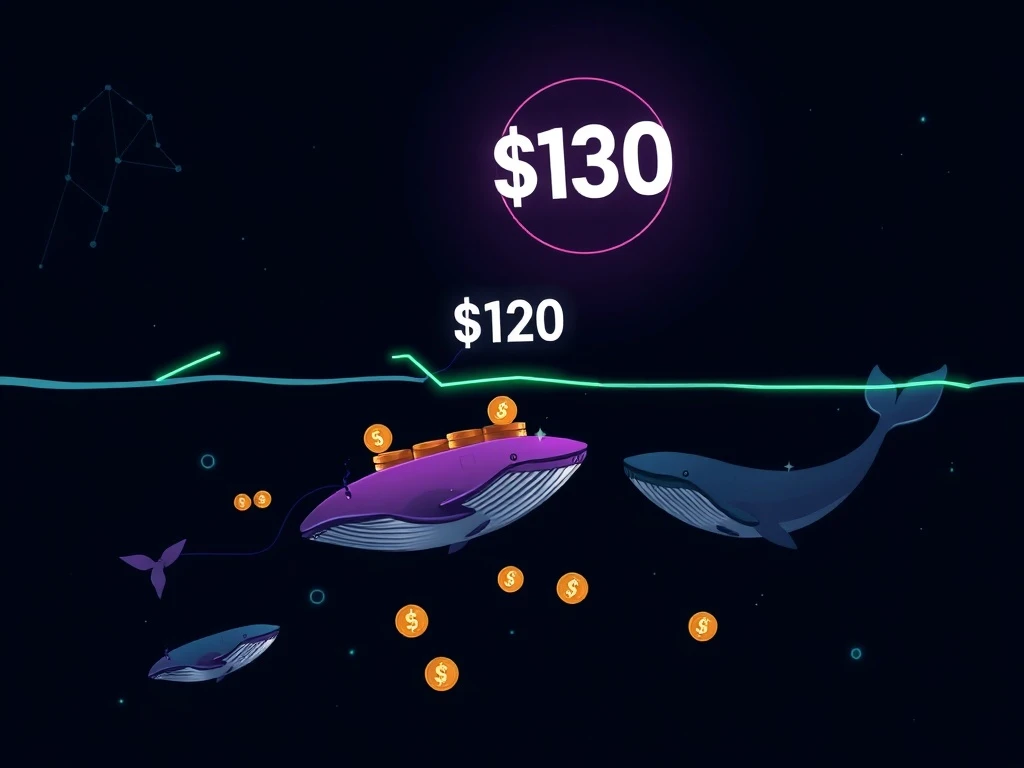
As of January 2025, the cryptocurrency market experiences a broad pullback, yet beneath Solana’s recent slip below the $130 psychological level, a compelling narrative of accumulation and strengthening fundamentals unfolds, challenging superficial price action.
Solana Price Action and Market Context
Solana’s SOL token recently breached the $130 support level, a price point not seen since early January. This movement aligns with a wider corrective phase across digital asset markets. However, experienced analysts immediately scrutinize on-chain metrics, which often provide a more reliable signal than short-term price volatility. Consequently, the focus shifts from the chart’s surface to the foundational data flowing through the Solana blockchain itself.
Decoding Whale Accumulation and Holder Sentiment
Data from leading analytics firm Glassnode reveals a decisive trend. Specifically, addresses holding between 1,000 and 10,000 SOL have aggressively increased their holdings since late November 2025. These entities now control approximately 48 million SOL, representing nearly 9% of the circulating supply. Furthermore, the cohort of mega-whales holding at least 100,000 tokens has expanded its collective stash from 347 million to 362 million SOL in under two months, now commanding a staggering 64% of the total supply.
- Whale Tier (1K-10K SOL): Sharp accumulation trend observed.
- Mega-Whale Tier (100K+ SOL): Holdings increased by 15 million SOL since mid-November.
- Long-Term Holder Net Position: Turned positive in late December, reaching a 15-month high of +3.85 million SOL, indicating net accumulation.
This accumulation phase mirrors the pattern observed in October 2024, which preceded a historic 95% rally in SOL’s price. Therefore, the current behavior of these large, typically informed investors suggests strong underlying confidence.
The Critical Signal of Exchange Supply Depletion
A paramount metric for gauging sell-side pressure is the balance of tokens on centralized exchanges. Glassnode data shows Solana’s exchange reserves have plummeted to 26.06 million SOL, a level last witnessed in January 2023. This represents a drop of 5 million SOL since late November. Essentially, holders are withdrawing tokens to private custody, a move that directly reduces immediate market liquidity and potential sell pressure. This trend strongly reinforces the bullish thesis built on whale accumulation.
Network Health and Ecosystem Revival
Beyond holder behavior, the Solana network demonstrates robust health and growing adoption. According to Nansen, daily active addresses have surged 51% week-over-week, surpassing 5 million to hit a six-month high. Simultaneously, the daily average transaction count has climbed 20% to 78 million, echoing levels from mid-August 2025. These figures underscore the network’s scalability and renewed engagement from users interacting with decentralized applications and staking services.
| Metric | Value | Change | Source |
|---|---|---|---|
| Daily Active Addresses | >5 Million | +51% | Nansen |
| Daily Transactions | 78 Million | +20% | Nansen |
| Stablecoin Supply | $15 Billion | +15% (ATH) | Token Terminal |
The Liquidity Engine: Stablecoin Supply at All-Time High
Perhaps the most significant bullish indicator is the explosion of stablecoin value on Solana. Data from Token Terminal shows the total stablecoin supply has skyrocketed over 15% in a week to reach an all-time high of $15 billion. Analysts, including those from Milk Road, interpret this surge as “new liquidity entering the network.” In practical terms, this massive influx of stable capital fuels trading, settlement, and application activity across the ecosystem. Increased stablecoin supply boosts network utility, fee generation, and overall adoption, creating a positive feedback loop that fundamentally supports SOL’s value.
Comparative Analysis and Historical Precedent
The current confluence of signals—whale accumulation, exchange outflow, and network growth—finds a notable precedent. The last time long-term holder accumulation reached similar heights was October 2024. That period of sustained accumulation directly preceded a near-doubling of SOL’s market value. While past performance never guarantees future results, the structural similarities in on-chain behavior provide a data-backed framework for understanding potential market cycles. The current metrics suggest the market is in a phase of distribution from weak hands to strong, informed holders.
Conclusion
While Solana’s brief dip below $130 captures headlines, the underlying on-chain data paints a decidedly bullish picture. Significant whale accumulation, a rapid decline in exchange supply, and resurgent network activity with record stablecoin liquidity collectively suggest a foundation being laid for potential recovery. The Solana price action, therefore, appears disconnected from its strengthening fundamentals, a condition markets often correct over time. Investors and observers should monitor these on-chain trends as leading indicators for the SOL market’s next major phase.
FAQs
Q1: Why did Solana’s price drop below $130?
The drop coincided with a broad market pullback affecting most major cryptocurrencies. Short-term price movements are often driven by macroeconomic sentiment and trader psychology, which can temporarily override fundamental metrics.
Q2: What does “whale accumulation” actually mean for SOL’s price?
When large holders (whales) accumulate, it typically reduces the circulating supply available for trading. This can create upward price pressure when demand returns, as fewer tokens are readily available for sale on the open market.
Q3: How does declining exchange supply indicate a bullish signal?
Tokens moved off exchanges are generally taken out of immediate selling custody. A falling exchange reserve means reduced potential sell pressure, as holders are choosing to custody assets themselves, often for staking or long-term holding.
Q4: Why is the surge in Solana’s stablecoin supply important?
A rising stablecoin supply represents fresh capital entering the ecosystem. This liquidity is essential for decentralized finance (DeFi) activity, trading pairs, and settling transactions, directly increasing the network’s utility and economic activity, which benefits the native token.
Q5: Can on-chain data like this guarantee a price increase for SOL?
No metric can guarantee future price movement. On-chain data provides a window into investor behavior and network health, offering a more nuanced view than price alone. It suggests underlying strength, but prices remain subject to broader market forces, regulations, and unforeseen events.