Trove’s Shocking Pivot: Investor Backlash Erupts After $11.5M Hyperliquid-to-Solana Shift
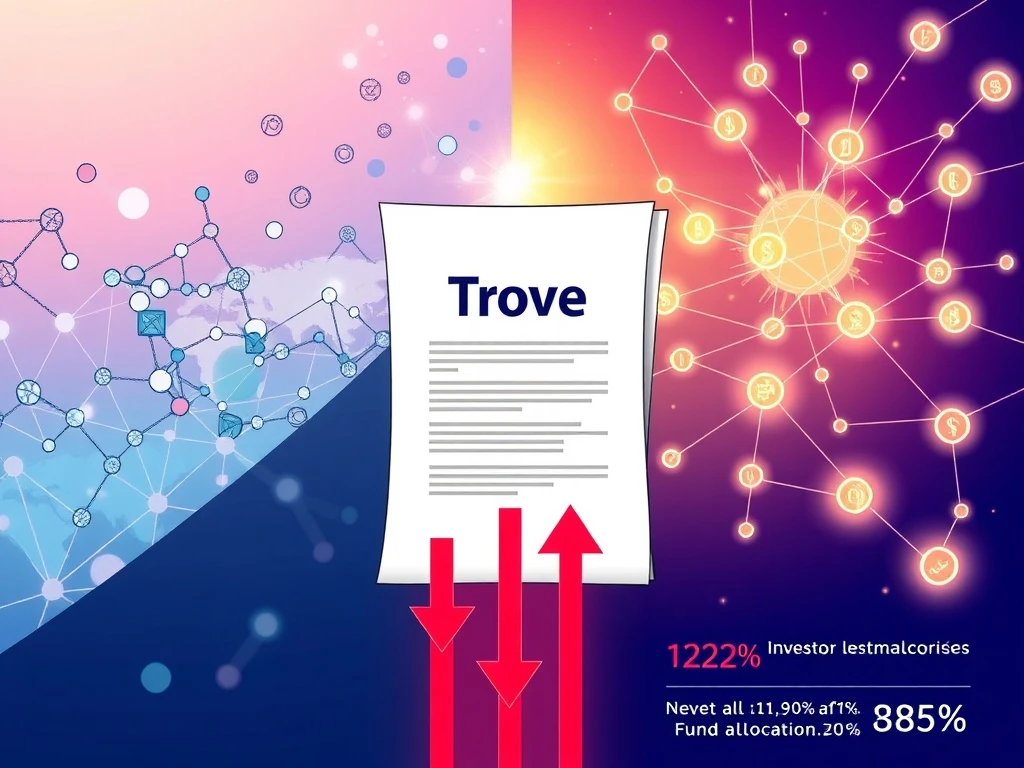
In a dramatic development shaking the decentralized finance sector, the Trove token project faces mounting investor backlash following its controversial decision to pivot development from the Hyperliquid ecosystem to Solana. The team announced this fundamental strategy shift in late April 2025, revealing plans to reallocate $9.4 million from an $11.5 million raise originally earmarked for Hyperliquid integration. Consequently, this move has triggered refund demands, legal scrutiny, and broader questions about governance in blockchain fundraising.
Trove’s Controversial Blockchain Pivot Sparks Outrage
The core controversy centers on Trove’s unilateral decision to change development trajectories. Initially, the project conducted a token sale premised explicitly on building a perpetual decentralized exchange (DEX) on Hyperliquid’s Layer 1 infrastructure. Investors committed funds based on that specific technical premise and ecosystem alignment. However, ahead of its scheduled Token Generation Event (TGE), the Trove team declared Solana as its new foundational chain. They cited superior liquidity, developer activity, and market survival as primary reasons.
This pivot represents more than a technical change. It fundamentally alters the investment thesis. The Hyperliquid ecosystem, while smaller, offers unique architectural benefits like native app-chain functionality. Conversely, Solana provides high throughput and a massive existing user base. Trove’s leadership stated the Solana path was “the only route to survival.” Nevertheless, investors who backed a Hyperliquid-centric vision feel betrayed. The team has processed $2.44 million in refunds so far, with another $100,000 planned.
Examining the Financial and Ethical Implications
The financial reallocation raises significant ethical questions. Of the total $11.5 million raised, $9.4 million is now designated for Solana development. This leaves a substantial portion of investor capital directed toward a use case they did not explicitly fund. Industry analysts note this situation tests the boundaries of “pivot rights” in decentralized autonomous organizations (DAOs) and token-based fundraising.
Legal Precedents and Investor Protections
While blockchain investment often operates in a regulatory gray area, similar cases have established precedents. Projects changing core promises post-fundraise frequently face legal challenges based on contractual misrepresentation. Trove’s public communications, its token sale documentation, and its initial roadmap all emphasized Hyperliquid integration. Legal experts suggest disgruntled investors might have grounds for claims, depending on jurisdictional interpretations of promotional materials as implied contracts.
The table below summarizes the fund allocation shift:
| Fund Allocation | Original Plan (Hyperliquid) | New Plan (Solana) |
|---|---|---|
| Core Development | $8.5M | $9.4M |
| Liquidity Provision | $2.0M | $1.5M |
| Operations/Marketing | $1.0M | $0.6M |
| Total Allocated | $11.5M | $11.5M |
Key impacts of this decision include:
- Investor Trust Erosion: Sudden strategy shifts damage credibility for future fundraising.
- Ecosystem Relationships: The move strains relations with the Hyperliquid community.
- Regulatory Attention: Such incidents often prompt closer regulatory scrutiny of crypto fundraising.
- Market Perception: Other projects may face heightened investor skepticism regarding roadmap adherence.
Broader Context: The Solana vs. App-Chain Debate
Trove’s pivot reflects a larger industry tension. Many developers face a critical choice: build on a large, monolithic chain like Solana for immediate reach or on specialized app-chains like Hyperliquid for tailored functionality. Solana’s network has demonstrated remarkable resilience and growth post-2022, attracting significant developer migration. Its high throughput and low fees are compelling for financial applications like perpetual DEXs.
Conversely, Hyperliquid represents the “app-chain” thesis. It allows projects to control their own blockchain environment, optimizing for specific use cases. This model promises greater customization and potential performance benefits. However, it requires bootstrapping security and liquidity—a challenging task. Trove’s leadership evidently determined that challenge was too great, opting for Solana’s established network effects despite the initial promise to backers.
Expert Analysis on Strategic Pivots
Industry observers note that while pivots are common in tech startups, crypto projects operate under different expectations. Token holders often perceive themselves as stakeholders, not just investors. A change in fundamental technology stack can invalidate their original value assessment. Some experts argue for clearer governance mechanisms from the outset, allowing token holders to vote on major directional changes before they occur. Trove’s case may accelerate the adoption of such frameworks.
Conclusion
The Trove investor backlash highlights evolving tensions in decentralized project governance and ethical fundraising. The project’s pivot from Hyperliquid to Solana, while strategically reasoned by its team, breached the specific expectations set during its $11.5 million capital raise. The resulting refunds and controversy serve as a cautionary tale for both projects and investors. As the sector matures, clearer communication, robust governance, and transparent contingency planning will become essential to maintain trust. The Trove situation ultimately underscores that in decentralized finance, technological agility must be balanced with unwavering commitment to investor promises.
FAQs
Q1: Why did Trove pivot from Hyperliquid to Solana?
Trove’s leadership stated that building on Solana presented “the only path for the project’s survival.” They cited Solana’s larger user base, deeper liquidity pools, and more active developer ecosystem as decisive factors for their perpetual DEX, despite the original plan targeting Hyperliquid.
Q2: How much money has Trove refunded to investors?
As of the latest reports, Trove has refunded $2.44 million to investors dissatisfied with the pivot. The team has also announced plans to issue an additional $100,000 in refunds, bringing the potential total to $2.54 million of the original $11.5 million raise.
Q3: What is a perpetual DEX, and why does the blockchain choice matter?
A perpetual DEX is a decentralized exchange that allows trading of perpetual futures contracts. The underlying blockchain choice critically impacts transaction speed, cost, security, available liquidity, and the composability with other DeFi applications, making it a fundamental technical decision.
Q4: Do investors have legal recourse against Trove for changing the plan?
Potential legal recourse depends on jurisdiction and how the initial fundraising was structured. If promotional materials and terms of sale created a binding expectation of Hyperliquid development, investors might have claims for misrepresentation. However, crypto fundraising often involves complex legal disclaimers.
Q5: How does this affect the broader Hyperliquid and Solana ecosystems?
The pivot is a setback for Hyperliquid, losing a high-profile project and its associated liquidity. For Solana, it represents another project migrating to its chain, reinforcing its network effect. The incident may make future investors in app-chain projects more cautious about potential pivots.