People’s Bank of China Confidently Holds Benchmark Lending Rates Steady Amid Economic Uncertainty
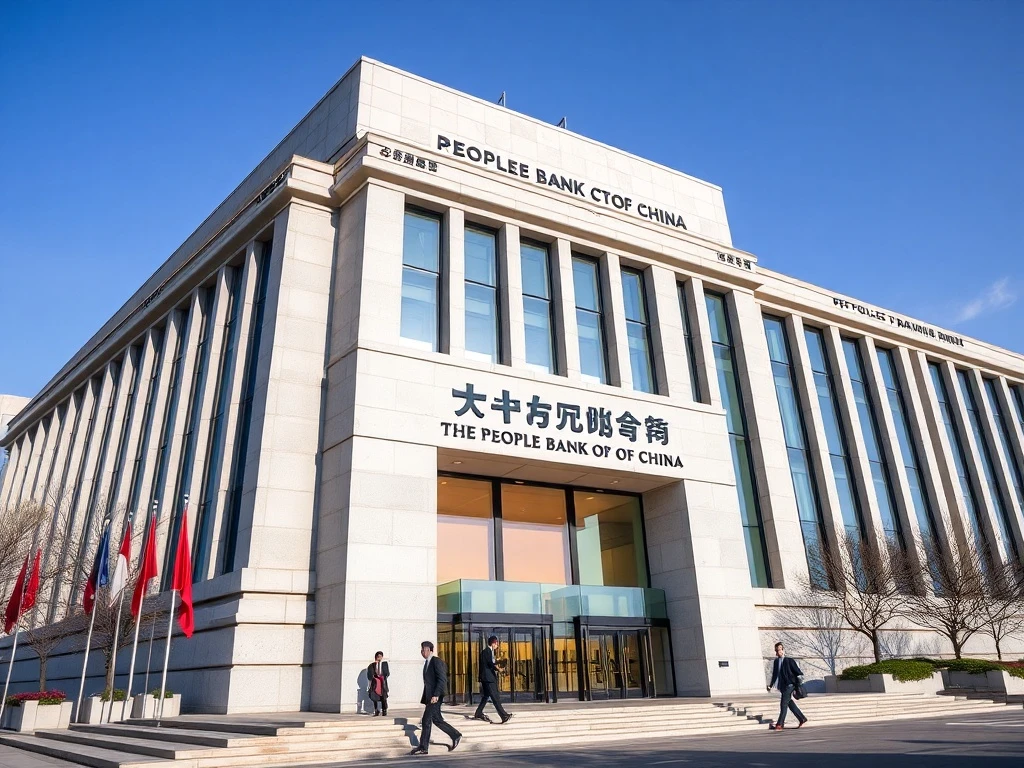
In a decisive move signaling policy continuity, the People’s Bank of China announced on Monday, March 17, 2025, that it would maintain its benchmark lending rates unchanged. The central bank’s decision keeps the one-year loan prime rate at 3% and the five-year LPR at 3.5%, marking the fourth consecutive month of stability in China’s key monetary policy rates. This announcement comes during a period of significant global economic recalibration and domestic market pressures, positioning China’s monetary authorities at a critical juncture for financial stability.
Understanding China’s Benchmark Lending Rate Decision
The People’s Bank of China operates within a complex economic landscape that demands careful monetary calibration. The loan prime rate functions as the country’s de facto benchmark for lending activities, directly influencing borrowing costs for households and businesses nationwide. Financial institutions reference these rates when determining interest charges for various loans, including mortgages and corporate financing. Consequently, the PBOC’s decision to maintain current levels reflects a calculated approach to economic management.
Market analysts had widely anticipated this outcome, given recent economic indicators and policy statements from Chinese financial authorities. The central bank previously maintained a similar stance during its January and February 2025 meetings, creating a pattern of monetary stability. This consistency provides market participants with predictable parameters for financial planning and investment decisions. Furthermore, the steady rates offer breathing room for sectors still recovering from previous economic challenges.
Global Context and Comparative Analysis
China’s monetary policy decisions occur against a backdrop of divergent approaches among major central banks worldwide. While the Federal Reserve continues navigating inflation concerns with potential rate adjustments, and the European Central Bank maintains its own cautious stance, the PBOC’s steady approach represents a distinct path. This divergence highlights China’s unique economic position and policy priorities. The country’s monetary authorities must balance multiple objectives simultaneously.
These objectives include supporting economic growth, maintaining financial stability, and managing currency valuation pressures. International observers closely monitor China’s rate decisions because they influence global capital flows and trade dynamics. A stable Chinese lending environment typically supports broader Asian economic stability. Additionally, consistent rates can encourage foreign investment by reducing uncertainty about financing costs within China’s substantial market.
Economic Indicators Behind the Decision
Several key economic metrics likely influenced the PBOC’s decision to maintain current benchmark lending rates. Recent data shows moderate inflation within target ranges, reducing immediate pressure for contractionary monetary measures. Industrial production figures demonstrate steady growth, while retail sales indicate gradual consumer recovery. The property sector, however, continues presenting challenges that require careful policy navigation. Export performance remains mixed amid global demand fluctuations.
Employment statistics show reasonable stability, though youth unemployment requires ongoing attention. Manufacturing PMI readings have hovered near expansion territory in recent months. Financial stability indicators suggest manageable risk levels within the banking system. These combined factors create an environment where maintaining current rates represents a balanced approach. The central bank appears focused on providing consistent policy signals rather than implementing frequent adjustments.
Implications for Domestic Markets and Borrowers
The steady benchmark lending rates directly affect millions of Chinese consumers and businesses. Homebuyers with variable-rate mortgages will experience continued predictability in their monthly payments. This stability supports housing market sentiment during a delicate recovery phase. Corporate borrowers planning expansion or investment projects can proceed with financing cost certainty. Small and medium enterprises particularly benefit from predictable borrowing expenses when making business decisions.
Financial institutions operate with clearer parameters for their lending operations and risk assessments. The banking sector’s net interest margins face less immediate pressure from rate changes. Bond markets typically respond positively to policy consistency, as it reduces valuation uncertainty. Stock market participants often interpret steady rates as supportive for corporate earnings outlooks. However, some analysts note that certain economic sectors might benefit more from rate adjustments.
Historical Perspective and Policy Evolution
China’s loan prime rate mechanism represents a significant evolution in monetary policy tools. The system replaced the previous benchmark lending rate in 2019, creating a more market-oriented approach to interest rate formation. Under this framework, the PBOC receives submissions from 18 commercial banks each month. These submissions reflect the rates these banks would charge their best customers. The central bank then calculates and publishes the LPR based on these submissions.
This process creates a stronger link between policy rates and actual market conditions. Historical data shows the one-year LPR has decreased from 4.25% in August 2019 to its current 3% level. The five-year LPR, which influences mortgage rates, has followed a similar downward trajectory. These reductions occurred during periods of economic stimulus and pandemic response. The current stability phase follows this period of gradual reduction, suggesting a new equilibrium might be emerging.
Sector-Specific Impacts and Market Reactions
Different economic sectors respond uniquely to steady benchmark lending rates. The property development industry typically welcomes rate stability during market adjustment periods. Construction companies benefit from predictable financing costs for ongoing projects. Manufacturing enterprises can plan capital expenditures with greater certainty about debt servicing requirements. Technology firms, particularly those in growth phases, appreciate consistent borrowing parameters for expansion plans.
Consumer discretionary sectors often see indirect benefits through maintained household purchasing power. The automotive industry watches rate decisions closely, as many vehicle purchases involve financing. Infrastructure projects with long timelines particularly value interest rate predictability. Agricultural enterprises managing seasonal financing needs benefit from stable credit conditions. Export-oriented businesses must consider both domestic rates and currency implications when making decisions.
Expert Analysis and Forward Outlook
Financial economists emphasize that monetary policy represents just one component of China’s broader economic management toolkit. Fiscal measures, regulatory adjustments, and structural reforms work alongside rate decisions to shape economic outcomes. Most analysts project continued rate stability through mid-2025, barring unexpected economic developments. The PBOC maintains multiple policy instruments beyond benchmark rates, including reserve requirement ratios and various lending facilities.
Future decisions will likely respond to inflation trends, employment data, and international monetary developments. The central bank’s communications suggest careful monitoring of several risk factors. These include global commodity price movements, geopolitical tensions affecting trade, and domestic financial stability indicators. Most experts anticipate the PBOC will maintain its balanced approach, adjusting policy only when clear evidence emerges requiring intervention.
Conclusion
The People’s Bank of China’s decision to maintain benchmark lending rates reflects careful economic stewardship during uncertain global conditions. By keeping the one-year loan prime rate at 3% and the five-year LPR at 3.5%, the central bank provides stability for borrowers and financial markets. This approach supports China’s economic rebalancing while managing multiple policy objectives. The PBOC’s steady benchmark lending rates decision demonstrates measured responsiveness to complex domestic and international economic signals, positioning China’s economy for sustainable growth through predictable monetary conditions.
FAQs
Q1: What are China’s benchmark lending rates?
The benchmark lending rates refer to the loan prime rates set by the People’s Bank of China. These include the one-year LPR at 3% and the five-year LPR at 3.5%, serving as reference rates for most lending activities in China’s financial system.
Q2: How often does the PBOC adjust these rates?
The People’s Bank of China reviews and potentially adjusts loan prime rates monthly, though changes don’t occur every month. The central bank has maintained current rates for four consecutive months as of March 2025.
Q3: How do these rates affect ordinary Chinese citizens?
These rates influence mortgage costs, personal loan rates, and savings returns for Chinese households. Steady rates mean predictable borrowing costs for home purchases and other major expenses.
Q4: Why would the PBOC keep rates steady instead of changing them?
The central bank maintains steady rates when current levels appropriately balance economic growth support, inflation control, and financial stability objectives without requiring adjustment.
Q5: How do China’s rates compare to other major economies?
China’s benchmark rates remain generally lower than current U.S. Federal Reserve rates but higher than the European Central Bank’s main rates, reflecting different economic conditions and policy approaches.