Bitcoin Price Dip: Kraken VP Reveals Ominous Bearish Trend Amid Geopolitical Storm
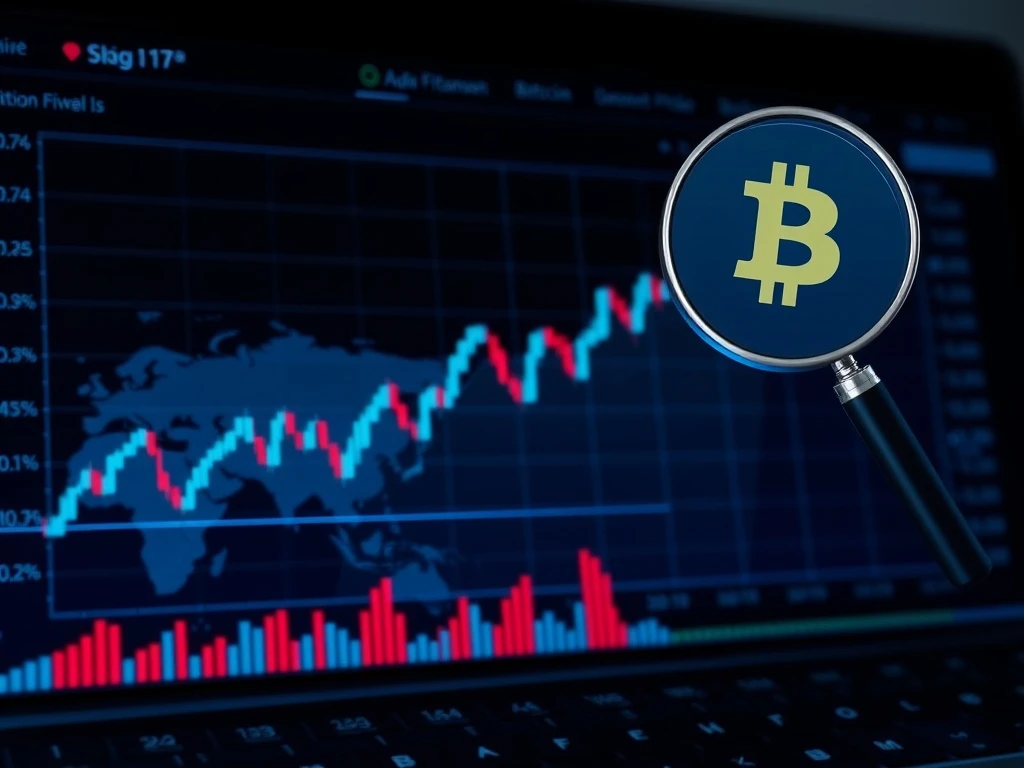
A sharp Bitcoin price dip has reignited concerns about the cryptocurrency market’s direction, with a top Kraken executive pointing to a reaffirmed bearish trend shaped by geopolitical friction and persistent downside risks. According to Matt Howells-Barby, Vice President at the major crypto exchange Kraken, the recent correction underscores a market environment where negative catalysts trigger swift sell-offs while positive news fails to generate sustained momentum. This analysis, provided in early 2025, follows a period of heightened sensitivity for digital assets, directly linking crypto volatility to global macroeconomic and political developments.
Bitcoin Price Dip Confirms Underlying Market Weakness
The recent Bitcoin price dip, while seemingly modest, carries significant weight according to industry experts. Matt Howells-Barby of Kraken identifies the move as a confirmation of a bearish trend established since a major decline on October 10 of the previous year. Consequently, the market has demonstrated what analysts term asymmetric downside risk. This means the market reacts sharply to negative news but shows only tepid responses to positive developments. For instance, regulatory approvals or institutional adoption news often provide limited upside, whereas hints of stricter regulation or global instability prompt immediate sell-offs.
Furthermore, this behavior indicates a market dominated by caution and short-term speculation rather than long-term conviction. The data reveals a clear pattern: sell-offs are deep and rapid, while rallies are shallow and fragile. This environment challenges traditional buy-and-hold strategies and increases the importance of risk management for all market participants, from retail investors to large funds.
Geopolitical Tensions Shatter Key Technical Support
Prior to the latest Bitcoin price dip, the asset was testing a crucial technical support level. Many traders anticipated a potential rebound from this zone. However, emerging geopolitical issues, specifically surrounding international trade policies, abruptly broke this upward momentum. Howells-Barby noted that the market’s sensitivity to these external factors is exceptionally high. The threat of escalated tariffs between the U.S. and the European Union acted as a direct catalyst, overriding positive technical signals.
- Technical Breakdown: Key support levels failed to hold under geopolitical pressure.
- Catalyst Sensitivity: Crypto markets now react faster to political headlines than many traditional assets.
- Liquidity Impact: Sudden sell-offs can strain market liquidity, exacerbating price moves.
This event highlights a maturation, albeit a painful one, of the cryptocurrency market. It is no longer an isolated asset class. Instead, it is deeply interconnected with global capital flows and risk sentiment. When traditional markets flinch at geopolitical news, cryptocurrency markets often experience a more pronounced reaction.
Expert Insight: The Asymmetric Risk Profile Explained
Matt Howells-Barby’s analysis provides a critical framework for understanding current market psychology. The asymmetric downside risk he describes is not merely observational; it is rooted in measurable on-chain and trading data. For example, exchange netflows often show increased Bitcoin deposits (indicating selling intent) following negative news, while positive news triggers smaller, more cautious withdrawals. This creates a persistent selling overhang during uncertain times.
Moreover, the limited 3.5% correction during this latest event offers a nuanced clue. According to Howells-Barby, this restraint suggests a segment of traders is holding positions. These holders likely anticipate a potential de-escalation in trade tensions, reminiscent of patterns observed during past U.S.-China disputes. This creates a market tug-of-war between fearful sellers and hopeful holders, with geopolitical statements acting as the deciding factor.
Historical Context and Comparative Market Analysis
The current bearish trend did not emerge in a vacuum. The reference point of October 10 last year marks a pivotal shift in market structure. Following that decline, Bitcoin and the broader crypto market failed to reclaim previous bullish momentum. Comparing this cycle to others reveals distinct differences.
| Factor | 2021 Bull Market | Current Market (2024-2025) |
|---|---|---|
| Primary Catalyst | Institutional adoption, macro liquidity | Geopolitics, regulatory clarity |
| Reaction to News | Amplified positive moves | Amplified negative moves (Asymmetric Risk) |
| Correlation to TradFi | Low/Decoupling | High, especially with risk-off events |
| Support Level Strength | Strong, with rapid bounces | Fragile, easily broken by external news |
This comparative analysis shows a market in a different phase. The driving forces have shifted from organic, industry-specific growth to reactive, macro-dependent sentiment. This increases volatility and makes price prediction more complex, as it requires analyzing political and economic events alongside blockchain metrics.
The Trump Tariff Wildcard and Future Volatility
A significant variable in the current equation is U.S. trade policy. Howells-Barby specifically pointed to statements from President Donald Trump regarding tariffs as a key volatility driver. The market’s memory of similar tensions with China informs its current positioning. Traders recall that tariff threats can escalate quickly but may also be walked back, leading to sharp relief rallies.
Therefore, the market faces a binary trigger. Statements suggesting escalation could prompt a severe Bitcoin price dip, potentially breaking below the recent 3.5% correction. Conversely, signals of de-escalation could unlock pent-up demand, leading to a short-covering rally. This setup guarantees elevated volatility in the coming months. Investors must monitor political discourse as closely as they chart moving averages.
Conclusion
The recent Bitcoin price dip serves as a stark reminder of the cryptocurrency market’s current vulnerability. As Kraken VP Matt Howells-Barby’s analysis confirms, a bearish trend defined by asymmetric downside risk is firmly in place. Geopolitical tensions, particularly around U.S.-EU trade relations, have become primary price drivers, capable of shattering technical support levels. While the limited depth of the latest correction reveals underlying holding behavior, the market’s path forward hinges on the volatile landscape of international policy. For investors, this environment demands heightened diligence, robust risk management, and an understanding that crypto asset prices are now inextricably linked to the global stage.
FAQs
Q1: What does “asymmetric downside risk” mean in crypto markets?
It describes a market condition where prices fall sharply on negative news but rise only modestly on positive news. This creates a skewed risk/reward profile favoring caution.
Q2: Why are geopolitical issues affecting Bitcoin’s price so much?
Bitcoin is increasingly treated as a risk asset by institutional investors. During times of global uncertainty, capital often flees riskier assets, leading to sell-offs in crypto alongside stocks and commodities.
Q3: How significant was the 3.5% correction mentioned by the Kraken VP?
While a 3.5% move is common for Bitcoin, its significance lies in the context. It broke key technical support amid geopolitical news, confirming the market’s sensitivity and bearish bias, rather than being a routine fluctuation.
Q4: What is a key support level, and why did it fail?
A key support level is a price zone where buying interest has historically been strong enough to halt declines. It failed in this instance because a geopolitical catalyst (tariff threats) triggered selling pressure that overwhelmed the usual buyers at that level.
Q5: Should investors expect more volatility in the cryptocurrency market?
Yes, according to the analysis. As long as geopolitical tensions, particularly around trade, remain unresolved, any official statements suggesting escalation or de-escalation are likely to cause significant price swings in Bitcoin and other cryptocurrencies.