Ember Protocol and Bluefin Launch Revolutionary Vault Leveraging Polymarket’s Prediction Data
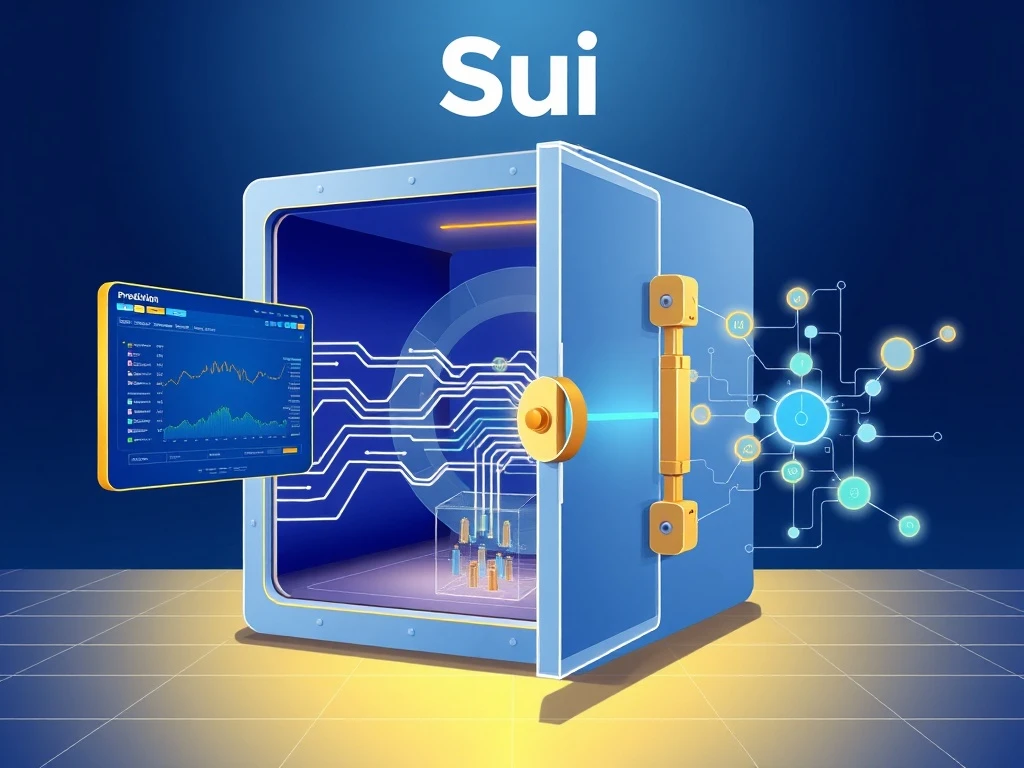
In a groundbreaking development for decentralized finance, Ember Protocol and Bluefin have unveiled a novel vault product that harnesses real-time data from prediction market platform Polymarket. This innovative launch, confirmed by the Sui Foundation on November 15, 2024, represents a significant convergence of prediction markets and automated investment strategies within the rapidly evolving blockchain ecosystem. The new vault fundamentally transforms how market sentiment data can drive sophisticated DeFi mechanisms.
Ember Protocol and Bluefin Launch Prediction Market Vault
The newly launched vault establishes a direct pipeline between Polymarket’s prediction data and automated investment strategies. Consequently, this integration creates what industry analysts describe as a “sentiment-driven” financial instrument. Ember Protocol provides the vault infrastructure, while Bluefin contributes its automated trading expertise. Both platforms operate natively on the Sui blockchain, leveraging its high-throughput capabilities for real-time data processing.
This development follows months of testing and represents a strategic expansion for both companies. Previously, Ember Protocol focused primarily on yield optimization strategies. Meanwhile, Bluefin specialized in decentralized perpetual trading. Their collaboration marks a deliberate move toward more sophisticated, data-informed DeFi products. The vault specifically utilizes Polymarket’s data feeds covering political events, economic indicators, and cultural outcomes.
The Technical Architecture Behind the Innovation
The vault operates through a multi-layered technical architecture designed for reliability and transparency. First, oracles securely pull verified data from Polymarket’s resolution mechanisms. Next, smart contracts on the Sui blockchain process this information through predefined logic gates. Finally, automated strategies execute based on specific data thresholds and market conditions.
Key technical components include:
- Data Verification Layer: Ensures prediction market outcomes are accurately and securely transmitted
- Strategy Execution Engine: Automatically deploys capital based on predefined parameters
- Risk Management Module: Implements circuit breakers and position limits
- Transparency Dashboard: Provides real-time visibility into vault operations and performance metrics
The Sui blockchain’s parallel execution capabilities enable this complex data processing without compromising speed. This technical advantage distinguishes the vault from similar attempts on other blockchain networks. Additionally, Move programming language’s security features provide enhanced protection against common smart contract vulnerabilities.
Expert Analysis: The Convergence of Prediction Markets and DeFi
Industry experts recognize this development as part of a broader trend toward “information markets” influencing financial products. Dr. Elena Rodriguez, a blockchain researcher at Stanford University, explains, “Prediction markets aggregate dispersed information more efficiently than traditional polls or surveys. Their integration with DeFi creates powerful new financial primitives that respond to real-world events.”
Historical context reveals this isn’t the first attempt to bridge these domains. Augur and Gnosis pioneered prediction markets on Ethereum years earlier. However, their integration with automated investment strategies remained limited until recently. The current vault represents a maturation of this concept, leveraging improved blockchain infrastructure and more sophisticated financial engineering.
Comparative analysis shows distinct advantages over previous approaches:
| Feature | Previous Prediction Market Integrations | Ember-Bluefin Vault |
|---|---|---|
| Execution Speed | Minutes to hours | Seconds |
| Data Sources | Single market platforms | Aggregated Polymarket data |
| Strategy Complexity | Basic conditional logic | Multi-factor algorithms |
| Blockchain Infrastructure | Ethereum mainnet | Sui blockchain |
Market Impact and Regulatory Considerations
The launch has generated significant discussion about market efficiency implications. Proponents argue that connecting prediction markets to investment vehicles improves price discovery across multiple asset classes. For instance, political prediction data might inform cryptocurrency trading strategies before traditional markets react. Conversely, critics raise concerns about potential feedback loops and market manipulation vectors.
Regulatory frameworks continue evolving alongside these technological developments. Currently, prediction markets operate in a complex legal landscape that varies significantly by jurisdiction. The vault’s designers have implemented geographic restrictions accordingly. They also built compliance features that can adapt to changing regulatory requirements. This proactive approach reflects lessons learned from previous DeFi regulatory challenges.
Market response indicators show growing institutional interest in such hybrid products. Trading volume patterns suggest sophisticated participants are testing the vault’s capabilities. Meanwhile, academic researchers are studying the broader implications for market efficiency. Early data indicates the vault responds to prediction market signals faster than traditional financial instruments.
The Sui Ecosystem’s Strategic Positioning
This development significantly strengthens Sui’s position within the competitive blockchain landscape. The network has strategically cultivated DeFi and gaming applications since its mainnet launch. Now, it demonstrates capability in more complex financial products. This progression follows a deliberate ecosystem development strategy focused on practical utility rather than speculative activity.
Sui’s technical advantages particularly suit data-intensive applications like this vault. Its parallel transaction processing handles multiple data streams simultaneously. Furthermore, its object-centric model provides natural representations for complex financial instruments. These features attracted Ember Protocol and Bluefin to build their solutions on Sui rather than alternative networks.
The broader Sui ecosystem benefits from this high-profile collaboration. Other developers gain reference implementations for similar integrations. Additionally, the vault attracts sophisticated users who might explore other Sui-based applications. This network effect contributes to sustainable ecosystem growth beyond temporary speculation cycles.
Future Developments and Industry Implications
The vault launch represents just the beginning of this convergence trend. Industry observers anticipate several developments in the coming months. First, more prediction markets will likely integrate with DeFi protocols. Second, increasingly sophisticated algorithms will process this data. Third, regulatory clarity should emerge as these products demonstrate real-world utility.
Specific roadmap items include:
- Multi-source data aggregation: Incorporating additional prediction platforms beyond Polymarket
- Cross-chain compatibility: Enabling strategies that respond to events across multiple blockchain networks
- Institutional-grade features: Adding compliance tools for traditional financial participants
- Research partnerships: Collaborating with academic institutions to study market impacts
The long-term implications extend beyond cryptocurrency markets. Traditional finance increasingly explores blockchain-based information aggregation. Consequently, developments like this vault provide valuable case studies for broader financial innovation. They demonstrate how decentralized technologies can create new market structures rather than merely replicating existing ones.
Conclusion
The Ember Protocol and Bluefin vault utilizing Polymarket data represents a significant innovation in decentralized finance. This product successfully bridges prediction markets with automated investment strategies on the Sui blockchain. Its technical implementation leverages advanced blockchain capabilities while addressing practical considerations like risk management and regulatory compliance. The vault’s launch signals growing maturity in DeFi product development, moving beyond simple yield farming toward sophisticated, data-driven financial instruments. As the ecosystem evolves, such integrations will likely become increasingly common, fundamentally changing how market participants access and utilize information for investment decisions.
FAQs
Q1: What exactly does the new vault do?
The vault automatically executes investment strategies based on real-time data from Polymarket’s prediction markets. It connects market sentiment about real-world events with automated trading algorithms on the Sui blockchain.
Q2: How does this differ from traditional prediction markets?
Traditional prediction markets simply allow users to bet on outcomes. This vault uses that prediction data to drive actual investment decisions in cryptocurrency markets, creating a direct link between information markets and financial markets.
Q3: What risks are associated with this type of product?
Potential risks include oracle failures, smart contract vulnerabilities, prediction market manipulation affecting trading strategies, and regulatory uncertainty in some jurisdictions. The developers have implemented multiple safeguards against these risks.
Q4: Why was Sui blockchain chosen for this implementation?
Sui’s parallel transaction processing handles multiple data streams efficiently, its Move programming language enhances security, and its object-centric model naturally represents complex financial instruments like this vault.
Q5: Can traditional financial institutions use this vault?
Currently, the vault primarily serves cryptocurrency native participants. However, its architecture includes compliance features that could eventually accommodate traditional institutions as regulatory frameworks evolve.
Q6: What types of prediction data does the vault use?
The vault primarily utilizes Polymarket data covering political elections, economic indicators, current events, and cultural outcomes. The developers plan to expand data sources based on user demand and market developments.