EU Anti-Coercion Instrument: Europe’s Bold Defense Against US Tariff Aggression
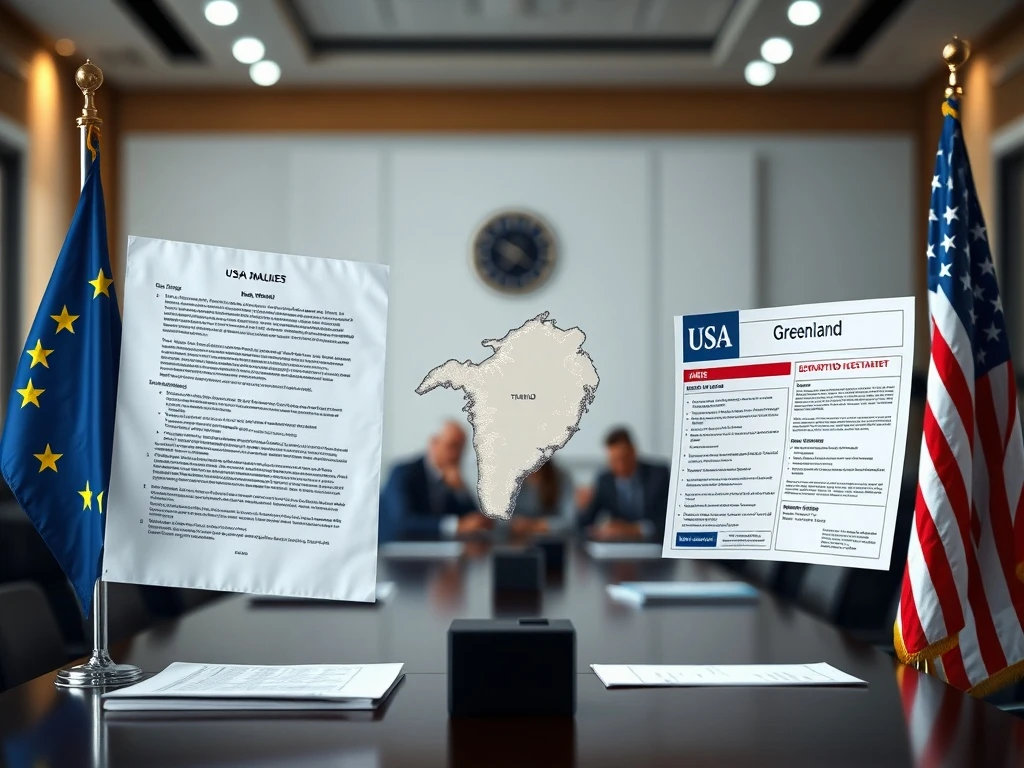
BRUSSELS, January 2025 – The European Union faces unprecedented economic pressure as the United States threatens punitive tariffs targeting eight member states, triggering the first serious test of Europe’s newly operational anti-coercion instrument and revealing deep fractures in the transatlantic alliance over Arctic sovereignty and economic coercion.
The EU Anti-Coercion Instrument: Europe’s Trade Defense Arsenal
European Commission officials activated contingency planning this week following President Donald Trump’s announcement of 10% tariffs on imports from Denmark, Norway, Sweden, France, Germany, the United Kingdom, Netherlands, and Finland. Consequently, these measures specifically respond to European military deployments to Greenland that challenge American Arctic ambitions. The anti-coercion instrument represents Europe’s most significant trade defense mechanism since the establishment of the single market.
This regulation, formally adopted in 2023, empowers the EU to impose countermeasures when third countries apply economic pressure to force policy changes. Significantly, the tool allows for restrictive measures against specific operators, sectors, or products from the coercing country. Moreover, it includes investment screening limitations and export control mechanisms. European Trade Commissioner Valdis Dombrovskis emphasized the instrument’s deterrent nature during a press briefing yesterday.
“The anti-coercion instrument serves as our economic shield,” Dombrovskis stated. “It ensures the EU can respond proportionately to coercive measures while preserving our strategic autonomy.” The Commissioner’s remarks followed emergency consultations between EU trade ministers who debated appropriate response scenarios. Meanwhile, diplomatic channels remain open but show minimal progress according to multiple European sources.
Legal Framework and Implementation Timeline
The European Parliament approved the anti-coercion regulation with broad support across political groups. Furthermore, the legislation establishes a clear procedural framework. Initially, the Commission must verify coercion exists through detailed investigation. Subsequently, it proposes countermeasures for Council approval by qualified majority voting. Finally, implementation occurs within strict proportionality guidelines.
Legal experts note several innovative aspects of the instrument. “Unlike traditional trade defense tools,” explains Dr. Elina Kortela of the College of Europe, “this mechanism addresses explicitly political coercion rather than unfair trade practices. It represents a paradigm shift in how the EU conceptualizes economic sovereignty.” The regulation’s Article 8 specifies that countermeasures may include restrictions on services, intellectual property rights, and public procurement access.
Greenland: The Arctic Flashpoint Testing Transatlantic Relations
Greenland’s strategic position has transformed this autonomous Danish territory into the central battleground for Arctic influence. Specifically, the island controls access to emerging shipping routes and substantial mineral resources. American administrations have consistently sought enhanced military and economic presence there since the Truman administration’s 1946 purchase offer.
Current tensions escalated dramatically last November when European nations deployed symbolic troop contingents to Thule Air Base’s periphery. These deployments followed Denmark’s rejection of expanded US operational rights. Subsequently, President Trump characterized European actions as “hostile to American security interests” during a campaign rally. The administration’s formal tariff announcement followed two weeks later with explicit linkage to Greenland access negotiations.
| Date | Event | Economic Response |
|---|---|---|
| Nov 2024 | EU members deploy troops to Greenland | None |
| Dec 2024 | US demands expanded military access | Threat of sanctions |
| Jan 10, 2025 | Denmark formally rejects US proposal | US announces 10% tariffs |
| Jan 15, 2025 | EU emergency trade council meeting | Anti-coercion instrument activation considered |
| Feb 1, 2025 | Scheduled tariff implementation | EU countermeasures deadline |
Geopolitical analysts highlight Greenland’s changing significance. “Melting ice caps have unlocked previously inaccessible resources,” notes Arctic security specialist Professor Lars Jensen. “Estimates suggest Greenland holds rare earth elements critical for green technology and defense applications. Consequently, control represents both economic and strategic priority for major powers.”
European Response: Unity Tested by Divergent Interests
European capitals display varying approaches to the American pressure campaign. French President Emmanuel Macron advocates immediate activation of the anti-coercion instrument during yesterday’s Élysée statement. “Europe must demonstrate it will not yield to economic blackmail,” Macron declared. “Our sovereignty depends on responding firmly to coercive tactics.”
Conversely, German Chancellor Olaf Scholz emphasizes diplomatic resolution while preparing contingency measures. “We maintain dialogue with our American partners,” Scholz commented following a cabinet meeting. “However, we simultaneously prepare appropriate responses should negotiations fail.” This dual-track approach reflects Germany’s export-dependent economy and traditional transatlantic orientation.
Smaller affected nations express particular concern. Finnish Prime Minister Petteri Orpo highlighted disproportionate impacts during an interview with Helsingin Sanomat. “Finland’s economy cannot absorb 25% tariffs on key exports,” Orpo stated. “Therefore, European solidarity becomes essential for smaller member states facing asymmetric pressure.”
Potential Countermeasure Scenarios
European Commission analysis identifies several response options under consideration:
- Targeted import restrictions on American agricultural products, particularly soybeans and liquefied natural gas
- Public procurement limitations for US technology firms in sensitive infrastructure projects
- Financial services access restrictions for American banks operating within the single market
- Intellectual property right suspensions for specific pharmaceutical and technology patents
- Investment screening enhancements for US acquisitions in strategic European industries
Trade economists warn about escalation risks. “The 2018 US-China trade war reduced bilateral trade by approximately 15%,” recalls Dr. Maria Chen of the Peterson Institute. “Similar EU-US tensions could disrupt integrated supply chains, particularly in automotive and aerospace sectors where transatlantic cooperation remains extensive.”
Economic Impacts and Sector Vulnerabilities
The threatened tariffs specifically target European industrial exports valued at approximately €85 billion annually. Automotive manufacturers face particular exposure, with German car exports to the United States exceeding €20 billion last year. Similarly, French aerospace components and Dutch semiconductor equipment feature prominently on affected product lists.
European Commission impact assessments project significant consequences without countermeasures. Their preliminary analysis suggests:
- Direct export reductions between 8-12% for targeted sectors
- Potential GDP contraction of 0.3-0.5% across affected economies
- Job losses estimated at 85,000-120,000 in manufacturing sectors
- Supply chain disruptions affecting 3,200 European companies with US dependencies
However, American businesses also face substantial vulnerability. European countermeasures could affect €120 billion in US exports to the EU. Agricultural states supporting the administration express particular concern about potential retaliation. Iowa Senator Chuck Grassley acknowledged these risks during a Senate Finance Committee hearing yesterday.
Broader Geopolitical Context: Shifting Alliance Dynamics
The Greenland dispute occurs alongside significant global realignments. Notably, US-China trade tensions have moderated following last November’s tariff truce. This détente has redirected American trade policy attention toward traditional allies. Simultaneously, European strategic autonomy initiatives gain renewed urgency following successive crises.
NATO officials express concern about security implications. “Economic coercion between allies undermines collective defense cohesion,” states a senior NATO diplomat speaking anonymously. “The Arctic represents a region requiring allied cooperation, not confrontation.” The diplomat references increasing Russian military activities in the High North as shared challenge requiring transatlantic coordination.
International law experts debate the dispute’s legal dimensions. “The UN Convention on the Law of the Sea provides framework for Arctic governance,” explains Professor Ingrid Bøe of the University of Oslo. “However, economic coercion for territorial access raises novel legal questions about permissible state behavior among allies.”
Conclusion
The European Union’s anti-coercion instrument faces its first major test against American tariff threats centered on Greenland sovereignty. This confrontation highlights evolving transatlantic relations where economic tools increasingly serve geopolitical objectives. European response decisions will demonstrate the bloc’s capacity for unified action under pressure while defining future economic sovereignty parameters. Ultimately, the Greenland standoff represents more than territorial dispute—it signifies fundamental renegotiation of how democratic allies manage competing interests in an increasingly contested global order.
FAQs
Q1: What is the EU anti-coercion instrument?
The anti-coercion instrument is a European Union trade defense mechanism that allows countermeasures against third countries applying economic pressure to force policy changes. It was adopted in 2023 and represents the EU’s most powerful unilateral trade tool.
Q2: Why does the United States want access to Greenland?
Greenland offers strategic advantages including control over emerging Arctic shipping routes, access to rare earth mineral deposits, and enhanced military positioning for northern hemisphere defense. Melting ice caps have increased the territory’s geopolitical significance.
Q3: Which European countries face US tariff threats?
Denmark, Norway, Sweden, France, Germany, the United Kingdom, Netherlands, and Finland face proposed 10% tariffs starting February 2025, potentially rising to 25% in June without Greenland access agreements.
Q4: How might the EU respond using the anti-coercion instrument?
Potential responses include targeted import restrictions on US products, public procurement limitations for American companies, financial services access restrictions, intellectual property right suspensions, and enhanced investment screening for US acquisitions.
Q5: What are the economic risks of this trade confrontation?
Risks include reduced EU-US trade volumes, supply chain disruptions in integrated industries like automotive and aerospace, GDP contraction in affected economies, job losses in manufacturing, and broader damage to transatlantic economic cooperation frameworks.