Evil Twin WiFi Networks: The Silent Crypto Threat Every Traveler Must Avoid in 2025
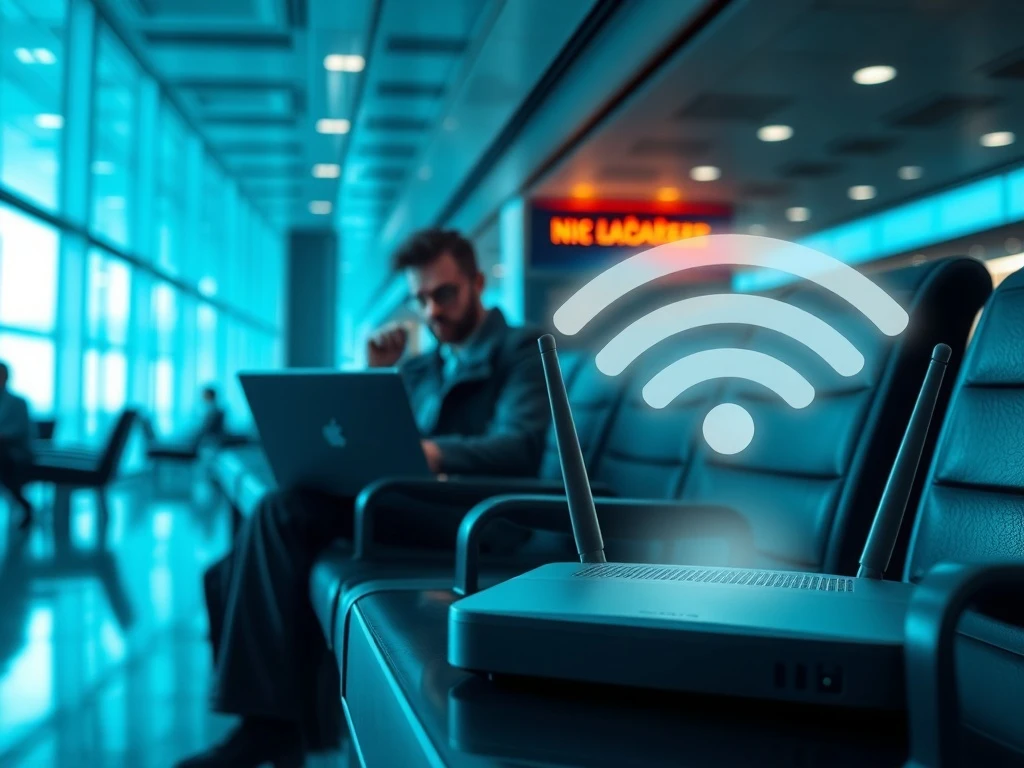
In the bustling transit hubs of 2025, a silent digital predator targets weary travelers: the ‘Evil Twin’ WiFi network. This sophisticated cyber threat clones legitimate wireless access points to intercept sensitive data, posing a severe risk to cryptocurrency holders globally. Security experts now warn that these attacks have evolved, becoming more prevalent at airports, hotels, and cafes where individuals frequently access crypto exchanges and wallets.
Understanding the Evil Twin WiFi Threat to Cryptocurrency
Evil Twin attacks represent a deliberate form of wireless network spoofing. Malicious actors establish rogue access points with names identical to legitimate public WiFi networks. Consequently, unsuspecting users connect to these fraudulent hotspots, enabling hackers to monitor all unencrypted internet traffic. The Australian Federal Police documented a significant case in 2024, charging an individual for deploying fake free WiFi points at a major airport to harvest personal data.
Steven Walbroehl, co-founder of cybersecurity firm Halborn, explains the mechanism clearly. “Attackers exploit the automatic connection features on modern devices,” he states. “They create a stronger signal with a familiar name, so devices prioritize it. Once connected, the attacker operates as a ‘man-in-the-middle,’ potentially capturing login credentials, session cookies, and even two-factor authentication codes.” This interception can lead directly to drained cryptocurrency exchange accounts.
High-Risk Locations and Traveler Vulnerability
Certain environments present elevated dangers for crypto users. Airports consistently rank as prime targets due to high traveler volume and urgent connectivity needs. Similarly, cafes, hotel lobbies, transit stations, and conference venues attract attackers. A traveler fatigued from a long flight, needing to execute a time-sensitive crypto transaction, represents the ideal victim profile. Their diminished vigilance increases susceptibility to social engineering prompts that often follow the initial connection.
The cybersecurity officer known as 23pds from SlowMist emphasizes prevalence. “These attacks are more common than people think,” they note. “There remains a significant portion of users who absolutely fall for it, especially when under pressure or in unfamiliar environments.” The psychological element is crucial; attackers bank on distraction and urgency to bypass normal security checks.
The Technical Limits and Social Engineering Edge
Importantly, merely connecting to a malicious WiFi network does not automatically compromise cryptocurrency stored in non-custodial wallets. Modern encryption protocols protect specific data transmissions. However, Walbroehl clarifies the real danger: “The network itself doesn’t magically extract private keys. The risk escalates when users are tricked into entering sensitive information. Captured exchange credentials, email access, or intercepted 2FA codes can let attackers drain centralized accounts rapidly.”
The attack often progresses to a second phase: phishing. After connection, users may encounter fake login pages for common services, prompts to install ‘security certificates’ or ‘helper tools,’ or urgent system update notifications. 23pds warns, “The worst-case scenario involves tricking a user into typing their seed phrase on a spoofed site, which unfortunately still happens too often. The victory for the attacker comes from inducing a human mistake, not breaking encryption.”
Proactive Defense Strategies for Crypto Travelers
Adopting a layered security approach is essential for anyone managing digital assets on the go. Experts recommend several concrete actions to mitigate risk.
- Avoid High-Risk Actions on Public WiFi: Never perform major crypto transfers, change security settings, or connect to new decentralized applications (dApps) while using public wireless networks. Postpone these tasks until you are on a trusted, private connection.
- Utilize Personal Mobile Hotspots: Your cellular data connection, used as a personal hotspot, generally provides a more secure pathway than open public WiFi. Consider international data plans for travel.
- Employ a Trusted VPN Service: A reputable Virtual Private Network encrypts all traffic between your device and the internet, rendering intercepted data useless to an Evil Twin operator. Ensure the VPN is activated before transmitting any sensitive data.
- Verify Network Legitimacy Verbally: If you must use a venue’s WiFi, confirm the exact network name with staff. Do not trust network names that appear suspiciously generic or have slight misspellings of legitimate options.
- Disable Auto-Connect Features: Turn off settings that allow your devices to automatically join available WiFi networks. This forces manual selection and adds a critical moment of scrutiny.
Furthermore, implement diligent browsing habits. Always use bookmarks for crypto exchanges and wallets instead of clicking search engine results or ads. Manually verify website addresses and double-check recipient wallet addresses before confirming transactions. Never enter a seed phrase or private key into any website or prompt that appears while on a public network.
The Travel Wallet Strategy: Limiting Financial Exposure
A highly effective tactic endorsed by security professionals involves segregating funds. 23pds advocates for a simple three-layer setup for travel.
| Wallet Layer | Purpose | Funds Amount | Connection |
|---|---|---|---|
| Main Holdings (Cold Storage) | Long-term asset storage | Bulk of portfolio | Never connected during travel |
| Designated Travel Wallet | Funds accessible during trip | Limited, pre-planned amount | Connected only via secure methods |
| Daily Use Hot Wallet | Small payments, minor interactions | Minimal ‘spending’ funds | Used for daily transactions |
This strategy strictly contains risk. “If your phone gets stolen, you click a bad link, or something goes wrong, your downside is financially limited,” explains 23pds. The travel wallet acts as a buffer, ensuring a compromised device does not lead to total loss.
Industry Warnings and Evolving Tactics
The threat landscape continues to shift. Nick Percoco, Chief Security Officer at Kraken, recently highlighted security shortcomings at crowded crypto conferences and events. Meanwhile, anecdotal reports, like that from an X user known as ‘The Smart Ape’ in January 2025, demonstrate how public WiFi misuse—even without a sophisticated Evil Twin—can lead to devastating losses through combined social engineering tactics.
Security firms now observe attackers tailoring fake networks to specific locations and events, using network names that reference the venue or a nearby business to enhance credibility. The integration of these attacks with broader phishing campaigns makes them particularly potent.
Conclusion
Evil Twin WiFi networks constitute a persistent and evolving threat to cryptocurrency security, especially for travelers in 2025. The attack combines technical spoofing with psychological manipulation, targeting individuals when they are most vulnerable. Robust defense requires both technological tools, like VPNs and personal hotspots, and disciplined behavioral practices, such as fund segregation and avoiding sensitive actions on public networks. Ultimately, maintaining cryptocurrency safety hinges on awareness, preparation, and a healthy skepticism toward convenient, free WiFi connections in high-traffic areas.
FAQs
Q1: What exactly is an ‘Evil Twin’ WiFi attack?
An Evil Twin attack is a cyber threat where a malicious actor creates a fraudulent wireless access point with a name identical to a legitimate public WiFi network. The goal is to trick users into connecting, allowing the attacker to intercept unencrypted internet traffic, steal login credentials, and deploy phishing pages.
Q2: Can an Evil Twin network directly steal the cryptocurrency from my hardware wallet?
No, not directly. A hardware wallet’s private keys never leave the device. However, if you connect to an Evil Twin and are tricked into approving a malicious transaction on a spoofed website or revealing your seed phrase, your funds can be stolen. The network facilitates the theft by enabling the phishing attempt.
Q3: How can I identify a potential Evil Twin network?
It can be very difficult. Warning signs include: a network with a name exactly matching a legitimate one but with a stronger signal, networks with slight misspellings, networks that don’t require a password when the official one should, or being prompted for unusual login information or downloads immediately after connecting.
Q4: Is using a VPN enough protection against Evil Twin attacks?
A trusted VPN is a strong layer of protection because it encrypts all data leaving your device. This prevents an attacker on the same network from reading your traffic. However, it does not protect you from visiting a phishing website and manually entering your information, so vigilance is still required.
Q5: What should I do immediately if I suspect I’ve connected to an Evil Twin network?
First, disconnect from the WiFi immediately. Change the passwords for any accounts you accessed while connected, especially email and cryptocurrency exchanges, using a different, secure network (like your cellular data). Enable any available session log-out features on those accounts and monitor them for suspicious activity.