Europe Shifts Toward Confrontation with Trump After Alarming Greenland Tariff Threats
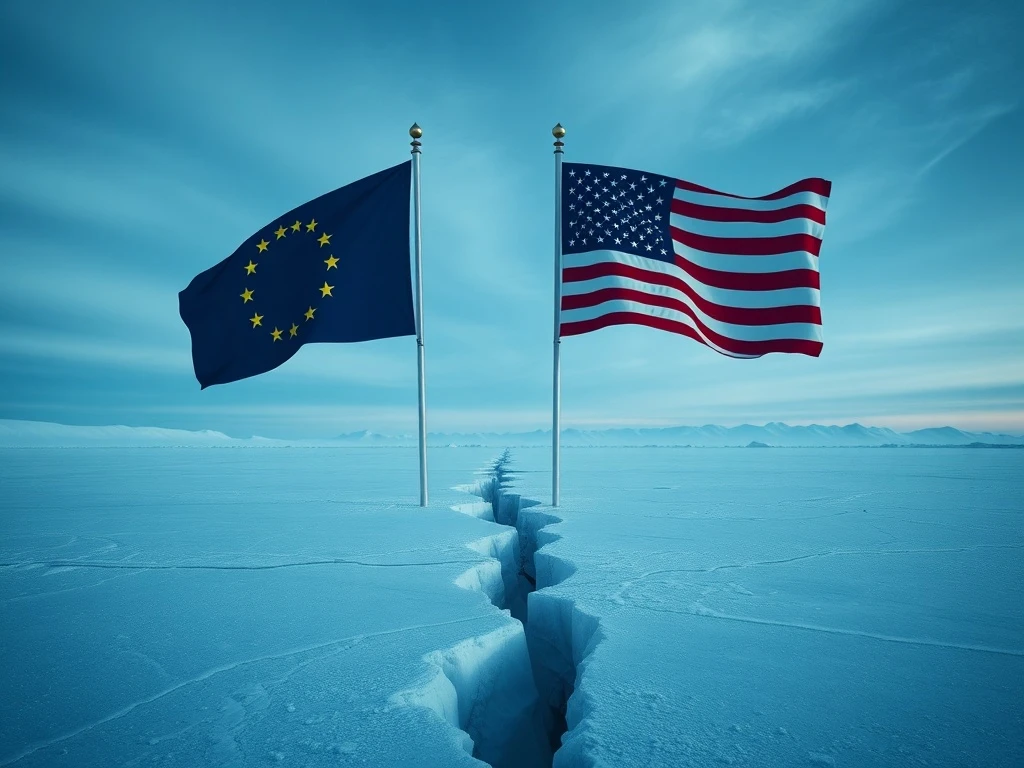
European capitals are undergoing a profound strategic recalibration, shifting decisively from appeasement to confrontation with the United States following President Donald Trump’s aggressive tariff threats targeting eight nations opposing the U.S. annexation of Greenland. This pivotal development, reported by Yonhap News citing a detailed Financial Times analysis published on January 18, 2025, signals a potential fracture in the foundational transatlantic alliance that has shaped global geopolitics for decades. The move represents not merely a policy disagreement but a fundamental reassessment of Europe’s relationship with its most powerful ally.
Europe Shifts Toward Confrontation: The Greenland Catalyst
The Financial Times report, based on interviews with approximately ten senior European officials and diplomats, reveals a continent at a crossroads. For years, European leaders pursued a strategy of cautious engagement and appeasement toward the Trump administration, aiming to preserve NATO cohesion and protect longstanding economic ties. However, the imposition of punitive tariffs against countries opposing the Greenland annexation has served as a brutal wake-up call. Consequently, many officials now believe President Trump has crossed a definitive red line, compelling a strategic shift toward a more confrontational posture. This represents a dramatic departure from decades of diplomatic orthodoxy.
Furthermore, the Greenland issue itself carries immense symbolic and strategic weight. The vast Arctic territory possesses significant natural resources and growing geopolitical importance due to climate change and new shipping routes. The U.S. push for annexation, viewed by many European allies as a stark violation of international norms and Danish sovereignty, created an initial rift. Subsequently, the decision to weaponize trade policy against dissenters transformed that rift into a chasm. European leaders have learned, in the words of the FT, that their efforts to manage the relationship through concession have ultimately failed to curb unilateral actions that threaten European interests and the rules-based international order.
The Mechanics of the Tariff Threat and Diplomatic Backlash
The specific tariff measures, though details remain under diplomatic negotiation, reportedly target key export sectors within the eight dissenting nations. These countries likely include several European Union member states alongside other global partners. The use of trade as a coercive tool for territorial expansion marks an unprecedented escalation in post-war U.S. foreign policy. In response, European institutions in Brussels and national governments are actively formulating a coordinated counter-strategy. This strategy may involve:
- Legal Challenges at the WTO: Preparing formal disputes against the U.S. tariffs as violations of global trade rules.
- Symmetrical Counter-Tariffs: Developing targeted retaliatory tariffs on politically sensitive U.S. exports.
- Strategic Autonomy Acceleration: Fast-tracking European initiatives to reduce dependency on U.S. technology, defense, and financial systems.
- Diplomatic Coalition Building: Strengthening partnerships with other democratic nations in Asia and the Americas to present a united front.
This shift is not uniform across all European capitals. Some Eastern European members, with stronger security dependencies on Washington, may urge continued caution. Meanwhile, France and Germany, as the EU’s traditional leaders, appear to be driving the confrontational pivot. The coming weeks will test the European Union’s ability to maintain a unified external policy under extreme pressure.
Historical Context and the Breakdown of Appeasement
The current crisis did not emerge in a vacuum. It follows years of simmering tensions over issues like NATO burden-sharing, the Iran nuclear deal, and climate policy. The European appeasement strategy, often termed “Trump management,” involved avoiding public criticism, offering limited concessions on trade, and emphasizing shared history. Experts note this approach was always fragile, built on the hope that core alliance principles would remain inviolate. The Greenland annexation push and associated tariffs shattered that hope. As one senior diplomat quoted anonymously by the FT stated, “The lesson is clear: appeasement only invites further demands. We must now define and defend our red lines clearly.”
The timeline of this breakdown is instructive. Initial European reactions to the Greenland idea were muted, focusing on dialogue and international law. The tariff announcement acted as the catalyst, converting diplomatic concern into strategic resolve. This pattern mirrors earlier trade disputes but with far higher geopolitical stakes. The table below outlines the key phases of this escalating confrontation:
| Phase | U.S. Action | Initial European Posture | European Shift |
|---|---|---|---|
| Initial Proposal | Signals interest in annexing Greenland | Cautious, seeks clarification, emphasizes Danish sovereignty | Diplomatic engagement |
| Formal Push | Advances annexation proposal diplomatically | Coordinated opposition from multiple EU states | Unified diplomatic resistance |
| Coercive Escalation | Announces tariffs on eight opposing nations | Shock, condemnation, emergency meetings | Strategic pivot to confrontation |
| Current Stance | Maintains tariff threat | Developing legal, economic, and diplomatic countermeasures | Active confrontation and alliance reassessment |
Global Implications and the Future of the Transatlantic Alliance
The ramifications of this European shift extend far beyond Brussels and Washington. A confrontational stance between the EU and the U.S. creates power vacuums and opportunities for other global actors. China and Russia will likely seek to exploit the division, offering alternative partnerships to European nations. Moreover, global governance on trade, climate, and security becomes exponentially more difficult without transatlantic cooperation. The very concept of “the West” as a coherent geopolitical bloc now faces its most severe test since the Cold War’s end.
Economically, the threat of a sustained trade conflict between the world’s two largest economic blocs could destabilize global markets. Supply chains, already reconfigured after recent crises, would face new pressures. The long-term impact on investment and growth in both Europe and America could be significant. From a security perspective, while NATO’s mutual defense clause (Article 5) remains legally binding, the political will for seamless military and intelligence cooperation could erode, affecting joint operations from the Baltic Sea to the Sahel.
Expert Analysis on Strategic Autonomy and Sovereignty
Policy analysts frame this moment as the inevitable culmination of the EU’s long-discussed quest for “strategic autonomy.” Previously a theoretical goal, the tariff threat provides a concrete impetus. This involves bolstering European defense capabilities through PESCO (Permanent Structured Cooperation), building resilient digital and energy infrastructures independent of foreign control, and strengthening the euro’s international role. The confrontation, therefore, may accelerate Europe’s emergence as a more independent, sovereign global power bloc, a process with decades-long consequences. The success of this pivot hinges on European unity, political will, and the ability to bear short-term economic costs for long-term strategic gain.
Conclusion
Europe’s shift toward confrontation with President Trump marks a historic inflection point in international relations. Driven by the alarming use of tariff threats to coerce support for the Greenland annexation, this strategic pivot reflects a stark realization that appeasement has failed. The move carries profound implications for the transatlantic alliance, global trade, and the geopolitical balance of power. As European leaders assemble their response, the world watches to see if this confrontation will lead to a permanent reordering of Western solidarity or force a recalibration that ultimately preserves it. The events of January 2025 will undoubtedly be studied for years as the moment Europe chose to stand its ground.
FAQs
Q1: What specifically triggered Europe’s shift to a confrontational stance with Trump?
The immediate trigger was the U.S. imposition of punitive tariffs on eight countries that opposed the American proposal to annex Greenland. European officials viewed this as weaponizing trade for territorial expansion, crossing a fundamental red line.
Q2: Which European countries are most affected by the U.S. tariff threats?
While the full list of eight nations is not fully public, it is believed to include several European Union member states. The FT report suggests a coordinated EU response is being formulated, indicating multiple members are targeted.
Q3: What does “strategic autonomy” mean in this context?
It refers to the European Union’s goal of reducing its dependency on the United States in critical areas like defense, technology, and finance. This confrontation is accelerating plans for a more independent European foreign and security policy.
Q4: How could this confrontation impact NATO?
It creates severe political strain within the alliance. While the NATO treaty’s mutual defense commitments remain, the political cohesion and willingness for joint military and intelligence operations could be significantly damaged, weakening the alliance’s effectiveness.
Q5: What are Europe’s likely next steps in this confrontation?
Expected steps include launching a formal WTO legal challenge against the tariffs, preparing targeted retaliatory tariffs on U.S. goods, and fast-tracking internal EU policies to build economic and strategic independence from the United States.