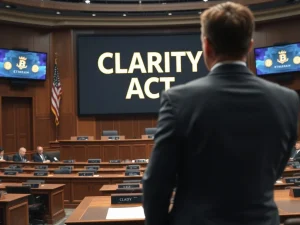
DeFi CLARITY Act Faces Critical Hurdles as Industry Leaders Sound Alarm Over Regulatory Uncertainty
WASHINGTON, D.C. — March 2025 — Decentralized finance leaders are raising urgent concerns as the Digital Asset Market Clarity Act faces indefinite postponement in the Senate Banking Committee, creating regulatory uncertainty that could reshape the future of cryptocurrency markets in the United States. The delayed markup of this crucial legislation has sparked intense debate among industry stakeholders who warn that current provisions might stifle innovation and push blockchain development overseas.
DeFi CLARITY Act Faces Indefinite Senate Delay
Republican leaders on the Senate Banking Committee postponed the markup of the Digital Asset Market Clarity Act late Wednesday without setting a new date for consideration. Consequently, this unexpected delay follows months of legislative debates about decentralized finance provisions, stablecoin regulations, and potential conflicts of interest. Many industry observers now anticipate a weeks-long hiatus before lawmakers return to the complex legislation.
The CLARITY Act represents the most comprehensive attempt to establish clear regulatory frameworks for digital assets since the 2023 market structure proposals. Specifically, the bill aims to define jurisdictional boundaries between the Securities and Exchange Commission and the Commodity Futures Trading Commission. However, recent amendments have introduced contentious provisions that directly affect decentralized platforms.
Industry Leaders Voice Specific Concerns
Major cryptocurrency organizations have identified several problematic areas within the current draft legislation. Alexander Grieve, Paradigm’s vice president of government affairs, emphasized the need for significant revisions to protect software developers. “Our highest priority remains protecting developers and DeFi,” Grieve stated. “The bill requires substantial edits to achieve this fundamental goal.”
Jake Chervinsky, Variant’s chief legal officer, expressed similar reservations about regulatory ambiguity. “The latest draft leaves uncertainty about whether various developers and infrastructure providers must implement KYC procedures,” Chervinsky noted on social media platform X. “Additionally, registration requirements with the SEC might apply to entities that cannot reasonably comply with traditional financial regulations.”
Key Industry Concerns About Current Draft
- Developer Liability: Potential requirements for software creators to implement know-your-customer protocols
- Registration Mandates: Possible SEC registration obligations for decentralized platform operators
- Stablecoin Restrictions: Proposed limitations on interest-bearing stablecoin mechanisms
- Tokenized Securities: Ambiguous provisions regarding tokenized traditional equities
- Compliance Burden: Regulatory frameworks designed for centralized entities applied to decentralized systems
The DeFi Education Fund’s Critical Assessment
The DeFi Education Fund issued a formal statement Wednesday highlighting specific legislative dangers. According to their analysis, certain proposed amendments could “seriously harm DeFi technology” while making market structure legislation “worse for software developers.” The organization particularly emphasized how poorly tailored regulations might inadvertently criminalize legitimate development activities.
Cody Carbone, CEO of The Digital Chamber, expressed cautious optimism about resolving these issues. “I feel confident that we can address some DeFi concerns,” Carbone told Crypto News Insights. “Currently, the focus involves narrowing certain definitions. I believe we can reach satisfactory solutions before the next markup session.”
| Stakeholder | Primary Concern | Desired Outcome |
|---|---|---|
| DeFi Education Fund | Developer protections and technology preservation | Clear safe harbors for software development |
| Crypto Venture Firms | Investment certainty and regulatory clarity | Predictable compliance frameworks |
| Exchange Platforms | Operational viability and competitive positioning | Balanced regulations supporting innovation |
| Senate Democrats | Illicit transaction prevention and consumer protection | Effective oversight mechanisms |
Political Dynamics and Legislative Timeline
Senate Banking Committee Chair Tim Scott announced a “brief pause” in proceedings after Coinbase CEO Brian Armstrong publicly stated the exchange could not support the legislation in its current form. This development highlights the complex political negotiations surrounding digital asset regulation. Meanwhile, Senate Democrats have reportedly raised concerns about potential illicit finance facilitation through DeFi platforms.
Todd Phillips, a Georgia State University law professor, offered academic perspective on the debate. “DeFi and crypto developers primarily care about establishing robust market structures,” Phillips explained in a social media post. “Their focus centers on creating environments where crypto markets can expand, rather than specific battles about where customers maintain their funds.”
Regulatory Evolution Timeline
The current legislative process follows years of regulatory development. Initially, the 2023 market structure proposals laid groundwork for comprehensive digital asset regulation. Subsequently, the 2024 stablecoin frameworks addressed specific payment system concerns. Now, the 2025 CLARITY Act attempts to synthesize these approaches while addressing emerging DeFi considerations.
Broader Market Implications and Global Context
The United States regulatory approach significantly influences global cryptocurrency development. Many industry advocates, including Armstrong, warn that restrictive legislation might push innovative companies to more favorable jurisdictions. This potential exodus could affect everything from job creation to technological leadership in blockchain development.
International regulatory frameworks provide important comparisons. For instance, the European Union’s Markets in Crypto-Assets regulation established different approaches to decentralized platforms. Similarly, Singapore and Switzerland have developed nuanced regulatory regimes that attempt to balance innovation with consumer protection.
Conclusion
The DeFi CLARITY Act represents a critical juncture for cryptocurrency regulation in the United States. As Senate deliberations continue, industry leaders emphasize the need for balanced approaches that protect innovation while addressing legitimate regulatory concerns. The postponed markup provides additional time for stakeholders to refine legislative language, but uncertainty persists about final outcomes. Ultimately, the legislation’s final form will significantly influence whether the United States becomes a leader or laggard in the rapidly evolving decentralized finance landscape.
FAQs
Q1: What is the Digital Asset Market Clarity Act?
The CLARITY Act represents proposed legislation establishing comprehensive regulatory frameworks for digital assets in the United States. It specifically addresses jurisdictional boundaries between financial regulators while creating rules for various cryptocurrency market participants.
Q2: Why did the Senate Banking Committee postpone the markup?
Committee leaders announced a “brief pause” following concerns from industry stakeholders about specific provisions. Coinbase’s public opposition and ongoing debates about DeFi regulations contributed to the decision to delay further consideration.
Q3: What are the main concerns about the current draft?
Industry leaders highlight potential requirements for software developers to implement KYC procedures, ambiguous registration mandates, restrictions on interest-bearing stablecoins, and compliance burdens designed for centralized entities being applied to decentralized systems.
Q4: How might this legislation affect DeFi platforms?
Depending on final language, the legislation could impose traditional financial regulations on decentralized platforms that cannot reasonably comply. This might force platform operators to restructure operations, limit services, or relocate outside United States jurisdiction.
Q5: What happens next with the legislation?
Stakeholders will continue negotiations with lawmakers during the postponement period. Industry groups hope to refine definitions and create appropriate exemptions before the Senate Banking Committee schedules a new markup session, potentially within several weeks.