Moldova Cryptocurrency Law: Strategic Alignment with EU’s MiCA Framework Creates Regulatory Clarity
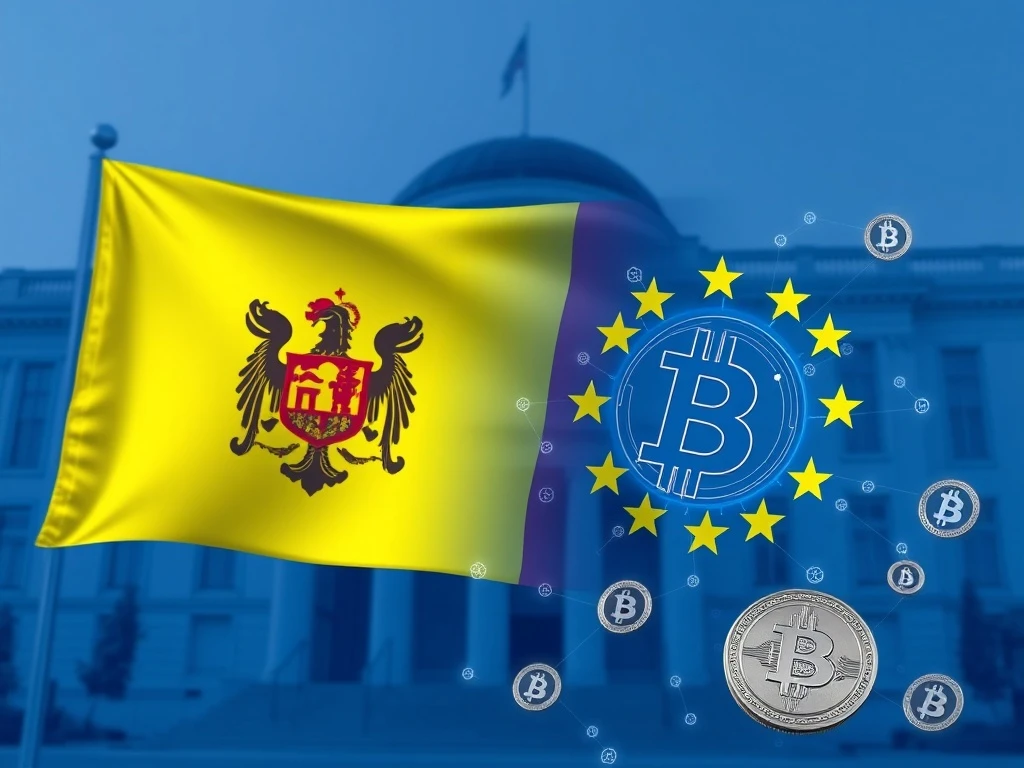
CHISINAU, Moldova – March 2025: The Republic of Moldova announces a pivotal move toward comprehensive cryptocurrency regulation, strategically aligning its forthcoming legislation with the European Union’s Markets in Crypto-Assets (MiCA) framework. This development represents a significant step for the Eastern European nation as it navigates the complex landscape of digital asset governance while maintaining its European integration trajectory.
Moldova’s Cryptocurrency Law: A Strategic Regulatory Framework
Moldovan Finance Minister Andrian Gavrilita confirms the government’s commitment to enacting cryptocurrency legislation this year. The Ministry of Finance collaborates with national regulators to develop a legal structure that permits citizens to hold and trade crypto assets. However, Minister Gavrilita explicitly clarifies that the legislation will not recognize cryptocurrencies as legal tender for payments. This nuanced approach balances innovation with financial stability concerns.
Government officials emphasize that banning cryptocurrency transactions is not a viable option. Instead, they pursue a regulated framework that provides legal certainty for market participants. The legislation’s exact timeline remains flexible, with potential introduction dates extending beyond next month. This flexibility allows for thorough stakeholder consultation and technical refinement.
The MiCA Framework: Europe’s Regulatory Blueprint
The European Union’s Markets in Crypto-Assets regulation establishes a comprehensive regulatory regime for crypto-assets across member states. MiCA creates harmonized rules for crypto-asset service providers, including requirements for authorization, governance, and consumer protection. The framework categorizes crypto-assets into three main types: asset-referenced tokens, e-money tokens, and other crypto-assets.
Moldova’s alignment with MiCA demonstrates strategic foresight for several reasons. First, it positions the country favorably for future EU integration discussions. Second, it provides regulatory clarity that could attract responsible crypto businesses to the region. Third, it establishes consumer protection measures that mitigate risks associated with digital asset investments.
Regional Context and Economic Implications
Moldova’s decision occurs within a broader Eastern European regulatory landscape. Neighboring Ukraine has implemented progressive crypto regulations since 2022, while Romania maintains a cautious approach pending EU directives. Moldova’s MiCA alignment creates potential competitive advantages in attracting blockchain enterprises seeking EU-adjacent jurisdictions with clear regulatory frameworks.
The legislation could stimulate Moldova’s digital economy through several mechanisms:
- Increased foreign investment: Clear regulations reduce uncertainty for international blockchain companies
- Enhanced financial inclusion: Regulated crypto services could reach unbanked populations
- Technological development: Framework supports blockchain innovation while managing risks
- Cross-border compatibility: MiCA alignment facilitates transactions with EU partners
Implementation Challenges and Technical Considerations
Implementing MiCA-aligned legislation presents several practical challenges for Moldovan authorities. The National Bank of Moldova must develop supervisory capacity for crypto-asset service providers. Similarly, the Financial Market Authority requires additional expertise to monitor compliance with new regulations. Technical infrastructure for reporting and oversight represents another implementation consideration.
The legislation’s exclusion of cryptocurrency payment recognition reflects prudent monetary policy considerations. This approach prevents potential conflicts with the national currency (Moldovan leu) while acknowledging crypto’s investment and store-of-value functions. The distinction between payment systems and investment assets follows established international regulatory patterns observed in jurisdictions like the United Kingdom and Canada.
Expert Perspectives on Moldova’s Regulatory Approach
Financial regulation specialists highlight several strategic aspects of Moldova’s approach. Dr. Elena Popovici, a Chisinau-based financial law professor, notes: “Moldova’s MiCA alignment demonstrates regulatory maturity. The country recognizes that comprehensive bans drive activity underground rather than eliminating risks. Instead, they’re creating a framework that brings transparency to crypto markets.”
International blockchain policy analysts observe that Moldova’s legislation timing coincides with broader regional trends. The European Banking Authority and European Securities and Markets Authority recently finalized MiCA technical standards, providing clearer implementation guidance for non-EU jurisdictions considering alignment.
Comparative Analysis: Moldova’s Position in Global Crypto Regulation
Moldova’s emerging framework places it within a global spectrum of cryptocurrency regulatory approaches. The following table illustrates key comparative dimensions:
| Jurisdiction | Regulatory Approach | Payment Recognition | Licensing Framework |
|---|---|---|---|
| Moldova (proposed) | MiCA-aligned comprehensive regulation | No | Authorization required for service providers |
| European Union | MiCA harmonized regulation | Limited (e-money tokens only) | EU-wide licensing passport |
| United States | Fragmented state/federal regulation | Varies by state | Multiple agency requirements |
| Singapore | Pro-innovation with strict AML | No | MAS licensing for services |
| El Salvador | Bitcoin as legal tender | Yes (Bitcoin only) | Minimal specific regulation |
This comparative perspective reveals Moldova’s middle-ground approach between permissive and restrictive regulatory models. The framework emphasizes consumer protection and market integrity while permitting innovation within defined parameters.
Consumer Protection and Risk Mitigation Measures
Moldova’s forthcoming legislation incorporates several MiCA-derived consumer protection mechanisms. These include mandatory disclosure requirements for crypto-asset white papers, clear risk warnings for investors, and capital requirements for service providers. The framework also establishes liability rules for crypto-asset issuers and requirements for complaint-handling procedures.
Anti-money laundering (AML) provisions represent another crucial component. Crypto-asset service providers must implement know-your-customer (KYC) procedures and transaction monitoring systems. These requirements align with Moldova’s Financial Action Task Force (FATF) commitments and EU AML directives, creating a layered approach to financial integrity.
Technological Infrastructure and Implementation Timeline
Successful implementation requires coordinated technological development across multiple government agencies. The National Bank of Moldova may need to upgrade its supervisory technology (SupTech) systems for monitoring crypto markets. Similarly, the Public Services Agency might develop blockchain-based business registration systems compatible with crypto enterprise requirements.
The legislation’s phased implementation could follow patterns observed in other jurisdictions adopting complex financial regulations. An initial phase might focus on registration and reporting requirements, followed by full licensing and supervision regimes. This gradual approach allows market participants time to achieve compliance while building regulatory capacity incrementally.
Conclusion
Moldova’s decision to legislate cryptocurrency in alignment with the EU’s MiCA framework represents a strategic regulatory advancement. The forthcoming Moldova cryptocurrency law balances innovation facilitation with risk management through clear legal parameters. While excluding payment recognition, the framework provides essential legal certainty for crypto asset holding and trading. This approach positions Moldova favorably within Eastern European digital asset markets while supporting broader European integration objectives. The legislation’s implementation will require continued coordination between government agencies, industry stakeholders, and international partners to achieve its intended benefits.
FAQs
Q1: What is the MiCA framework that Moldova is aligning with?
The Markets in Crypto-Assets (MiCA) is the European Union’s comprehensive regulatory framework for crypto-assets. It establishes harmonized rules across EU member states for crypto-asset issuance, trading, and service provision, focusing on consumer protection, market integrity, and financial stability.
Q2: Will cryptocurrencies become legal payment methods in Moldova?
No. Finance Minister Andrian Gavrilita explicitly stated that the legislation will not recognize cryptocurrencies as a means of payment. The framework regulates crypto as investment assets rather than payment instruments, maintaining the Moldovan leu’s exclusive status as legal tender.
Q3: When will Moldova’s cryptocurrency law take effect?
The exact timeline remains uncertain. While the government aims to enact legislation this year, Minister Gavrilita noted it might not be introduced next month. The implementation will likely follow a phased approach to allow for regulatory capacity building and industry adaptation.
Q4: How does Moldova’s approach compare to neighboring countries?
Moldova’s MiCA alignment differs from Ukraine’s more permissive crypto regulations and Romania’s cautious wait-and-see approach. The framework positions Moldova as having EU-compatible regulations, potentially attracting blockchain businesses seeking regulatory clarity in Eastern Europe.
Q5: What are the main benefits of this regulatory approach for Moldova?
Key benefits include increased legal certainty for investors and businesses, enhanced consumer protection measures, improved anti-money laundering controls, potential attraction of responsible crypto enterprises, and strengthened alignment with European regulatory standards supporting broader EU integration goals.