AI Crypto Trading: The Inevitable Transformation Reshaping Human Financial Roles
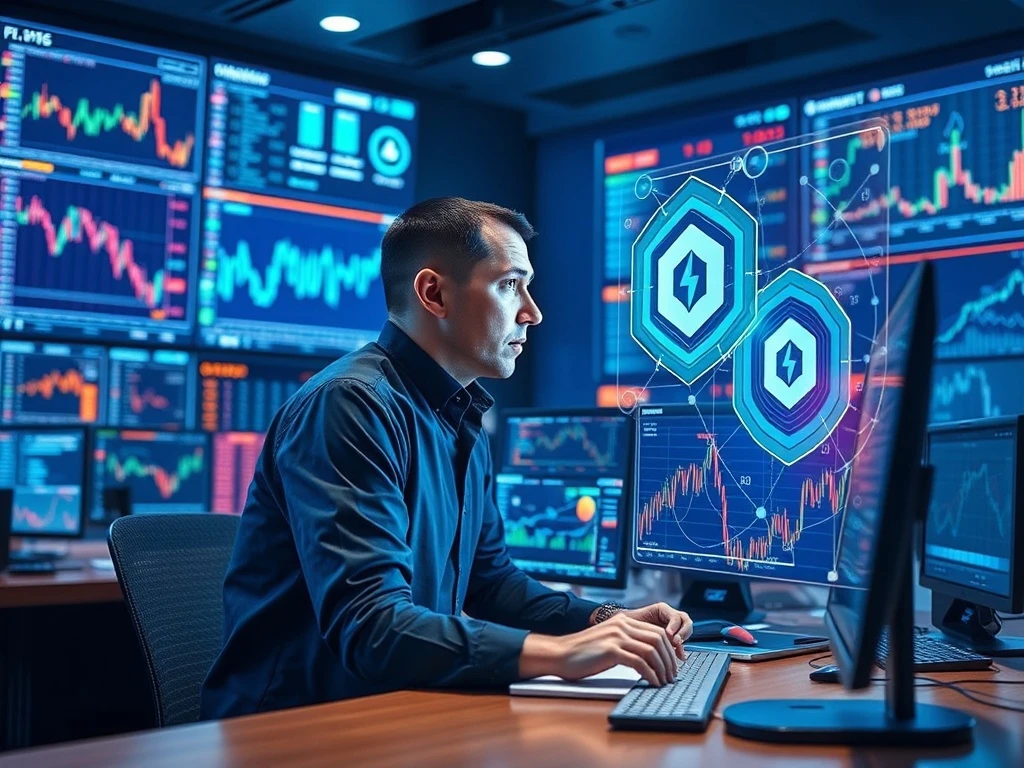
Artificial intelligence is fundamentally reshaping cryptocurrency trading worldwide, creating a complex landscape where automation enhances efficiency while simultaneously redefining traditional human roles in financial markets. This transformation represents more than just technological advancement—it signals a structural shift in how trading decisions are made, who makes them, and what skills will remain valuable in the evolving digital economy. As AI systems become increasingly sophisticated, the financial industry faces critical questions about control, accountability, and the future of human judgment in automated markets.
The Evolution of AI in Cryptocurrency Trading
Crypto markets have experienced rapid AI adoption since 2024, with trading platforms integrating machine learning systems for analysis, execution, and optimization. These systems process vast amounts of blockchain data, market signals, and social sentiment in real-time. Consequently, they enable faster decision-making than traditional human approaches. The World Economic Forum identifies data-rich sectors like finance as particularly susceptible to AI transformation. This susceptibility stems from the structured nature of financial data and the quantifiable nature of trading outcomes.
Major cryptocurrency exchanges and trading firms now deploy AI tools for multiple functions. These functions include market analysis, risk assessment, and trade execution. Ryan Li, co-founder and CEO of crypto research platform Surf AI, observes that AI primarily handles routine tasks. “AI is replacing the 80% that nobody actually wants to do,” Li told Crypto News Insights. “The best researchers use AI to dramatically improve their work.” This shift allows human traders to focus on strategic decisions rather than data processing.
Current Implementation and Limitations
Despite significant advancements, most AI trading systems remain constrained by human oversight. Traders still define strategies, set risk parameters, and maintain ultimate accountability. According to Igor Stadnyk, co-founder of AI trading platform True Trading, “From a technical point of view, autonomous trading is already possible. The question is not execution; it’s control, limits and accountability.” This balance between automation and human control represents the current frontier in crypto trading evolution.
Human Roles in Transition: Job Market Impacts
The integration of AI into crypto trading is reshaping employment structures across the industry. Junior analyst positions face particular scrutiny as AI systems automate research and monitoring tasks. Traditional finance provides relevant parallels. Researchers at Stanford University and Boston College tested an AI analyst across thousands of US mutual fund portfolios between 1990 and 2020. Their findings revealed AI-managed portfolios generated an average of $17.1 million more per fund per quarter than human-managed counterparts.
Ed deHaan, the Stanford accounting professor who led this experiment, doesn’t anticipate mass displacement of portfolio managers. However, he warns that junior analyst roles could be at risk. This pattern extends to cryptocurrency markets. Trading firms increasingly rely on smaller, more specialized teams. “Funds used to hire teams of researchers or interns,” Li explained. “Now they just have one really good researcher who can work with AI a lot better.”
Skill Set Evolution and Hiring Challenges
The changing landscape creates new hiring challenges and skill requirements. Li described evaluating candidates from prestigious institutions who lacked fundamental skills. “I’ve seen so many people with perfect scores from Berkeley, and they don’t know how to code,” he noted. “They don’t know how to write anything because they are entirely helped by AI.” This observation highlights how AI tools might weaken traditional hiring signals while creating demand for different competencies.
| Metric | Human Traders | AI Models |
|---|---|---|
| Capital Preservation (Bear Market) | -32.21% | -4.48% |
| Data Processing Speed | Limited by human capacity | Real-time across multiple sources |
| Emotional Decision Making | Present, can cause bias | Absent, purely analytical |
| Adaptation to New Conditions | Requires learning and adjustment | Continuous learning capability |
AI Trading Versus Algorithmic Systems
Understanding the distinction between AI trading and traditional algorithmic systems is crucial. Algorithmic trading relies on deterministic rules that execute predefined strategies when specific conditions occur. These systems leave little room for interpretation once rules are established. Conversely, AI trading operates under uncertainty, handling incomplete, noisy, or contradictory information. “With AI, you’re working under uncertainty,” Stadnyk emphasized. “AI is useful in those situations because it can still operate when information is incomplete and conditions are constantly changing.”
This capability allows AI systems to interpret complex data types that challenge traditional algorithms. These data types include news articles, social media sentiment, and cultural context across different regions and languages. Nina Rong, executive director of growth at BNB Chain, notes increased visibility into behavioral shifts. “AI helps with gathering information for crypto folks and improves research efficiency,” Rong told Crypto News Insights. “It also gives non-programmers the ability to use programming as a tool.”
Key Differentiators Between Systems
- Decision Framework: Algorithmic systems follow fixed rules; AI systems employ adaptive learning
- Data Handling: Algorithms require clean, structured data; AI processes unstructured, noisy information
- Adaptation Speed: Algorithms need manual adjustment; AI systems self-optimize continuously
- Complexity Management: Algorithms struggle with multivariate problems; AI excels at pattern recognition in complex datasets
The Human Judgment Imperative in Automated Markets
Despite advancing automation, human judgment remains essential in cryptocurrency trading. Strategic decisions about market positioning, risk tolerance, and portfolio construction continue to require human insight. Furthermore, ethical considerations, regulatory compliance, and long-term vision necessitate human oversight. The most effective trading operations combine AI efficiency with human strategic thinking.
Santiment data from June reveals persistent concerns about AI job replacement in crypto communities. These discussions ranked above memecoins and trading strategy topics. This concern reflects broader anxiety about technological displacement across industries. However, the reality appears more nuanced than complete replacement. Instead, roles are evolving toward higher-level functions.
Areas Where Human Judgment Prevails
Several critical functions resist full automation. First, strategic vision development requires understanding broader economic and social contexts that AI might miss. Second, ethical decision-making involves values and principles beyond pure optimization. Third, relationship management with clients, regulators, and partners demands emotional intelligence. Fourth, crisis management during unprecedented market events benefits from human creativity and adaptability.
Market Experiments and Performance Data
Recent experiments provide concrete evidence about AI trading capabilities. Decentralized perpetuals exchange Aster conducted a notable competition pitting 100 human traders against 100 AI models during market decline. Human traders finished down 32.21%, while AI models posted a 4.48% loss. This experiment tested capital preservation during bear market conditions—a scenario where emotional decision-making often harms human traders.
Meanwhile, AI tokens experienced significant volatility. Following a late-2024 boom, these tokens lost approximately 67% of their market value according to CoinMarketCap data. This volatility demonstrates both the enthusiasm for AI applications and the market’s uncertainty about their long-term value. Projects like Virtuals Protocol continue experimenting with AI-managed wallets and on-chain activity, pushing boundaries while maintaining human oversight.
The Future Trajectory: Acceleration and Integration
The pace of change in crypto AI trading exceeds traditional industry timelines. “A year has passed since AI agents first gained traction,” Stadnyk observed. “In crypto, that’s like 10 years in aerospace or 100 years in medicine because everything can be tested very quickly.” This accelerated timeline means market participants must adapt rapidly to remain competitive.
Looking toward 2025 and beyond, several trends emerge. First, hybrid systems combining AI execution with human strategy will dominate professional trading. Second, regulatory frameworks will evolve to address accountability in automated systems. Third, educational institutions will adjust curricula to develop AI-augmented trading skills. Fourth, new specializations will emerge at the intersection of cryptography, data science, and behavioral finance.
Conclusion
AI crypto trading represents a transformative force reshaping human roles in financial markets worldwide. This transformation doesn’t simply replace humans with machines but rather reconfigures how work is distributed and what skills hold value. Human judgment remains crucial for strategic decisions, ethical considerations, and complex problem-solving. Meanwhile, AI systems excel at data processing, pattern recognition, and efficient execution. The future belongs to traders who effectively integrate artificial intelligence with human insight, creating collaborative systems that leverage the strengths of both approaches. As this evolution continues, the financial industry must balance innovation with responsibility, ensuring that technological advancement serves market integrity and participant welfare.
FAQs
Q1: How is AI crypto trading different from traditional algorithmic trading?
AI crypto trading uses machine learning to adapt to changing conditions and interpret unstructured data, while algorithmic trading follows fixed, predetermined rules without adaptive capabilities.
Q2: What human roles are most at risk from AI trading automation?
Junior analyst and research positions face the highest displacement risk as AI automates data gathering and routine analysis tasks that traditionally served as training grounds for financial careers.
Q3: Can AI trading systems operate completely independently?
While technically possible, most systems maintain human oversight for strategy selection, risk parameter setting, and accountability, particularly in regulated environments and institutional settings.
Q4: How does AI trading perform compared to human traders in volatile markets?
Experiments like Aster’s trading competition show AI systems often preserve capital more effectively during market declines due to their lack of emotional decision-making and consistent risk application.
Q5: What skills will human traders need to remain relevant alongside AI systems?
Traders will need strategic thinking, risk management expertise, ethical judgment, and the ability to interpret AI-generated insights within broader economic and social contexts.