Crypto Liquidations Unleash $700M Short Squeeze as Bitcoin Shatters $95,000 Barrier

A dramatic cascade of nearly $700 million in cryptocurrency liquidations rocked global markets on January 14, 2026, as Bitcoin decisively broke through the critical $95,000 psychological barrier. This seismic event, centered on leveraged derivatives positions, underscores the powerful and often brutal mechanics governing digital asset markets. Consequently, traders betting against the market faced automatic position closures, fueling a reflexive price surge that analysts describe as predominantly technical rather than fundamental.
Anatomy of a $700 Million Crypto Liquidation Event
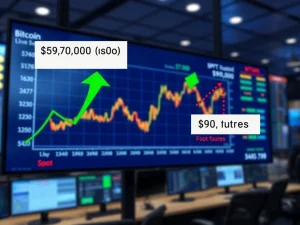
The liquidation wave commenced during the January 14 trading session when Bitcoin (BTC) surged past $95,000, eventually peaking near $97,800. Simultaneously, Ethereum (ETH) rallied approximately 5% to cross $3,380. These coordinated movements triggered automatic liquidations of leveraged short positions across major exchanges. Specifically, the total liquidated volume reached approximately $700 million within hours, with Bitcoin accounting for $380 million and Ethereum for $250 million. This phenomenon, known as a short squeeze, occurs when falling prices force traders who borrowed assets to sell (short sellers) to repurchase them hastily to cover losses, ironically pushing prices higher.
Gabe Selby, Head of Research at CF Benchmarks, provided critical context. “Breaking above $95,000 triggered the liquidation of a large volume of short positions, forcing a buyback demand,” Selby explained. He characterized the rally as “mechanical,” linking it to a technical market adjustment following price declines in October and November 2025. Notably, trading volumes exploded without a corresponding spike in funding rates—the fees paid between long and short position holders in perpetual swap markets. This detail suggests the move was driven more by forced covering than by new, leveraged bullish speculation.
Key Data from the Liquidation Cascade
- Total Liquidations: ~$700 million in short positions.
- Bitcoin’s Share: $380 million, highlighting its dominant market influence.
- Ethereum’s Share: $250 million, indicating broad market stress.
- Market Context: No major fundamental news catalyst preceded the move.
- Sentiment Shift: The Crypto Fear & Greed Index jumped to 61, its highest since October 2025.
Market Mechanics and the Weight of Leverage
The event vividly illustrates the inherent vulnerabilities within cryptocurrency derivatives markets. Unlike traditional equity markets, crypto markets feature extremely high leverage, sometimes exceeding 100x on certain platforms. This leverage amplifies both gains and losses. When prices move sharply against concentrated positions, a liquidation cascade can become self-fulfilling. As prices rise, short positions hit their liquidation prices, triggering market buy orders. These buy orders push prices higher, liquidating more shorts in a volatile feedback loop.
This structure means market dynamics can temporarily decouple from underlying fundamentals. Joel Kruger, a strategist at LMAX Group, noted the movement “awakened the bullish momentum,” with participants now eyeing a push toward $100,000 for Bitcoin. However, Kruger and other analysts emphasize the lack of a direct fundamental catalyst, such as a macroeconomic policy shift or a major corporate adoption announcement. The rally instead stemmed from persistent order book imbalances and the structural setup of the derivatives market itself.
The Role of ETFs and Institutional Flows
Providing a backdrop of legitimacy, the spot Bitcoin and Ethereum ETFs witnessed significant inflows. On their first trading day of the year, these products attracted $646 million. This institutional interest creates a foundational support level, even as short-term volatility is driven by speculative derivatives trading. The coexistence of steady ETF inflows and violent derivatives liquidations paints a picture of a maturing yet still fragmented market.
Analyst Perspectives: Bullish Reset or Technical Bounce?
Market observers remain divided on the event’s long-term significance. The bullish interpretation views the liquidation flush as a healthy clearing of excess speculative leverage, potentially paving the way for a more sustainable uptrend. Kruger pointed to supportive peripheral fundamentals, including stability in traditional equity markets and U.S. bond yields, which help restore overall risk appetite. He identified key confirmation levels: “A weekly close above $95,000 for BTC, or a surpassing of $3,500 for ETH, would constitute an important confirmation signal.”
Conversely, the cautious perspective highlights the absence of a core fundamental driver. The rally’s mechanical nature raises questions about its sustainability once the forced buying subsides. The critical test will be whether prices can consolidate at these higher levels without the support of further liquidation-driven demand. The resilience of major altcoins and overall market depth in the coming weeks will serve as crucial indicators.
Historical Context and Risk Management Lessons
Liquidation events of this magnitude are not unprecedented in crypto history. Similar short squeezes occurred during the 2021 bull market and following the LUNA collapse in 2022. Each event reinforces critical lessons for traders: the dangers of over-leverage, the importance of understanding exchange liquidation engines, and the need for robust risk management strategies, including stop-loss orders and position diversification.
For the broader market, these events test the resilience of trading infrastructure and highlight the need for continued maturation of risk management tools, such as more sophisticated derivatives and improved market surveillance. Regulators globally are likely scrutinizing such volatility to inform future policy frameworks for crypto derivatives.
Conclusion
The January 14 crypto liquidations event, resulting in a $700 million short squeeze, serves as a stark reminder of the powerful forces within digital asset markets. While Bitcoin’s breach of $95,000 and Ethereum’s surge above $3,300 ignited the move, the underlying driver was the mechanical unwinding of highly leveraged positions. This episode balances between signaling a potential bullish market reset and underscoring the persistent fragility induced by excessive leverage. Ultimately, the market’s trajectory will depend on its ability to attract organic, long-term capital beyond the reflexive mechanics of derivatives trading. Investors should prioritize understanding these market structures while maintaining disciplined risk management in the face of ongoing volatility.
FAQs
Q1: What caused the massive crypto liquidations on January 14, 2026?
The primary cause was Bitcoin’s price surge above $95,000 and Ethereum’s rise above $3,300. This move triggered automatic liquidations of leveraged short positions on derivatives exchanges, leading to a short squeeze where forced buying pushed prices even higher.
Q2: What is a short squeeze in cryptocurrency markets?
A short squeeze happens when traders who have borrowed and sold an asset (betting its price will fall) are forced to buy it back to cover their positions as prices rise. This forced buying creates additional upward pressure on the price, creating a volatile feedback loop.
Q3: Were there any fundamental news events behind this price movement?
Analysts reported no direct fundamental catalyst, such as major regulatory news or corporate adoption. The rally was described as “mechanical” or technical, driven by market structure and leverage rather than underlying economic news.
Q4: How does high leverage contribute to such liquidation events?
High leverage allows traders to control large positions with relatively little capital. While this magnifies potential profits, it also means that small price moves against the position can wipe out the trader’s collateral, triggering an automatic liquidation by the exchange to prevent further loss.
Q5: What should traders learn from this liquidation event?
The key lessons are the importance of prudent leverage, the necessity of understanding liquidation mechanics on their chosen exchange, and the implementation of strict risk management strategies. Events like this highlight that markets can move violently due to internal mechanics alone.