Bitcoin Open Interest Plummets 31%: A Powerful Signal for Imminent Market Rebound
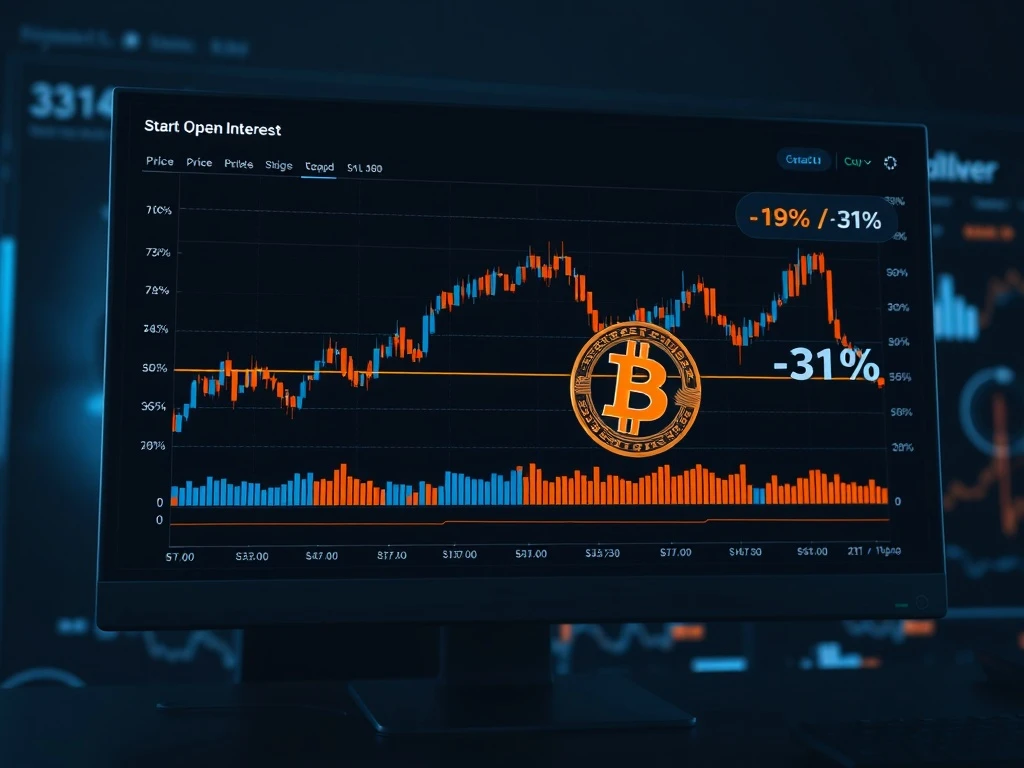
Global cryptocurrency markets witnessed a significant development this week as Bitcoin derivatives open interest plunged 31% since October, creating what analysts describe as a powerful signal for potential market recovery. According to CryptoQuant contributor Darkpost, this substantial decrease represents healthy market deleveraging that historically precedes major rebounds. The data, collected from major derivatives exchanges worldwide, reveals a systematic unwinding of speculative positions that could establish crucial support levels for Bitcoin’s next upward movement.
Bitcoin Open Interest Decline Signals Market Reset
The cryptocurrency derivatives market experienced a remarkable transformation during recent months. Bitcoin open interest, representing the total number of outstanding derivative contracts, decreased by nearly one-third from its October peak. This reduction occurred across major trading platforms including Binance, Bybit, and OKX. Market analysts interpret this movement as a necessary correction following periods of excessive leverage. Consequently, the current market structure appears healthier than during previous speculative bubbles.
Derivatives markets serve as crucial indicators for understanding trader sentiment and market positioning. Open interest specifically measures the total number of active contracts that market participants hold. When this metric declines significantly, it typically indicates that traders are closing positions rather than opening new ones. This process, known as deleveraging, reduces systemic risk within cryptocurrency markets. Historical data from 2018 and 2020 demonstrates similar patterns preceding substantial Bitcoin recoveries.
Understanding Derivatives Market Mechanics
Cryptocurrency derivatives trading involves complex financial instruments that derive their value from underlying assets like Bitcoin. These instruments include futures contracts, options, and perpetual swaps. Traders utilize derivatives for various purposes including speculation, hedging, and leverage amplification. The current market correction primarily affected perpetual swap contracts, which represent the majority of cryptocurrency derivatives volume. These instruments allow traders to maintain positions without expiration dates, making them particularly sensitive to market sentiment shifts.
Historical Precedents and Market Psychology
Previous cryptocurrency cycles provide valuable context for understanding current market dynamics. During the 2018 bear market, Bitcoin open interest declined approximately 40% before the market established its ultimate bottom. Similarly, the March 2020 crash saw open interest reductions exceeding 50% before Bitcoin began its historic rally to new all-time highs. These patterns suggest that excessive leverage must be cleared from markets before sustainable recoveries can occur. Market psychology plays a crucial role in this process, as fear-driven liquidations often create oversold conditions that attract institutional buyers.
The current market environment shares characteristics with both previous cycles. However, important distinctions exist in market structure and participant composition. Institutional involvement has increased substantially since 2020, potentially altering traditional cycle dynamics. Despite this evolution, fundamental principles of market leverage and risk management continue to apply. The gradual unwinding of positions observed since October suggests a more orderly correction compared to previous rapid liquidations.
Analyst Perspectives on Market Recovery
Multiple cryptocurrency analysts have commented on the open interest decline’s implications. Darkpost’s analysis emphasizes the healthy nature of current deleveraging while acknowledging potential risks. Other market observers note that reduced open interest typically correlates with decreased volatility, creating conditions conducive to trend reversals. However, analysts universally caution against interpreting single indicators in isolation. Comprehensive market analysis requires examining multiple metrics including funding rates, liquidation levels, and spot market volumes.
The relationship between open interest and price action follows established technical principles. High open interest during downtrends often indicates persistent selling pressure, while declining open interest during price consolidation suggests weakening bearish momentum. Current market conditions display the latter pattern, with Bitcoin’s price stabilizing as speculative positions unwind. This technical setup frequently precedes trend reversals when combined with other confirming indicators.
Risk Factors and Alternative Scenarios
Despite optimistic interpretations, legitimate concerns persist regarding extended market corrections. Darkpost specifically warned about potential further declines if Bitcoin enters a full bear market phase. Historical analysis reveals that open interest can continue declining throughout prolonged downtrends, sometimes reaching reductions exceeding 70% from peak levels. Such scenarios typically involve fundamental market shifts rather than technical corrections alone. Current macroeconomic conditions including interest rate policies and regulatory developments could influence Bitcoin’s trajectory independently of derivatives metrics.
Market participants should consider several risk factors when evaluating recovery potential. Exchange reserves, regulatory announcements, and macroeconomic indicators all impact cryptocurrency valuations. The derivatives market represents just one component of the broader ecosystem. Furthermore, the increasing sophistication of cryptocurrency derivatives introduces new variables including options flows and volatility products that weren’t significant factors during previous cycles.
Comparative Analysis of Market Metrics
Key derivatives metrics currently indicate:
- Open interest reduction: 31% since October peak
- Funding rates: Mostly neutral across major exchanges
- Liquidations: Significant reduction in forced position closures
- Volume ratios: Spot trading increasing relative to derivatives
This combination of factors suggests decreasing speculative activity and increasing fundamental trading. The shift from derivatives-dominated to spot-dominated markets often precedes sustainable price appreciation. Institutional accumulation patterns during recent months support this interpretation, with significant Bitcoin purchases occurring despite derivatives market contractions.
Market Structure Evolution Since 2020
Cryptocurrency derivatives markets have undergone substantial transformation during recent years. Regulatory developments, product innovation, and participant diversification have all influenced market dynamics. The current open interest decline occurs within this evolved context, making direct historical comparisons challenging. However, fundamental principles of leverage cycles remain relevant despite structural changes. Market makers and institutional participants now play larger roles in derivatives markets, potentially smoothing extreme volatility while extending correction periods.
Technological advancements have also impacted derivatives trading. Automated risk management systems, sophisticated liquidation engines, and cross-exchange arbitrage bots have changed how positions unwind during market stress. These developments may explain the relatively orderly nature of current deleveraging compared to previous chaotic liquidations. The market appears to be experiencing a controlled reset rather than a panic-driven collapse.
Conclusion
Bitcoin open interest reductions represent a potentially positive development for cryptocurrency markets seeking sustainable recovery. The 31% decline since October indicates healthy deleveraging that historically precedes market bottoms. However, investors should consider this metric alongside broader market conditions and fundamental factors. While derivatives market resetting creates favorable technical conditions, ultimate price direction depends on multiple variables including institutional flows, regulatory developments, and macroeconomic trends. The current market environment suggests cautious optimism tempered with awareness of persistent risks in evolving cryptocurrency ecosystems.
FAQs
Q1: What exactly is Bitcoin open interest?
Bitcoin open interest represents the total number of outstanding derivative contracts across exchanges. It measures market participation and leverage levels rather than trading volume.
Q2: Why does declining open interest suggest potential market recovery?
Reduced open interest indicates deleveraging, where excessive speculative positions are cleared. This process removes systemic risk and often establishes market bottoms before new uptrends begin.
Q3: How significant is a 31% reduction in historical context?
Previous major market bottoms saw open interest declines between 40-60%. The current 31% reduction suggests substantial but not extreme deleveraging, potentially indicating a measured market reset.
Q4: Can open interest continue declining in a bear market?
Yes, during prolonged bear markets, open interest can decline 70% or more from peak levels. The current reduction doesn’t guarantee immediate recovery if fundamental conditions deteriorate.
Q5: How do institutional investors affect derivatives markets differently now?
Institutional participation has increased market sophistication but may extend correction periods through systematic risk management rather than panic selling.