Google VASP Registration Mandate Sparks Critical Deadline for Crypto Exchanges in South Korea
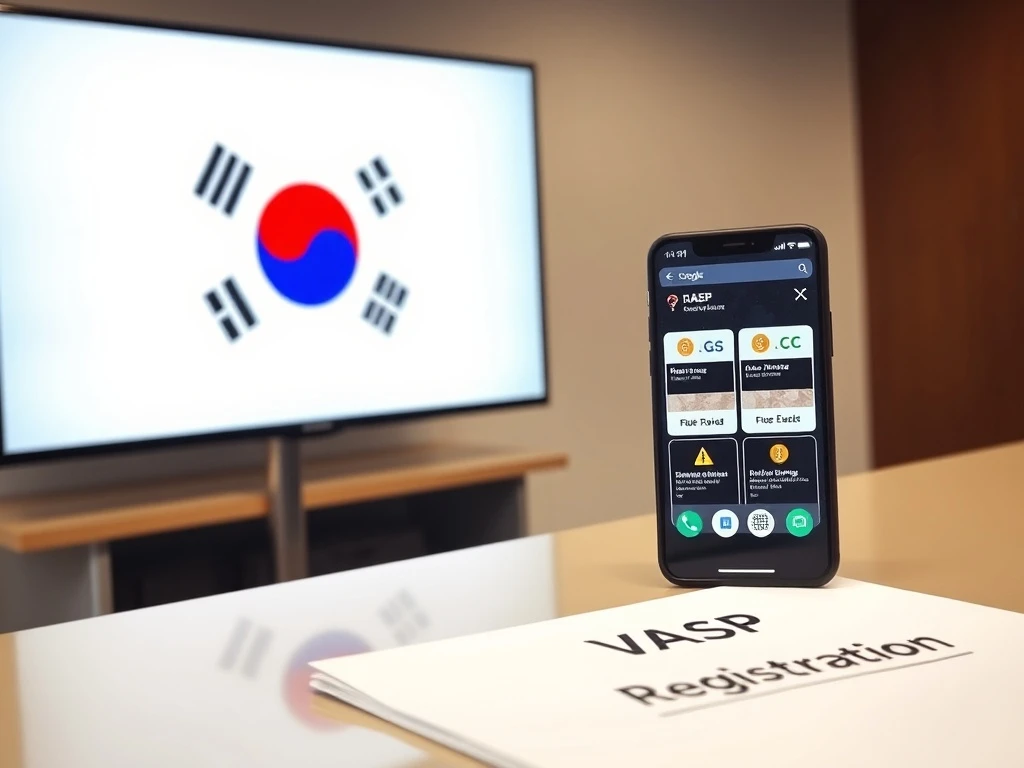
SEOUL, South Korea – January 15, 2025: In a decisive move that reshapes the digital asset landscape, Google has instituted a critical new policy requiring all cryptocurrency exchange applications on its Play Store in South Korea to provide verified proof of their Virtual Asset Service Provider (VASP) registration. Consequently, this mandate creates an imminent compliance deadline of January 28, directly threatening the operational continuity for major global exchanges that have not yet secured this essential regulatory approval from South Korea’s Financial Intelligence Unit (FIU).
Google VASP Registration Policy Explained
Google’s new enforcement action represents a significant escalation in platform-level compliance for the cryptocurrency sector. Specifically, the policy requires exchange operators to submit official documentation directly to Google, proving their successful registration as a Virtual Asset Service Provider with South Korea’s FIU. Moreover, this requirement aligns Google’s app marketplace governance with the nation’s stringent financial regulations. As a result, any exchange application failing to meet this standard will become unavailable for new installations by South Korean users after the January 28 cutoff. However, existing installations on user devices may continue to function, creating a complex user access scenario.
The policy’s immediate impact centers on global cryptocurrency giants. For instance, platforms like Binance, OKX, and Bybit, which currently serve South Korean users but lack formal VASP registration, face potential removal from the Play Store. Furthermore, this move by Google acts as a powerful enforcement mechanism for South Korea’s existing regulatory framework, effectively outsourcing a layer of compliance verification to a major technology gatekeeper. Industry analysts note this creates a powerful public-private partnership for regulatory enforcement.
The Regulatory Backdrop: South Korea’s Evolving Crypto Framework
South Korea established its VASP registration regime under the Specific Financial Information Act, which underwent amendments to incorporate virtual asset service providers. This law mandates that all crypto exchanges operating in South Korea must register with the FIU, a division of the Financial Services Commission (FSC). The registration process involves rigorous checks, including:
- Real-Name Account Partnerships: Exchanges must partner with local banks to ensure user accounts are verified.
- Anti-Money Laundering (AML) Systems: Implementation of robust, certified AML and Know-Your-Customer (KYC) protocols.
- Information Security Management System (ISMS) Certification: Proof of adequate cybersecurity measures from a recognized authority.
- Corporate Governance: Disclosure of executive backgrounds and operational transparency.
Previously, enforcement relied on direct regulatory action against non-compliant exchanges. Google’s policy, however, introduces a novel and potent market-access barrier. This development follows a timeline of increasing scrutiny:
| Date | Event |
|---|---|
| March 2020 | South Korea passes the amended Specific Financial Information Act, requiring VASP registration. |
| September 2021 | Registration deadline passes; dozens of exchanges shut down for non-compliance. |
| 2022-2024 | Registered exchanges (Upbit, Bithumb, Coinone, Korbit) dominate the domestic market. |
| Q4 2024 | Google reportedly begins notifying exchanges of the impending policy change. |
| January 2025 | Google announces the January 28 enforcement deadline for VASP proof on Play Store. |
Potential Impact on Major Global Crypto Exchanges
The policy casts immediate uncertainty over the operations of several prominent international exchanges in South Korea. According to the report by Digital Asset, Binance, OKX, and Bybit have not completed the VASP registration process. When questioned about its registration plans, a Binance spokesperson provided a notably non-committal response, stating the matter “has not been discussed internally.” This suggests a potential strategic divergence, where some global platforms may deprioritize the South Korean market rather than undergo the costly and complex localization process.
The impact extends beyond simple app availability. Firstly, new user acquisition through the primary Android app distribution channel would cease entirely. Secondly, the inability to publish updates via the Play Store could lead to security and functionality issues for existing users over time. Thirdly, it signals to the global market that South Korea’s regulatory perimeter is effectively extending through technology partnerships. Consequently, exchanges must now weigh the market’s value against the compliance cost.
Expert Analysis on Market Structure and User Safety
Financial regulation experts view Google’s move as a logical extension of “gatekeeper accountability.” Professor Kim Jae-hyun, a fintech law specialist at Seoul National University, explains, “Google controls a critical distribution channel. By mandating VASP proof, they are not creating new law but enforcing existing law at the point of access. This significantly raises the compliance burden for offshore exchanges and strengthens the position of registered domestic operators.” This action could accelerate market consolidation around the four major registered South Korean exchanges.
From a user protection perspective, the policy offers clear benefits. It creates a higher assurance layer for Android users downloading crypto apps, reducing exposure to unregistered or potentially non-compliant platforms. Nonetheless, it also raises questions about user choice and market competition, potentially limiting access to global liquidity pools and diverse asset offerings available on international platforms.
Broader Implications for the Global Crypto Industry
Google’s policy in South Korea may establish a precedent for other jurisdictions with clear crypto licensing regimes. Regulatory bodies in the European Union (under MiCA), the United Kingdom, and Japan could pressure app stores to adopt similar gatekeeping functions. This trend points toward a future where app store compliance becomes a standard component of global crypto regulation.
For exchange operators, the strategy must now encompass not only direct regulator relationships but also platform-partner policies. The technical requirement to submit official documentation to Google adds an administrative step that requires coordination between legal, compliance, and developer relations teams. Failure to manage this interface correctly could result in loss of market access regardless of regulatory status.
The move also highlights the evolving role of major tech firms in the financial ecosystem. As neutral platform providers, their terms of service increasingly intersect with national financial regulations, casting them as de facto enforcement agents. This development will likely prompt further discussion about the responsibilities and liabilities of technology gatekeepers in regulated industries.
Conclusion
Google’s mandate for VASP registration proof from cryptocurrency exchanges on the South Korean Play Store marks a pivotal convergence of technology platform governance and financial regulation. By setting a January 28 deadline, Google has created a powerful incentive for global exchanges to formalize their status with South Korea’s FIU or risk losing access to the Android user base. This policy strengthens the domestic regulatory framework, enhances user protection, and may reshape the competitive landscape by favoring fully compliant, registered entities. The response from major exchanges like Binance, OKX, and Bybit will reveal much about their long-term commitment to the South Korean market and their adaptability to an increasingly gatekept global regulatory environment.
FAQs
Q1: What is VASP registration in South Korea?
A1: VASP (Virtual Asset Service Provider) registration is a mandatory licensing process with South Korea’s Financial Intelligence Unit (FIU). It requires crypto exchanges to meet strict anti-money laundering, cybersecurity, real-name banking, and corporate governance standards to operate legally in the country.
Q2: Which exchanges are affected by Google’s new policy?
A2: The policy affects any cryptocurrency exchange app distributed on the Google Play Store in South Korea that lacks verified VASP registration. Reports specifically mention global platforms like Binance, OKX, and Bybit as being at risk, while registered domestic exchanges (Upbit, Bithumb, Coinone, Korbit) are compliant.
Q3: What happens on January 28, 2025?
A3: Starting January 28, Google will prevent new installations of any crypto exchange app that has not submitted proof of VASP registration to the Play Store. Existing app installations on user devices may continue to work, but they will not receive updates and will be unavailable for new users.
Q4: Can users still access non-compliant exchanges after the deadline?
A4: Users may potentially access exchanges via their websites or through alternative Android app distribution methods (sideloading). However, using unregistered exchanges may carry regulatory and security risks, and the convenience and security of the official Play Store channel will be unavailable for those platforms.
Q5: Does this policy affect iOS users on the Apple App Store?
A5: Google’s policy applies only to its Google Play Store for Android devices. Apple maintains its own App Store review guidelines. However, Apple has historically enforced strict compliance with local laws, and it may introduce a similar requirement for South Korea in the future, though no such announcement has been made.