Bank of Korea Interest Rate Holds Steady at 2.50% Amidst Critical Global Economic Crossroads
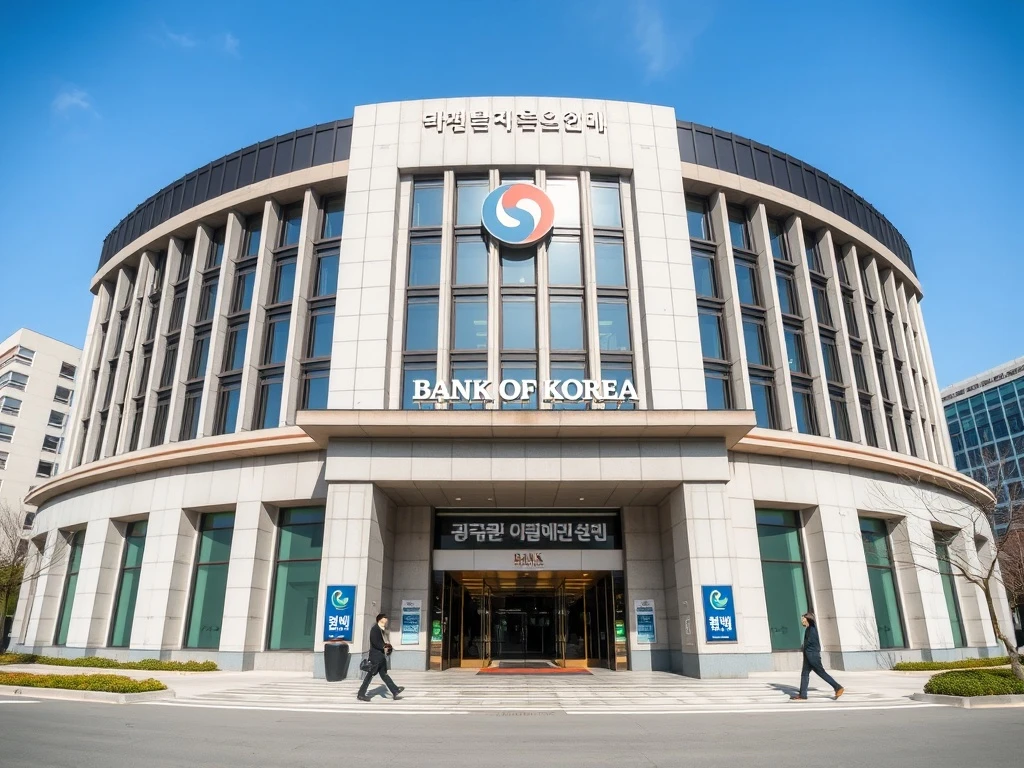
SEOUL, South Korea – January 16, 2025: The Bank of Korea (BOK) has decisively maintained its benchmark interest rate at 2.50% for a fifth consecutive policy meeting, extending a monetary policy pause that began in mid-2024. This pivotal decision underscores the central bank’s ongoing balancing act between persistent inflation concerns and signs of economic fragility. Consequently, the BOK continues its wait-and-see approach in a complex global financial landscape.
Bank of Korea Interest Rate Decision: A Prolonged Pause
The Monetary Policy Board of the Bank of Korea unanimously voted to keep the Base Rate unchanged at 2.50%. This marks the fifth hold since July 2024, following previous pauses in August, October, and November. Governor Rhee Chang-yong emphasized data dependency for future moves. The current rate represents a significant shift from the aggressive tightening cycle that peaked in early 2023. Market analysts widely anticipated this outcome, reflecting consensus on the need for stability.
Furthermore, the BOK’s statement highlighted several key factors influencing its decision. These include moderating but still-elevated core inflation, uneven domestic consumption, and heightened external uncertainties. The central bank also revised its 2025 GDP growth forecast downward slightly, acknowledging global headwinds. This cautious stance aligns with several other major central banks currently in holding patterns.
Analyzing the Economic Context Behind the Hold
Understanding this extended pause requires examining South Korea’s economic indicators. Consumer price inflation has cooled from its peak but remains above the BOK’s 2% target. Core inflation, which excludes volatile food and energy prices, has proven particularly sticky. Meanwhile, household debt levels remain a perennial concern for policymakers, limiting their appetite for further rate hikes that could strain heavily indebted consumers.
On the external front, the global economic outlook remains clouded. Slowing growth in China, South Korea’s largest trading partner, continues to pressure export-oriented sectors. Additionally, divergent monetary policies among major economies like the U.S. Federal Reserve and the European Central Bank create foreign exchange volatility. The BOK must carefully manage these cross-border capital flows and their impact on the Korean won.
Expert Analysis and Market Implications
Financial experts point to the nuanced signals within the BOK’s statement. “The language suggests the tightening cycle is definitively over, but the door for further hikes remains technically ajar,” noted Dr. Kim Soo-min, a senior economist at the Korea Institute of Finance. “The focus has shifted entirely to the duration of this restrictive stance. Markets are now pricing in a rate cut no earlier than the third quarter of 2025.”
The immediate market reaction was muted, indicating the decision was fully priced in. The Korean won showed minimal movement against the U.S. dollar, while bond yields edged slightly lower. However, the prolonged hold has tangible effects. For savers, it means continued relatively high returns on deposits. For businesses and prospective homeowners, borrowing costs remain elevated, potentially dampening investment and major purchases. The table below summarizes the recent BOK rate decision timeline.
| Meeting Date | Decision | Rate | Key Driver |
|---|---|---|---|
| July 2024 | Hold | 2.50% | Assessment of prior hikes |
| August 2024 | Hold | 2.50% | Inflation persistence |
| October 2024 | Hold | 2.50% | Global growth fears |
| November 2024 | Hold | 2.50% | Household debt risks |
| January 2025 | Hold | 2.50% | Balancing growth & inflation |
The Path Forward for South Korean Monetary Policy
Looking ahead, the BOK’s policy trajectory hinges on a narrow set of data points. First, the evolution of service-sector inflation will be critical. Second, the labor market’s strength and wage growth trends will influence domestic demand. Third, the performance of key exports like semiconductors and automobiles will signal broader economic health. The central bank has explicitly stated its commitment to bringing inflation sustainably to target.
Comparatively, South Korea’s monetary policy stance sits between more hawkish and dovish global peers. The BOK’s 2.50% rate is higher than the European Central Bank’s but lower than the Federal Reserve’s. This differential affects currency valuations and trade competitiveness. Policymakers must therefore monitor international developments as closely as domestic ones. A sudden shift by a major central bank could force the BOK’s hand.
Potential Risks and Contingency Planning
Several risk scenarios could disrupt the current policy pause. A resurgence in global energy prices could reignite inflationary pressures. Alternatively, a sharper-than-expected downturn in China could severely impact Korean exports, potentially necessitating a stimulative rate cut. The BOK maintains it has sufficient policy tools to address either scenario, including macroprudential measures to manage financial stability risks separate from interest rates.
Conclusion
The Bank of Korea’s decision to hold its benchmark interest rate at 2.50% for a fifth time reflects a deliberate, stability-focused strategy. This extended pause allows previous rate hikes to fully permeate the economy while providing policymakers time to assess conflicting data. The central bank prioritizes anchoring inflation expectations without derailing economic growth. Ultimately, the duration of this restrictive monetary policy will define South Korea’s economic trajectory in 2025 and beyond.
FAQs
Q1: What is the Bank of Korea’s current benchmark interest rate?
The Bank of Korea’s Base Rate remains at 2.50%, unchanged since it was set at that level in early 2024.
Q2: Why did the BOK decide to freeze the rate again?
The BOK cited the need to balance moderating inflation with economic growth risks, alongside global uncertainties and high household debt levels.
Q3: How does this rate compare to historical averages?
The current 2.50% rate is above the ultra-low levels seen during the pandemic but below the highs of previous tightening cycles, representing a moderately restrictive stance.
Q4: What does this mean for loans and mortgages in South Korea?
Borrowing costs for variable-rate loans and new mortgages will remain elevated, continuing the financial pressure on households and businesses with existing debt.
Q5: When is the next Bank of Korea monetary policy meeting?
The BOK’s Monetary Policy Board typically meets every two months. The next decision is scheduled for February 2025, where officials will review updated economic projections.