SEC Zcash Investigation Ends with Landmark Decision, Providing Crucial Regulatory Clarity
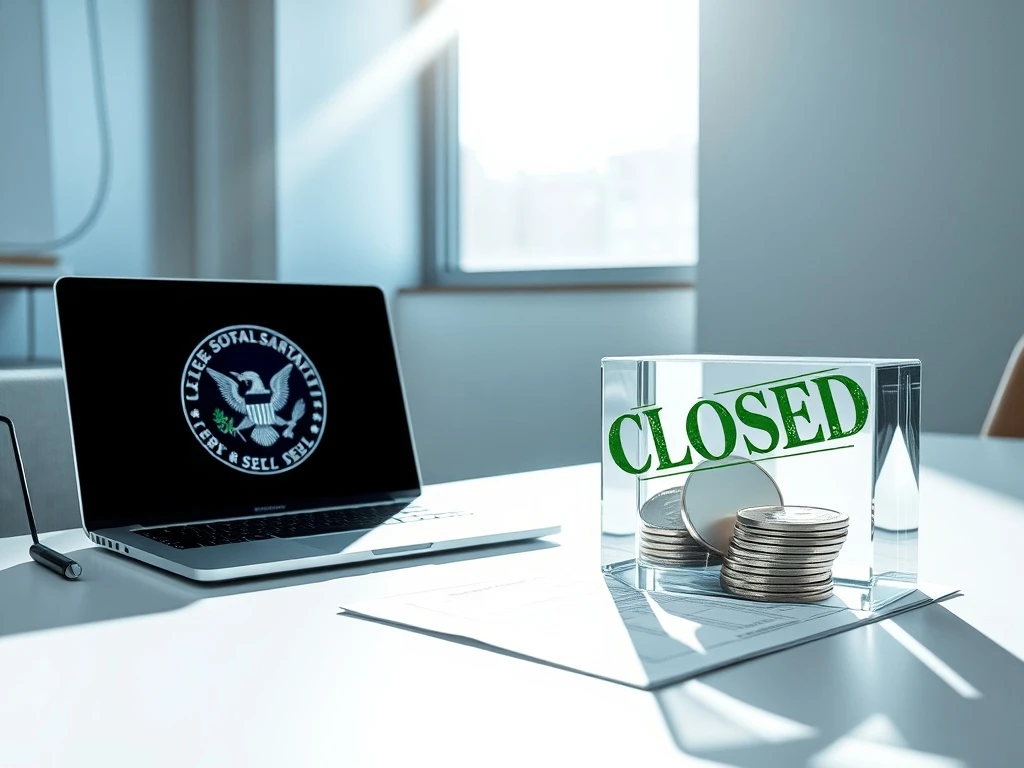
In a significant development for the cryptocurrency sector, the U.S. Securities and Exchange Commission (SEC) has formally concluded its investigation into the Zcash Foundation without recommending any enforcement action. This decision, reported in early 2025, marks the end of a regulatory probe that began in 2023 and provides much-needed clarity for privacy-focused digital assets. The closure signals a potential shift in how regulators approach complex blockchain technologies built with enhanced privacy features.
SEC Zcash Investigation Concludes Without Penalty
The SEC officially notified the Zcash Foundation of its decision to close the investigation. Consequently, the foundation will face no penalties or enforcement actions. This notification arrived after nearly two years of scrutiny. The investigation initially examined whether Zcash (ZEC), the privacy-centric cryptocurrency the foundation supports, might constitute a security under U.S. law. Therefore, the SEC’s conclusion represents a pivotal moment for the project and similar technologies.
Regulatory experts immediately noted the importance of this outcome. Specifically, it suggests the SEC may distinguish between a cryptocurrency’s underlying technology and its promotional or fundraising activities. The Zcash Foundation, established in 2016, focuses on protocol development, research, and grants. It does not control ZEC’s monetary policy or issuance, factors often critical in securities analysis. This distinction likely played a key role in the agency’s final determination.
Background and Timeline of the Regulatory Probe
The SEC’s inquiry into the Zcash Foundation reportedly commenced in 2023. It emerged during a period of intensified regulatory focus on the broader crypto industry. At that time, the SEC was actively pursuing numerous enforcement actions against other crypto projects alleging unregistered securities offerings. The Zcash probe, however, always occupied a unique space due to the coin’s foundational privacy technology.
Zcash utilizes a cryptographic method called zk-SNARKs. This technology allows for shielded transactions where sender, receiver, and amount remain encrypted on the public blockchain. While offering strong privacy, this feature also raised questions from regulators concerned about compliance with financial surveillance laws. The investigation’s closure indicates the SEC separated its review of the foundation’s activities from broader concerns about the technology’s use.
Expert Analysis on the Regulatory Implications
Legal specialists in blockchain technology have weighed in on the decision’s ramifications. “The SEC’s choice not to act is as informative as an enforcement action,” noted a former SEC enforcement attorney now in private practice. “It demonstrates that supporting open-source, decentralized protocol development, absent clear profit-seeking from the efforts of others, may fall outside the Howey Test’s scope.” This reference is to the Supreme Court case defining an investment contract.
Furthermore, the decision provides a reference point for other privacy-enhancing crypto projects. Projects like Monero (XMR) and Dash (DASH) have long operated under similar regulatory uncertainty. The table below contrasts key aspects of the Zcash Foundation’s structure with typical entities the SEC has charged.
| Entity Characteristic | Zcash Foundation Model | SEC-Charged ICO Model |
|---|---|---|
| Fundraising Mechanism | Initial mining “founder’s reward” (ended 2020) | Direct token sale to public investors |
| Ongoing Control | Non-profit; supports independent development | Centralized team controls roadmap & treasury |
| Profit Promise | No explicit promise of profits | Marketing emphasized price appreciation |
| Technology Focus | Public good R&D for privacy tech | Often focused on building a profitable platform |
Impact on the Cryptocurrency and Privacy Landscape
The probe’s closure has immediate and tangible effects. First, it removes a significant overhang for the Zcash Foundation, allowing it to operate with greater certainty. Second, it offers a degree of validation for non-profit entities in the crypto governance space. Finally, it may influence how other global regulators view similar organizations. The decision arrives amid ongoing international debates about balancing financial privacy with regulatory compliance, such as the EU’s Markets in Crypto-Assets (MiCA) framework.
Market participants have reacted cautiously but positively. The clarity reduces one layer of systemic risk for investors and developers engaged with the Zcash ecosystem. However, experts caution that the decision is case-specific. “This is not a blanket approval of privacy coins,” emphasized a fintech law professor. “It is a decision not to pursue action against this particular foundation based on its specific facts and activities. The underlying assets themselves remain in a complex regulatory category.”
The Path Forward for Privacy-Centric Protocols
Looking ahead, the foundation and similar projects face continued challenges. Regulatory expectations around travel rule compliance and anti-money laundering (AML) for financial intermediaries dealing in privacy coins remain stringent. The technology itself must evolve to enable optional compliance without breaking its core privacy guarantees. Projects are already working on solutions like “viewing keys” that allow users to selectively disclose transaction details to auditors or tax authorities.
This regulatory milestone may accelerate technical innovation. Developers can now focus more resources on protocol upgrades and less on legal defense. The broader industry will watch how this precedent interacts with other SEC cases, particularly those concerning the classification of crypto assets as securities. The decision underscores the importance of organizational structure and conduct in the regulatory analysis of decentralized networks.
Conclusion
The SEC’s decision to close its Zcash Foundation investigation without enforcement action provides crucial regulatory clarity for a complex segment of the cryptocurrency market. This outcome highlights the nuanced approach regulators must take with decentralized, privacy-focused technologies. It reinforces the distinction between supporting public infrastructure and engaging in securities promotion. The landmark decision will likely serve as a key reference point for future regulatory engagements with open-source cryptographic projects, shaping the evolution of digital asset privacy and compliance for years to come.
FAQs
Q1: What was the SEC investigating about the Zcash Foundation?
The SEC probe, begun in 2023, examined whether the Zcash Foundation’s activities related to the Zcash (ZEC) cryptocurrency potentially violated U.S. securities laws. The investigation focused on the foundation’s role and whether ZEC could be classified as a security.
Q2: Does this mean Zcash is not a security?
The SEC’s decision not to take action against the Zcash Foundation is a positive signal, but it is not a formal legal ruling that ZEC is not a security. It indicates that, based on the foundation’s specific structure and activities, the SEC chose not to pursue an enforcement case at this time.
Q3: How does this affect other privacy coins like Monero?
While not a direct precedent, the decision provides a helpful data point. It suggests that non-profit foundations supporting protocol development may face different regulatory scrutiny than commercial entities selling tokens. Each project’s unique facts will determine its regulatory standing.
Q4: What are the key reasons the SEC may have closed the investigation?
Key factors likely included the Zcash Foundation’s non-profit status, its focus on public-good research and development, the lack of a direct promise of profits to supporters, and the decentralized nature of the Zcash network which the foundation does not control.
Q5: What are the main compliance challenges remaining for privacy coins?
Major challenges remain for exchanges and financial services firms handling privacy coins. They must still navigate “Travel Rule” regulations, Bank Secrecy Act obligations, and anti-money laundering requirements, which are difficult to reconcile with fully private transactions.