Coinone Delists MAVIA: Critical Regulatory Shift Hits Gaming Token in South Korea
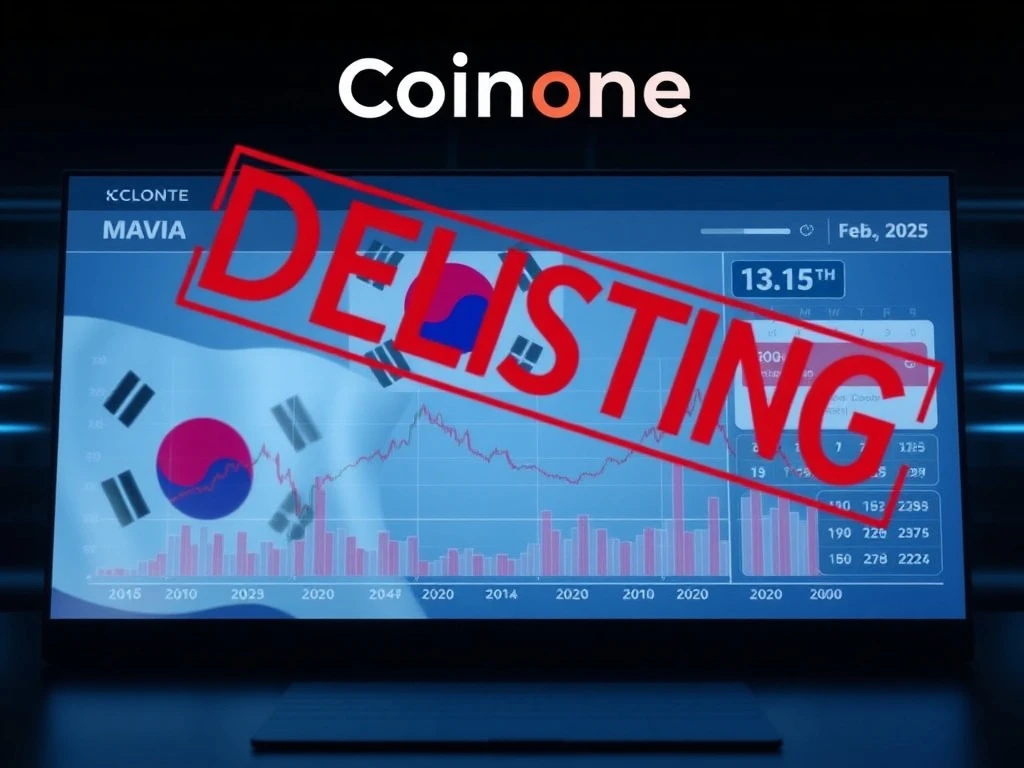
SEOUL, South Korea – February 10, 2025 – The South Korean cryptocurrency exchange Coinone has announced a significant regulatory decision to delist the Heroes of Mavia (MAVIA) token, creating immediate market repercussions and highlighting evolving compliance standards in Asia’s cryptocurrency landscape. This announcement follows increased scrutiny of gaming-related digital assets and demonstrates how exchanges are adapting to 2025’s regulatory environment.
Coinone Announces MAVIA Delisting Details
Coinone officially confirmed the MAVIA delisting through a public notice on February 10, 2025. The exchange will suspend all MAVIA trading pairs at precisely 6:00 a.m. UTC on February 13, 2025. Consequently, users must complete any pending transactions before this deadline. After the suspension, withdrawal functionality will remain available for a limited period, typically 30 days based on Coinone’s historical practices. This timeline gives MAVIA holders adequate opportunity to manage their assets.
The exchange cited standard delisting criteria in its announcement. Specifically, Coinone referenced concerns about the project’s compliance with updated local regulations. Additionally, the exchange mentioned trading volume considerations and potential security vulnerabilities. However, Coinone did not provide detailed technical specifications about these security concerns. This approach maintains transparency while protecting sensitive information.
Understanding the Heroes of Mavia Project
Heroes of Mavia represents a mobile strategy game built on blockchain technology. Developed by Skrice Studios, the game integrates non-fungible tokens (NFTs) and the MAVIA utility token. Players can earn MAVIA through gameplay, particularly by participating in base-building and combat scenarios. The token facilitates various in-game transactions and governance functions within the Mavia ecosystem.
The project launched its token in early 2024 through multiple exchange listings. Initially, MAVIA gained attention for blending traditional gaming mechanics with blockchain economics. However, recent months showed declining trading volumes across several exchanges. This trend potentially influenced Coinone’s decision-making process regarding the token’s viability on their platform.
South Korea’s Evolving Crypto Regulatory Framework
South Korea implemented the Virtual Asset User Protection Act in July 2024, establishing comprehensive cryptocurrency regulations. This legislation requires exchanges to conduct rigorous due diligence on listed tokens. Furthermore, the law mandates ongoing monitoring of compliance with financial regulations. Gaming tokens like MAVIA face particular scrutiny regarding their classification as securities or utility tokens.
The Financial Services Commission (FSC) oversees cryptocurrency exchanges in South Korea. Recently, the FSC emphasized stricter enforcement of existing guidelines. Consequently, exchanges like Coinone proactively review their token listings. This regulatory environment explains why MAVIA might not meet updated compliance standards for continued trading.
Market Impact and Immediate Consequences
The MAVIA delisting announcement immediately affected the token’s market performance. Trading volume increased significantly as holders adjusted their positions. Meanwhile, the token price experienced volatility across remaining exchanges. Other South Korean exchanges monitored the situation closely for potential similar actions.
| Metric | Before Announcement | After Announcement |
|---|---|---|
| 24-Hour Trading Volume | $1.2 million | $4.8 million |
| Price Change | -2.3% | -18.7% |
| Exchange Availability | 12 exchanges | 11 exchanges |
Coinone users holding MAVIA received direct notifications about the delisting process. The exchange provided clear instructions for asset management before the deadline. Additionally, Coinone updated its trading interface to display warnings about the impending suspension. These measures ensured users had sufficient information to make informed decisions.
Comparative Analysis of Exchange Delisting Practices
Cryptocurrency exchanges follow different procedures for token delistings. Major global platforms like Binance and Coinbase typically provide 30-90 days notice before removing trading pairs. However, South Korean exchanges often implement shorter timelines due to regulatory requirements. Coinone’s 3-day notice period aligns with common practices in the Korean market for compliance-related delistings.
Exchange delistings generally occur for several specific reasons:
- Regulatory compliance issues – Tokens failing to meet updated legal requirements
- Low trading volume – Insufficient market activity to maintain listing
- Security concerns – Potential vulnerabilities in token contracts or protocols
- Project abandonment – Lack of development activity or team communication
In MAVIA’s case, regulatory considerations likely played the primary role. Gaming tokens face particular scrutiny in South Korea’s regulatory environment. The Financial Services Commission examines whether these assets function as unregistered securities. Consequently, exchanges preemptively remove tokens that might raise compliance questions.
Expert Perspectives on Gaming Token Regulations
Industry analysts observe increasing regulatory attention toward gaming-related cryptocurrencies. Professor Kim Min-ji, a blockchain regulation expert at Seoul National University, explains this trend. “South Korean authorities carefully examine play-to-earn models,” she notes. “These models potentially create financial incentives that resemble investment products.”
Furthermore, gaming tokens often face unique compliance challenges. Their dual nature as both utility tokens and potential investment vehicles creates regulatory ambiguity. Exchanges like Coinone must navigate this complexity while maintaining regulatory compliance. Consequently, they sometimes delist tokens preemptively to avoid potential violations.
Technical Implications for MAVIA Holders
MAVIA token holders on Coinone must complete specific actions before the delisting deadline. First, they should cancel any open orders involving MAVIA trading pairs. Second, users need to convert or withdraw their MAVIA tokens before February 13. After this date, only withdrawals to external wallets will remain possible for a limited time.
The delisting does not affect MAVIA tokens held in personal wallets. These assets remain accessible on the Ethereum blockchain, where MAVIA operates as an ERC-20 token. Holders can transfer these tokens to other supporting exchanges or use them within the Heroes of Mavia game ecosystem. The project’s fundamental technology remains unchanged by the exchange delisting.
Other exchanges continue to support MAVIA trading at the time of announcement. Major platforms like Bybit, KuCoin, and Gate.io still list MAVIA trading pairs. However, these exchanges might review their listings following Coinone’s decision. International holders should monitor their preferred platforms for similar announcements regarding MAVIA availability.
Historical Context of Korean Exchange Delistings
South Korean exchanges have previously delisted numerous tokens for compliance reasons. In 2023, multiple exchanges removed privacy-focused cryptocurrencies like Monero and Zcash. These actions followed regulatory guidance about anonymous transaction capabilities. Similarly, in 2024, exchanges delisted several gaming tokens that failed to meet updated disclosure requirements.
Coinone specifically has established a track record of proactive compliance measures. The exchange maintains a regular review process for all listed tokens. When projects fail to meet evolving standards, Coinone typically provides brief notice before delisting. This approach balances regulatory requirements with user protection considerations.
The Korean cryptocurrency market represents approximately 10% of global trading volume. Consequently, exchange decisions in this market influence international perceptions. When major Korean exchanges delist tokens, other global platforms often conduct similar reviews. This pattern demonstrates how regional regulatory actions create global ripple effects.
Future Outlook for Gaming Cryptocurrencies
The MAVIA delisting signals broader trends affecting gaming-related digital assets. Regulatory clarity continues to evolve across multiple jurisdictions. In response, game developers increasingly design tokens with compliance as a primary consideration. Some projects now implement geographical restrictions to address regulatory variations.
Industry observers anticipate more standardized approaches to gaming token classification. Regulatory bodies worldwide develop clearer guidelines for these hybrid assets. Consequently, exchanges will likely establish more consistent listing criteria. This evolution should reduce sudden delistings as compliance expectations become more predictable.
Conclusion
Coinone’s decision to delist MAVIA demonstrates how cryptocurrency exchanges adapt to evolving regulatory landscapes. The February 13, 2025 deadline provides MAVIA holders limited time to manage their assets on the platform. This action reflects broader trends in South Korea’s cryptocurrency regulation, particularly regarding gaming-related tokens. As global standards continue developing, exchanges will likely implement more proactive compliance measures. The MAVIA delisting serves as a case study in how regulatory considerations increasingly influence cryptocurrency market structure and exchange operations.
FAQs
Q1: What should MAVIA holders on Coinone do before the delisting?
MAVIA holders should cancel open orders and withdraw or convert their tokens before February 13, 2025, at 6:00 a.m. UTC. After this deadline, only withdrawals to external wallets will remain available temporarily.
Q2: Will the MAVIA delisting affect tokens held in personal wallets?
No, the delisting only affects MAVIA tokens held on the Coinone exchange platform. Tokens in personal wallets remain accessible on the Ethereum blockchain and usable within the Heroes of Mavia ecosystem.
Q3: Why did Coinone decide to delist the MAVIA token?
Coinone cited standard delisting criteria including regulatory compliance considerations, trading volume factors, and potential security concerns. The exchange follows South Korea’s Virtual Asset User Protection Act requirements.
Q4: Are other exchanges also delisting MAVIA?
At the time of announcement, other major exchanges continue supporting MAVIA trading. However, they may conduct similar reviews following Coinone’s decision, so holders should monitor their preferred platforms.
Q5: How does this delisting reflect broader cryptocurrency trends?
The MAVIA delisting demonstrates increasing regulatory scrutiny of gaming-related tokens and exchanges’ proactive compliance measures. Similar actions will likely continue as global cryptocurrency regulations evolve.