FLOW Investment Warning Extended: Upbit, Bithumb, Coinone Face Critical Review Decision
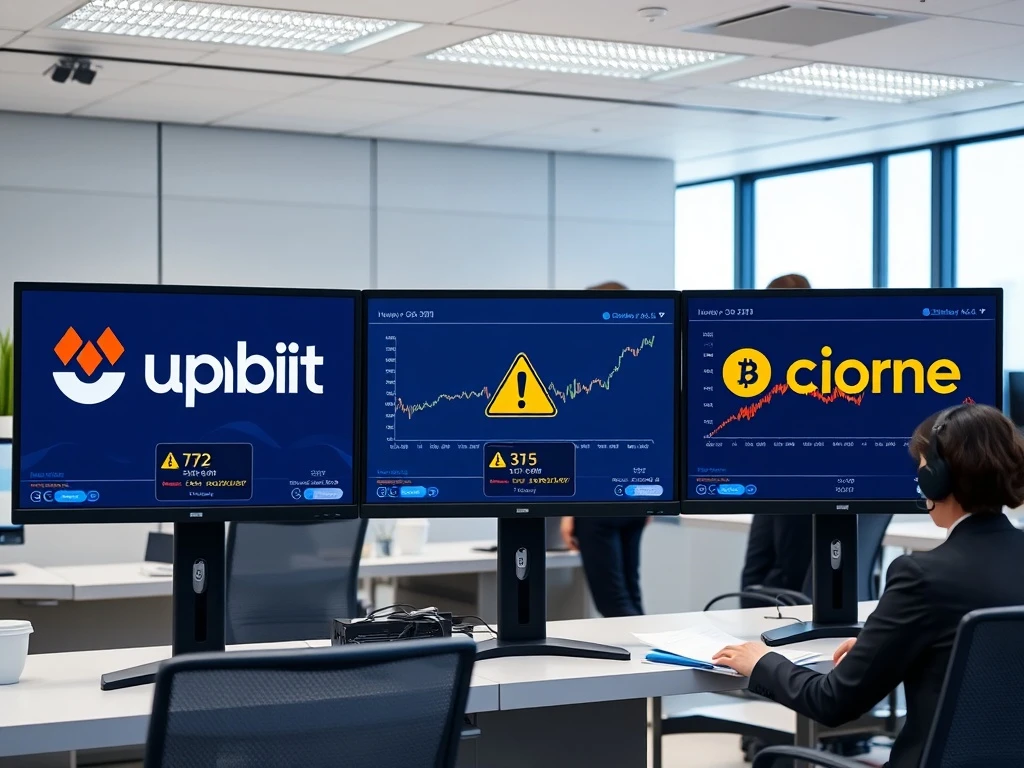
SEOUL, South Korea – March 2025: Three major South Korean cryptocurrency exchanges have collectively extended a significant investment warning designation for the FLOW token, creating immediate market uncertainty and highlighting the nation’s evolving regulatory framework. Upbit, Bithumb, and Coinone announced this critical decision following coordination through the Digital Asset Exchange Alliance (DAXA), marking another pivotal moment in South Korea’s stringent digital asset oversight.
FLOW Investment Warning Receives Extended Timeline
The Digital Asset Exchange Alliance member companies confirmed the extension this week. Consequently, the exchanges require additional time for thorough evaluation. They recently received clarification documents from the FLOW project team. Therefore, analysts now anticipate a more detailed review process. The original warning designation prompted immediate market reactions. However, this extension suggests deeper complexities.
South Korean exchanges maintain rigorous listing standards. Specifically, they evaluate multiple risk factors. These factors include:
- Project transparency and development activity
- Regulatory compliance with local and international standards
- Market manipulation risks and trading patterns
- Technical security and blockchain integrity
- Team credibility and communication responsiveness
Market data indicates noticeable trading volume changes following the announcement. Meanwhile, international exchanges continue normal FLOW trading operations. This discrepancy highlights jurisdictional regulatory differences.
DAXA’s Coordinated Regulatory Approach
The Digital Asset Exchange Alliance represents a crucial development in South Korea’s crypto landscape. Formed by the country’s leading exchanges, DAXA establishes unified standards. These standards aim to protect investors and ensure market stability. The alliance frequently coordinates warning designations and delisting decisions.
DAXA’s warning system operates through multiple stages. Initially, exchanges issue investment cautions. Subsequently, they may implement trading restrictions. Finally, complete delisting becomes possible. This graduated approach allows project teams to address concerns. However, it also creates market uncertainty during review periods.
Recent DAXA actions demonstrate consistent patterns. The alliance previously issued warnings for several tokens. Many projects successfully resolved identified issues. Others faced eventual delisting. This track record establishes DAXA’s authority in the market.
Expert Analysis of Exchange Decision-Making
Financial regulation specialists emphasize the procedural nature of this extension. “South Korean exchanges follow meticulous review protocols,” explains cryptocurrency compliance analyst Min-ji Park. “Extension decisions typically indicate either complex issues or substantial project responses requiring verification.”
Industry observers note the timing significance. The extension coincides with broader regulatory developments. South Korea’s Financial Services Commission continues refining digital asset frameworks. Consequently, exchanges maintain particularly cautious stances. They prioritize compliance above all other considerations.
Comparative data reveals warning designation frequencies across exchanges:
| Exchange | 2024 Warnings Issued | Average Review Period | Resolution Rate |
|---|---|---|---|
| Upbit | 14 | 42 days | 65% |
| Bithumb | 11 | 38 days | 72% |
| Coinone | 9 | 45 days | 60% |
These statistics demonstrate consistent regulatory approaches. However, each case involves unique circumstances.
Market Impact and Investor Implications
The warning extension immediately affected FLOW’s market position. Trading volumes declined on South Korean exchanges. Meanwhile, price volatility increased temporarily. International markets showed milder reactions. This pattern reflects the localized nature of DAXA’s influence.
Investors face several practical considerations during warning periods. First, they cannot initiate new FLOW purchases on affected exchanges. Second, existing holdings remain accessible for selling or withdrawal. Third, price discovery mechanisms may become less efficient. Finally, uncertainty typically increases short-term volatility.
Seasoned traders recognize warning period dynamics. Historically, some tokens successfully address exchange concerns. Others fail to meet requirements. Therefore, investor responses vary considerably. Some reduce positions proactively. Others maintain holdings awaiting resolution.
Blockchain analytics firms report increased FLOW token movements. Specifically, some holders transferred assets to international exchanges. Others moved tokens to private wallets. These movements represent rational portfolio management strategies.
The FLOW Project’s Position and Response
The FLOW blockchain, developed by Dapper Labs, powers numerous NFT and gaming applications. Its ecosystem includes major partnerships and substantial developer activity. Project representatives submitted clarification documents to DAXA members. These documents presumably address specific exchange concerns.
Industry sources suggest several potential review focus areas. Regulatory compliance represents one likely concern. Token distribution and vesting schedules may require clarification. Additionally, technical developments and roadmap execution could need verification. Finally, corporate structure and governance might undergo scrutiny.
Dapper Labs maintains an established industry reputation. The company created NBA Top Shot and other successful NFT platforms. This track record provides some credibility during review processes. However, South Korean exchanges evaluate each project independently.
Regulatory Context and Future Implications
South Korea’s cryptocurrency regulation continues evolving rapidly. The forthcoming Digital Asset Basic Act will establish comprehensive frameworks. Meanwhile, exchanges implement proactive compliance measures. DAXA’s coordinated approach represents this transitional period’s characteristic caution.
International observers closely monitor South Korean developments. The nation represents a significant cryptocurrency market. Its regulatory decisions often influence other jurisdictions. Consequently, the FLOW warning extension attracts global attention. It demonstrates practical enforcement mechanisms.
Several factors distinguish South Korea’s regulatory environment. First, investor protection receives paramount emphasis. Second, exchange accountability remains consistently enforced. Third, technological innovation receives balanced consideration. These principles guide all regulatory actions.
The Financial Services Commission recently emphasized exchange responsibilities. Commissioner Lee Bok-hyun stated, “Digital asset exchanges must maintain rigorous standards. They serve as market gatekeepers and investor protectors.” This official position reinforces DAXA’s current approach.
Conclusion
Upbit, Bithumb, and Coinone’s extended FLOW investment warning reflects South Korea’s maturing cryptocurrency regulatory framework. The DAXA-coordinated decision demonstrates systematic investor protection mechanisms. Market participants now await the review’s conclusion. This process will clarify FLOW’s future on South Korean exchanges. Ultimately, such regulatory actions contribute to market stability and institutional confidence. The cryptocurrency industry continues navigating complex compliance landscapes worldwide.
FAQs
Q1: What does an investment warning mean for FLOW token holders?
An investment warning restricts new purchases but allows selling and withdrawals. Holders retain access to their assets while exchanges conduct reviews.
Q2: How long do DAXA warning reviews typically last?
Review periods vary but average 40-45 days. Extensions occur when exchanges require additional verification or documentation.
Q3: Can FLOW be traded elsewhere during the South Korean warning?
Yes, international exchanges continue normal FLOW trading. The warning only affects Upbit, Bithumb, and Coinone operations.
Q4: What happens if FLOW fails the exchange review?
Exchanges may implement trading restrictions or complete delisting. Projects typically receive opportunities to address concerns before final decisions.
Q5: How does this warning affect FLOW’s blockchain operations?
The warning only affects exchange listings. The FLOW blockchain continues operating normally. Applications and smart contracts remain fully functional.