Pakistan’s Bold Stablecoin Partnership with Trump Family-Led DeFi Project Signals Major Financial Shift
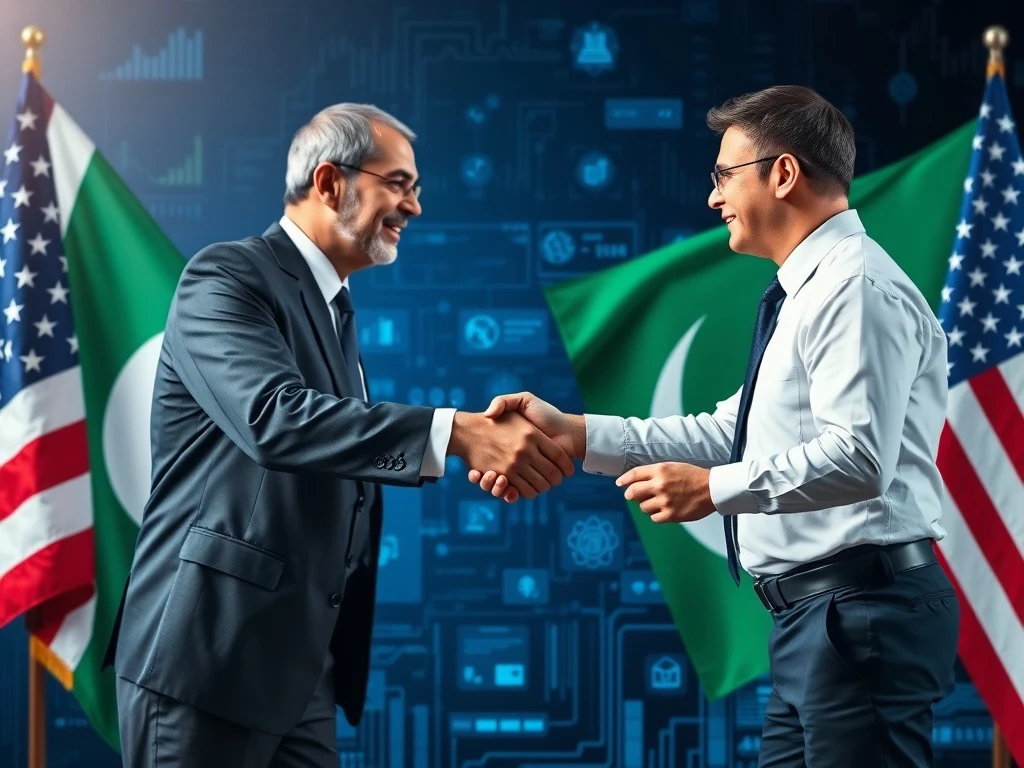
In a move that could reshape its financial landscape, Pakistan has announced plans to collaborate with World Liberty Financial (WLFI), a decentralized finance project with leadership ties to the Trump family, on developing a national dollar-pegged stablecoin. This groundbreaking initiative, reported by Unfolded in March 2025, represents one of the most significant sovereign engagements with private-sector cryptocurrency infrastructure to date. Consequently, financial analysts and blockchain experts are closely monitoring this development for its potential to influence both Pakistan’s economy and global digital currency adoption.
Pakistan’s Stablecoin Strategy with World Liberty Financial
The partnership centers on creating a regulated, fiat-collateralized stablecoin pegged to the United States dollar. This digital asset would operate on a permissioned blockchain network. The State Bank of Pakistan (SBP) is reportedly overseeing the technical and regulatory framework. World Liberty Financial brings its expertise in decentralized finance protocols and digital asset management to the table. The collaboration aims to address several pressing economic challenges.
- Remittance Efficiency: Pakistan receives over $30 billion annually in worker remittances. A stablecoin could drastically reduce transfer times and costs.
- Financial Inclusion: Approximately 100 million Pakistani adults lack access to formal banking. Digital wallets for the stablecoin could bridge this gap.
- Monetary Policy Tool: The SBP could use the transparent ledger for more precise economic monitoring and intervention.
Furthermore, this initiative aligns with global central bank digital currency (CBDC) explorations but opts for a public-private partnership model. The technical specifications suggest a hybrid approach, combining regulatory oversight with DeFi’s innovation.
World Liberty Financial and the Trump Family Connection
World Liberty Financial emerged in late 2023 as a DeFi project focusing on compliant digital asset solutions. Several members of the former U.S. First Family hold advisory and leadership roles within the organization. Donald Trump Jr. serves as the Chairman of the Strategic Advisory Board. Eric Trump oversees partnerships and institutional relations. This high-profile involvement has drawn significant attention to WLFI’s operations and regulatory engagements worldwide.
The company’s whitepaper emphasizes “financial sovereignty through technology” and has previously secured partnerships with several fintech firms in Southeast Asia. WLFI’s architecture reportedly uses a proof-of-stake consensus mechanism with built-in regulatory compliance layers, known as “RegTech nodes.” These nodes allow authorized entities, like central banks, to monitor transactions without compromising user privacy entirely. This feature likely made WLFI an attractive partner for a sovereign nation like Pakistan, which must balance innovation with financial control and anti-money laundering requirements.
Geopolitical and Economic Implications of the Deal
This partnership arrives at a critical juncture for Pakistan’s economy. The country has faced persistent currency volatility, with the Pakistani Rupee (PKR) experiencing significant depreciation against the dollar in recent years. A dollar-pegged digital asset could provide a stable store of value and medium of exchange for both domestic and cross-border trade. However, analysts caution about potential risks.
Adopting a dollar-pegged instrument effectively cedes some monetary sovereignty to the Federal Reserve’s policies. Additionally, the political optics of partnering with a firm linked to a prominent American political family are complex. Supporters argue it brings credibility and technological prowess. Critics question the alignment of long-term interests. The table below outlines the core arguments from both perspectives.
| Potential Benefits | Potential Risks |
|---|---|
| Stabilizes segments of the digital economy | Dollar dependency could increase |
| Attracts foreign blockchain investment | Political controversy may arise |
| Modernizes financial infrastructure | Technology and execution risks exist |
| Reduces remittance costs for citizens | Regulatory hurdles in multiple jurisdictions |
Simultaneously, the International Monetary Fund (IMF), which has an ongoing program with Pakistan, has not issued an official statement. Historically, the IMF has shown cautious interest in blockchain for improving fiscal transparency.
The Technical Architecture of the Proposed Stablecoin
Insiders describe the proposed asset as a “sovereign-backed digital token” (SBDT). It will not be a central bank digital currency in the traditional sense but a jointly managed stablecoin. The SBP will hold the equivalent dollar reserves in a dedicated, audited custodial account. WLFI will manage the blockchain infrastructure, smart contracts, and wallet ecosystem. Each token will be minted upon receipt of a corresponding U.S. dollar deposit and burned upon redemption.
The blockchain will likely be an enterprise-grade, permissioned variant of Ethereum or a similar smart-contract platform. This allows for programmability—enabling features like time-locked savings or automated tax withholding—while maintaining control over network participants. Key technical considerations include:
- Interoperability: Plans exist for bridges to major public blockchains like Ethereum and Solana for international use.
- Compliance: Identity verification (KYC) will be mandatory for wallet creation above a minimal threshold.
- Scalability: The network must handle potentially millions of transactions as adoption grows.
Moreover, the development timeline suggests a pilot phase targeting overseas workers and export-oriented businesses by Q4 2025. A full public launch would follow after regulatory review.
Global Context and Regulatory Precedents
Pakistan’s move places it within a growing cohort of nations exploring sovereign digital assets. However, its choice of a private partnership model is distinctive. For instance, China’s digital yuan (e-CNY) is a fully state-issued and controlled CBDC. Nigeria’s eNaira operates similarly. Conversely, projects like the proposed “USC” stablecoin in the United States are purely private initiatives awaiting federal charters.
This Pakistani model represents a middle path. It leverages private sector speed and expertise while retaining state oversight over the monetary anchor—the dollar reserves. The success or failure of this partnership will provide a crucial case study for other developing economies. Countries like Egypt, Kenya, and the Philippines, which also rely heavily on remittances, are observing closely. Regulatory bodies, including the Financial Action Task Force (FATF), will scrutinize the compliance framework. Pakistan remains on the FATF’s “grey list,” making robust anti-money laundering controls paramount for this project’s legitimacy.
Conclusion
Pakistan’s planned partnership with World Liberty Financial on a dollar-pegged stablecoin marks a pivotal experiment at the intersection of national finance and decentralized technology. This initiative aims to harness blockchain’s efficiency for economic stability and inclusion. The involvement of the Trump family-linked DeFi project adds a unique geopolitical dimension. Ultimately, the venture’s success will depend on flawless technical execution, unwavering regulatory compliance, and broad public trust. As the pilot phase approaches in late 2025, the world will watch to see if this bold stablecoin partnership can deliver its promised financial transformation.
FAQs
Q1: What is the main goal of Pakistan’s stablecoin partnership with World Liberty Financial?
The primary goal is to create a secure, dollar-pegged digital currency to reduce remittance costs, enhance financial inclusion, and provide a stable digital asset for its economy, leveraging private-sector blockchain expertise.
Q2: How is the Trump family involved in World Liberty Financial?
Donald Trump Jr. chairs the project’s Strategic Advisory Board, and Eric Trump manages partnerships. They provide strategic direction and leverage their networks for institutional relationships.
Q3: Will this stablecoin replace the Pakistani Rupee?
No. The stablecoin is designed as a complementary digital tool pegged to the US dollar, not a replacement for the national fiat currency. It will exist alongside the PKR for specific use cases like remittances and trade.
Q4: What are the biggest risks for Pakistan in this deal?
Key risks include increased dependency on US dollar monetary policy, potential political controversy, technological execution challenges, and the need to satisfy stringent international regulatory and anti-money laundering standards.
Q5: When is the stablecoin expected to launch?
Reports indicate a pilot phase targeting overseas workers and exporters could begin in the fourth quarter of 2025, with a broader public launch contingent on the pilot’s success and regulatory approvals.