Unibase’s Groundbreaking AI Web3 Summit in Seoul 2026: BNB Chain Powers Future Agent Systems
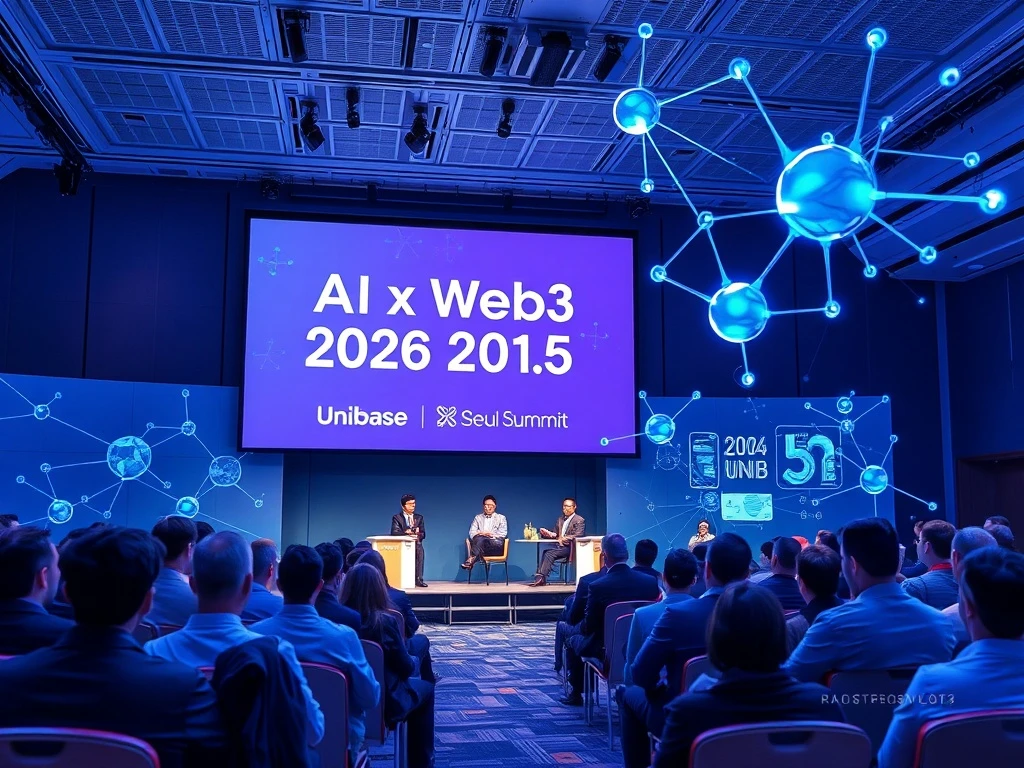
Seoul, South Korea – January 17, 2026 – The intersection of artificial intelligence and decentralized technology takes a monumental step forward as Unibase, a pioneering decentralized AI memory layer, announces it will host the highly anticipated AI × Web3 2026 Seoul Summit. This landmark event, supported by the BNB Chain ecosystem and with Crypto News Insights as a media partner, convenes leading innovators to chart the course for autonomous agent systems in the coming year. Consequently, the summit represents a critical juncture for an industry poised to redefine digital interaction.
Unibase AI Web3 Summit: A Confluence of Vision and Infrastructure
Unibase positions itself at the core of a new technological paradigm. As a high-performance decentralized memory layer, it provides the essential infrastructure for AI agents to operate persistently and securely across Web3 environments. Therefore, hosting this summit is a strategic move that aligns with its core mission. The event’s location in Seoul, a global hub for both technological innovation and crypto adoption, provides significant real-world context. Moreover, South Korea’s progressive stance on digital assets and its robust tech infrastructure make it an ideal backdrop for discussions on deployment at scale.
The support from BNB Chain is not merely symbolic. BNB Chain operates one of the world’s largest smart contract blockchains by daily active users. Its involvement signals a strong industry belief in the practical integration of AI within existing, high-throughput decentralized networks. This partnership underscores a shared vision where AI agents can leverage blockchain for verifiable computation, immutable data storage, and transparent governance. For instance, an AI agent managing a decentralized finance (DeFi) portfolio requires reliable, tamper-proof data—a need perfectly addressed by this convergence.
Decoding the 2026 Agent System Expansion Agenda
The summit’s central theme focuses on the “deployment and expansion of agent systems in 2026.” This shift from theoretical research to practical implementation marks a pivotal industry phase. Agent systems refer to autonomous AI programs that can perform tasks, make decisions, and interact with both digital and physical environments without constant human intervention. Their expansion into Web3 unlocks possibilities for decentralized autonomous organizations (DAOs), smart contract automation, and personalized digital economies.
Key participants reflect the ecosystem’s diversity. KITE AI and Boings.ai likely represent specialized AI model developers. FLock is known for federated learning on blockchain, a privacy-preserving approach to AI training. SOON and Sentient may contribute perspectives on agentic frameworks and AI-aligned economic systems. Together, their discussions will address critical pathways for 2026, including:
- Scalability & Interoperability: How can AI agents operate efficiently across multiple blockchains and layer-2 solutions?
- Security & Audibility: Ensuring agent actions are secure, transparent, and verifiable on-chain.
- Data Sovereignty & Memory: Leveraging decentralized storage for persistent agent memory, a core function of Unibase’s technology.
- Economic Models: Designing sustainable tokenomics for agent services and interactions.
The Expert Angle: Why This Summit Matters Now
Industry analysts point to late 2025 and 2026 as the launch window for the first generation of commercially viable, blockchain-native AI agents. The technology stack—comprising scalable blockchains, advanced AI models, and decentralized infrastructure like Unibase—has reached necessary maturity. This summit acts as a strategic coordination point. It allows competing and complementary projects to align on standards, share research on bottlenecks, and foster collaborations that accelerate the entire field. Furthermore, the choice of January 17 places the event at the very beginning of the year, strategically setting the industry’s agenda and investment focus for the next twelve months.
The timeline is also significant. Following major breakthroughs in foundational AI models and scaling solutions for Ethereum and other chains, the logical next step is integration. Events like this translate academic papers and whitepapers into roadmaps and partnerships. The presence of a major media partner, Crypto News Insights, ensures that these insights reach a broad audience of developers, investors, and policymakers, amplifying the summit’s impact beyond the conference hall.
The Broader Impact on Technology and Society
The implications of successfully deploying AI agent systems within Web3 are profound. From a technical perspective, it could lead to more resilient and intelligent decentralized applications (dApps). For example, a DeFi protocol could employ an AI agent as a dynamic risk manager, adjusting parameters in real-time based on market data. In gaming and the metaverse, AI-driven non-player characters (NPCs) could own assets and have persistent histories stored on-chain, creating deeper immersion.
On a societal level, this fusion promises to enhance user sovereignty. Instead of AI services controlled by centralized corporations, individuals could own and direct personal AI agents that interact with the decentralized web on their behalf, managing identity, data, and digital assets. However, the summit must also confront significant challenges. These include the immense computational cost of running AI on-chain, the environmental impact of consensus mechanisms, and the unresolved ethical frameworks for autonomous digital agents. Addressing these issues head-on will be crucial for sustainable growth.
| Participant | Presumed Focus Area | Role in Ecosystem |
|---|---|---|
| Unibase (Host) | Decentralized AI Memory | Infrastructure Provider |
| BNB Chain (Supporter) | Scalable Blockchain | Execution Layer & Ecosystem |
| KITE AI | AI Model Development | Core AI Research |
| FLock | Federated Learning | Privacy-Preserving AI Training |
| Sentient | AI-Aligned Economics | Incentive & Governance Design |
Conclusion
The Unibase AI Web3 Summit in Seoul is far more than a single industry event. It serves as a definitive marker of the transition from speculative potential to tangible build-out. By bringing together infrastructure pioneers like Unibase, massive ecosystems like BNB Chain, and cutting-edge AI researchers, it creates a unique crucible for innovation. The discussions on January 17, 2026, will likely shape the development, deployment, and governance of agent systems for years to come. Ultimately, the success of this convergence will be measured by its ability to create more open, intelligent, and user-empowered digital experiences, solidifying the role of the AI Web3 summit as a catalyst for the next technological epoch.
FAQs
Q1: What is Unibase’s primary function in the AI x Web3 space?
A1: Unibase operates as a decentralized AI memory layer. It provides persistent, secure, and verifiable storage for the data and operational states of AI agents operating on blockchain networks, enabling them to function with continuity across sessions.
Q2: Why is BNB Chain’s support for this summit significant?
A2: BNB Chain’s support validates the practical integration of AI into a high-traffic, real-world blockchain environment. It provides a testbed and potential deployment platform for the agent systems discussed, bridging theoretical AI concepts with a live Web3 user base.
Q3: What are “agent systems” in this context?
A3: Agent systems refer to autonomous AI programs capable of performing complex tasks, making decisions, and interacting within digital environments. In Web3, these agents could automate DeFi strategies, manage DAO proposals, or operate as intelligent entities in metaverses, all while leveraging blockchain for transparency.
Q4: How does this summit relate to broader 2026 technology trends?
A4: The summit directly addresses a key 2026 trend: the operationalization of AI within decentralized frameworks. It moves beyond proof-of-concepts to tackle the scalability, security, and economic challenges of widespread deployment, setting a near-term industry agenda.
Q5: What potential challenges might the summit discussions highlight?
A5: Key challenges include the high cost and latency of on-chain AI computation, establishing ethical and safety guidelines for autonomous agents, ensuring interoperability across different blockchain ecosystems, and designing user-friendly interfaces for agent control.