BitMine’s Staked Ether Soars to 1.5M ETH, Capturing 4% of Total Staked in Monumental 2026 Move
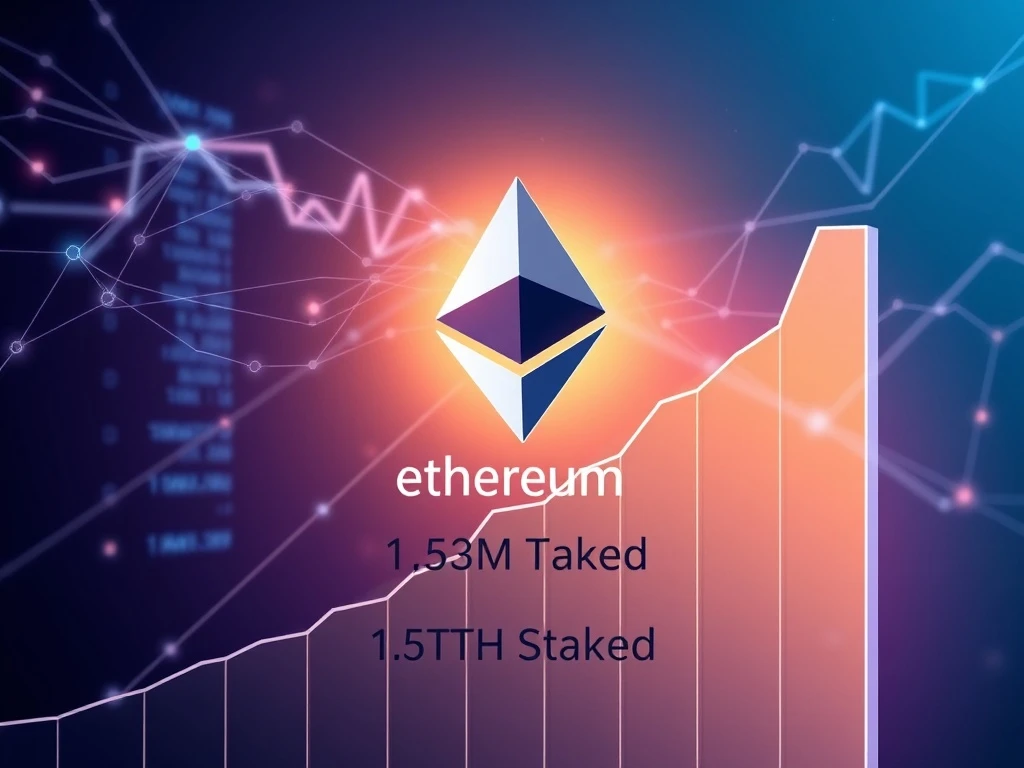
In a landmark development for institutional cryptocurrency adoption, BitMine Immersion Technologies has dramatically increased its staked Ethereum position to 1.53 million ETH, representing approximately 4% of all staked Ether on the Beacon Chain as of Wednesday, February 12, 2026. This strategic move, valued at over $5 billion, signals growing confidence among major digital asset treasuries despite recent market volatility and positions BitMine as a dominant force in Ethereum’s proof-of-stake ecosystem.
BitMine’s Monumental Ethereum Staking Expansion
Blockchain analytics platform Lookonchain reported the substantial transaction on Wednesday, revealing that BitMine added 186,560 ETH to its staking position. Consequently, this single transaction, worth approximately $625 million, follows closely behind the company’s recent milestone of crossing one million staked Ether. Moreover, the company now controls 1,530,784 staked ETH, representing a staggering $5.13 billion in value at current market prices.
This development places BitMine’s digital asset treasury among the largest single Ethereum stakers globally. Significantly, the company still holds substantial unstaked reserves, with only 37% of its total 4.16 million ETH currently committed to the Beacon Chain. Therefore, this suggests potential for further staking expansion as market conditions and network dynamics evolve throughout 2026.
Institutional Staking Reshapes Ethereum’s Landscape
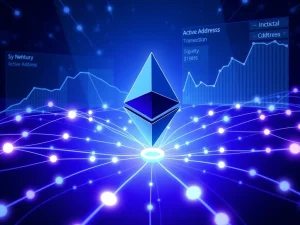
The Ethereum staking ecosystem has undergone profound transformation since the network’s transition to proof-of-stake in September 2022. Currently, approximately 36 million ETH remains staked on the Beacon Chain, representing nearly 30% of Ethereum’s total circulating supply. BitMine’s 4% share represents a substantial concentration among institutional players, potentially influencing network security and governance dynamics.
Several key factors drive institutional staking participation:
- Yield Generation: Staking provides consistent returns compared to traditional treasury management
- Network Participation: Institutions gain influence in Ethereum’s evolving governance structure
- Long-term Positioning: Staking demonstrates commitment to Ethereum’s future development roadmap
- Regulatory Clarity: Improved frameworks in 2025-2026 have reduced institutional hesitation
Simultaneously, the Ethereum validator entry queue has surged to 2.3 million ETH, reaching its highest level since August 2023. This backlog indicates robust demand for staking participation despite the 32 ETH minimum requirement and potential slashing risks associated with validator operation.
Market Impact and Price Correlation
Ether’s price surged 7% on Wednesday, marking its largest daily gain in 2026 and reaching $3,375 on Coinbase during early trading hours. While multiple factors influence cryptocurrency prices, substantial staking activity from major institutions typically signals long-term confidence in the underlying asset. Furthermore, this price movement brings ETH closer to breaking resistance above $3,400, potentially ending a two-month sideways trading pattern.
BitMine’s stock performance has mirrored broader crypto market trends, climbing 3.8% in after-hours trading to reach $32.35. The company has experienced an 11.5% year-to-date share price increase, outperforming many traditional technology stocks during the same period. This correlation suggests growing investor recognition of cryptocurrency treasury management as a legitimate corporate strategy.
BitMine’s Comprehensive Digital Asset Strategy
Beyond its substantial Ethereum position, BitMine maintains a diversified digital asset portfolio according to its latest corporate disclosures. The company’s treasury includes 192 Bitcoin (BTC), nearly $1 billion in cash reserves, and a $23 million stake in Eightco Holdings. This balanced approach demonstrates sophisticated risk management uncommon among early cryptocurrency adopters.
Tom Lee, Fundstrat’s managing partner and BitMine chairman, articulated his bullish outlook during a Monday investor briefing. “We continue to view the leverage reset post October 10th, 2025, as akin to the ‘mini crypto winter,'” Lee stated. “2026 is the year crypto prices recover and with stronger gains in 2027-2028.” His perspective reflects growing institutional sentiment that recent market corrections have created attractive entry points for long-term positions.
The cryptocurrency treasury management sector has expanded rapidly since 2023, with corporate holdings now outpacing Bitcoin’s new supply at a 3-to-1 ratio according to recent industry analyses. This trend suggests accelerating institutional adoption despite regulatory uncertainties and market volatility throughout 2025.
Technical Analysis and Network Implications
From a technical perspective, Ethereum’s staking mechanics have proven remarkably resilient despite substantial validator growth. The network currently processes approximately 900,000 active validators, with each requiring 32 ETH to participate in consensus. BitMine’s position represents control over roughly 47,800 validators, assuming optimal distribution across the staking infrastructure.
| Asset | Quantity | Percentage Staked | Approximate Value |
|---|---|---|---|
| Ethereum (ETH) | 4,167,768 | 37% | $13.9B |
| Staked ETH | 1,530,784 | 100% of staked portion | $5.13B |
| Bitcoin (BTC) | 192 | N/A | $12.5M |
| Cash Reserves | N/A | N/A | $1B |
| Eightco Holdings | Equity Stake | N/A | $23M |
Network security implications warrant careful consideration as institutional stakes grow. While decentralization remains a core Ethereum value proposition, concentrated staking positions could theoretically influence consensus decisions. However, the network’s slashing mechanisms and distributed validator technology implementations help mitigate centralization risks associated with large stakers.
Conclusion
BitMine’s expansion to 1.5 million staked Ether represents a watershed moment for institutional cryptocurrency adoption in early 2026. The company’s 4% share of total staked ETH demonstrates growing corporate confidence in Ethereum’s proof-of-stake model despite recent market turbulence. Furthermore, this strategic positioning coincides with renewed price momentum for Ether and broader crypto assets, suggesting potential alignment between institutional activity and market recovery narratives.
As cryptocurrency treasury management evolves from experimental to essential corporate finance practice, BitMine’s approach provides a template for balanced digital asset allocation. The company maintains substantial liquidity through cash reserves while committing significant portions of its cryptocurrency holdings to productive staking arrangements. Consequently, this development merits close observation by investors, regulators, and network participants throughout 2026’s evolving cryptocurrency landscape.
FAQs
Q1: What percentage of total staked Ethereum does BitMine now control?
BitMine currently controls approximately 4% of all staked Ethereum on the Beacon Chain, with 1.53 million ETH out of roughly 36 million total staked ETH.
Q2: How much Ethereum did BitMine recently add to its staking position?
The company added 186,560 ETH to its staking position in a single transaction, worth approximately $625 million at current market prices.
Q3: What other assets does BitMine hold in its treasury?
Beyond Ethereum, BitMine’s treasury includes 192 Bitcoin, nearly $1 billion in cash reserves, and a $23 million stake in Eightco Holdings.
Q4: How has BitMine’s stock performed following this staking increase?
BitMine stock climbed 3.8% in after-hours trading to $32.35 and has gained 11.5% year-to-date, outperforming many traditional assets during the same period.
Q5: What are the implications of large institutional stakers on Ethereum’s network?
While concentrated staking positions raise decentralization concerns, Ethereum’s slashing mechanisms and validator distribution technologies help maintain network security and prevent excessive influence by single entities.