Federal Reserve Interest Rates Face Renewed Pressure as Trump Urges Aggressive Cuts
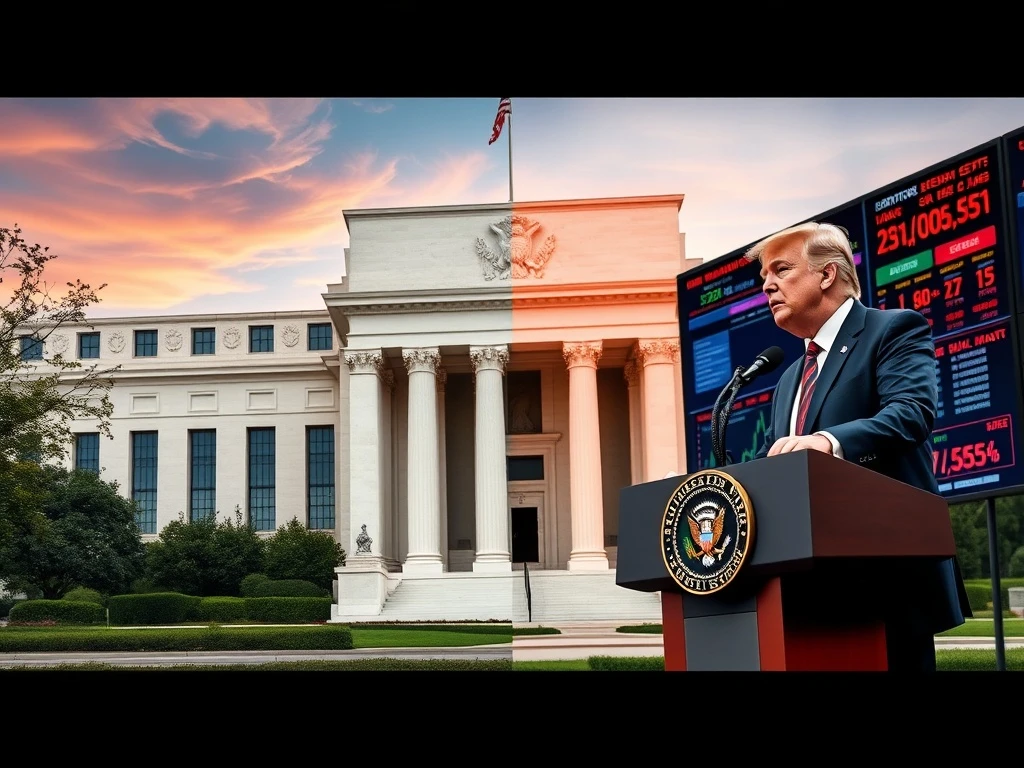
WASHINGTON, D.C. – March 2025: President Donald Trump has intensified pressure on the Federal Reserve to implement interest rate reductions, creating renewed tension between the executive branch and America’s independent central bank. This latest development marks a significant chapter in the ongoing debate about monetary policy direction during periods of economic expansion. The President’s comments, reported by Walter Bloomberg, specifically criticized Federal Reserve leadership while advocating for more accommodative policies despite generally positive economic indicators.
Federal Reserve Interest Rates Under Political Scrutiny
President Trump’s recent statements continue a pattern of public commentary on monetary policy that began during his first term. The President explicitly stated that the Federal Reserve Chairman “is ruining every bull market” while expressing hope for rate cuts amid positive economic news. This public pressure raises fundamental questions about central bank independence, a cornerstone of modern economic governance. Historically, Federal Reserve chairs have maintained operational autonomy despite occasional political pressure from various administrations.
Monetary policy decisions typically follow established frameworks including maximum employment and price stability mandates. The Federal Reserve’s dual mandate, established by Congress, guides interest rate decisions through careful analysis of economic data rather than political considerations. Recent economic indicators show moderate growth with controlled inflation, creating complex decision-making conditions for policymakers. Market analysts closely watch these developments because interest rate changes significantly impact borrowing costs, investment decisions, and currency valuations.
Historical Context of Presidential Fed Relations
Presidential pressure on the Federal Reserve represents a recurring theme in American economic history. Previous administrations have occasionally expressed policy preferences, though most maintained more diplomatic channels than recent public commentary. The relationship between the executive branch and central bank involves constant balancing between democratic accountability and operational independence. This tension becomes particularly pronounced during election years or periods of economic uncertainty.
Several historical precedents illustrate similar dynamics. President Lyndon Johnson famously pressured Fed Chair William McChesney Martin in the 1960s, while President Richard Nixon exerted influence during Arthur Burns’ tenure. More recently, President George H.W. Bush expressed frustration with Alan Greenspan’s policies during the 1992 election cycle. What distinguishes current circumstances involves the frequency and public nature of commentary combined with unprecedented communication channels including social media platforms.
Expert Analysis on Central Bank Independence
Economic experts emphasize that central bank independence correlates strongly with lower inflation and greater macroeconomic stability. Research from institutions like the International Monetary Fund demonstrates that politically independent central banks achieve better long-term outcomes. Federal Reserve independence allows policymakers to make difficult decisions that may prove unpopular in the short term but benefit the economy over longer horizons. This institutional design protects against inflationary pressures that often accompany politically motivated monetary expansion.
Current economic conditions present particular challenges for Federal Reserve decision-makers. Key indicators show:
- Moderate GDP growth at approximately 2.3% annually
- Unemployment rates near historic lows at 3.8%
- Core inflation hovering around the 2% target
- Consumer confidence remaining relatively stable
- Manufacturing indices showing mixed signals
These conditions traditionally suggest maintaining rather than reducing interest rates, creating tension between political preferences and conventional policy frameworks.
Market Impacts and Investor Considerations
Financial markets react sensitively to both Federal Reserve decisions and political commentary about monetary policy. Interest rate expectations significantly influence asset valuations across multiple sectors. Lower rates typically benefit equities, real estate, and growth stocks while challenging fixed-income investments and savings returns. The potential for political influence creates additional uncertainty that markets must price accordingly.
Investors currently face complex decisions amid these developments. Historical data suggests that political pressure rarely produces immediate policy changes, though it may influence longer-term direction. Market participants monitor several key indicators including Treasury yields, dollar strength, and volatility indices. The relationship between presidential commentary and actual policy outcomes remains uncertain, requiring careful analysis rather than reactive decision-making.
Comparative International Perspectives
Global central banking practices offer useful comparisons for understanding current American dynamics. The European Central Bank maintains strict independence protocols, while the Bank of Japan operates under different institutional arrangements. Several emerging economies have experienced political interference with negative consequences including currency instability and capital flight. International observers watch Federal Reserve developments closely because U.S. monetary policy decisions create spillover effects across global financial systems.
The table below illustrates recent central bank approaches:
| Central Bank | Current Policy Stance | Political Pressure Level | Recent Rate Decisions |
|---|---|---|---|
| Federal Reserve | Data-dependent | High | Holding steady |
| European Central Bank | Cautiously accommodative | Low | Moderate cuts |
| Bank of Japan | Ultra-accommodative | Moderate | Negative rates maintained |
| Bank of England | Restrictive | Low | Gradual increases |
Economic Theory Versus Political Reality
Traditional economic theory suggests central banks should maintain independence to effectively manage business cycles and control inflation. The Taylor Rule and similar frameworks provide mathematical guidance for interest rate decisions based on inflation gaps and output deviations. Political considerations rarely feature in these models, creating tension when real-world dynamics intersect with theoretical frameworks. Current circumstances test these boundaries as public commentary influences market expectations and potentially policy outcomes.
Federal Reserve officials face challenging communication decisions amid these developments. Public statements must balance transparency with careful messaging to avoid exacerbating market volatility. Recent speeches and meeting minutes reveal continued commitment to data-driven decision processes despite external pressures. The institution’s credibility depends on maintaining this approach while acknowledging legitimate political concerns about economic performance.
Conclusion
President Trump’s renewed pressure on Federal Reserve interest rates highlights ongoing tensions between political objectives and independent monetary policy. The Federal Reserve faces complex decisions balancing economic data, market expectations, and institutional credibility. Historical precedents suggest central bank independence generally produces superior economic outcomes despite occasional political friction. Market participants should monitor developments carefully while recognizing that Federal Reserve decisions ultimately depend on comprehensive economic analysis rather than political commentary. The coming months will reveal how these institutional dynamics evolve amid changing economic conditions and political considerations.
FAQs
Q1: How often has President Trump commented on Federal Reserve policy?
President Trump has commented on Federal Reserve policy numerous times since taking office, with increased frequency during periods of economic uncertainty or market volatility. His recent statements continue a pattern established during his first administration.
Q2: Can the President legally force the Federal Reserve to cut interest rates?
No, the Federal Reserve operates as an independent entity within government. While the President appoints Fed chairs and board members, the institution maintains operational independence regarding specific policy decisions including interest rate adjustments.
Q3: What economic indicators typically guide Federal Reserve interest rate decisions?
The Federal Reserve primarily considers employment data, inflation metrics, GDP growth, consumer spending, and global economic conditions. Their dual mandate focuses on maximum employment and price stability when making monetary policy decisions.
Q4: How do interest rate changes affect ordinary Americans?
Interest rate changes impact mortgage rates, credit card APRs, auto loans, savings account yields, and retirement investment returns. Lower rates generally reduce borrowing costs but also decrease returns on conservative savings vehicles.
Q5: What historical precedents exist for presidential pressure on the Federal Reserve?
Multiple presidents have expressed policy preferences to Federal Reserve chairs, including Lyndon Johnson, Richard Nixon, and George H.W. Bush. The current situation differs primarily in the frequency and public nature of commentary rather than the basic dynamic itself.