GWEI Token Launch: ETHGas Platform’s Revolutionary Governance Move for Ethereum Block Trading
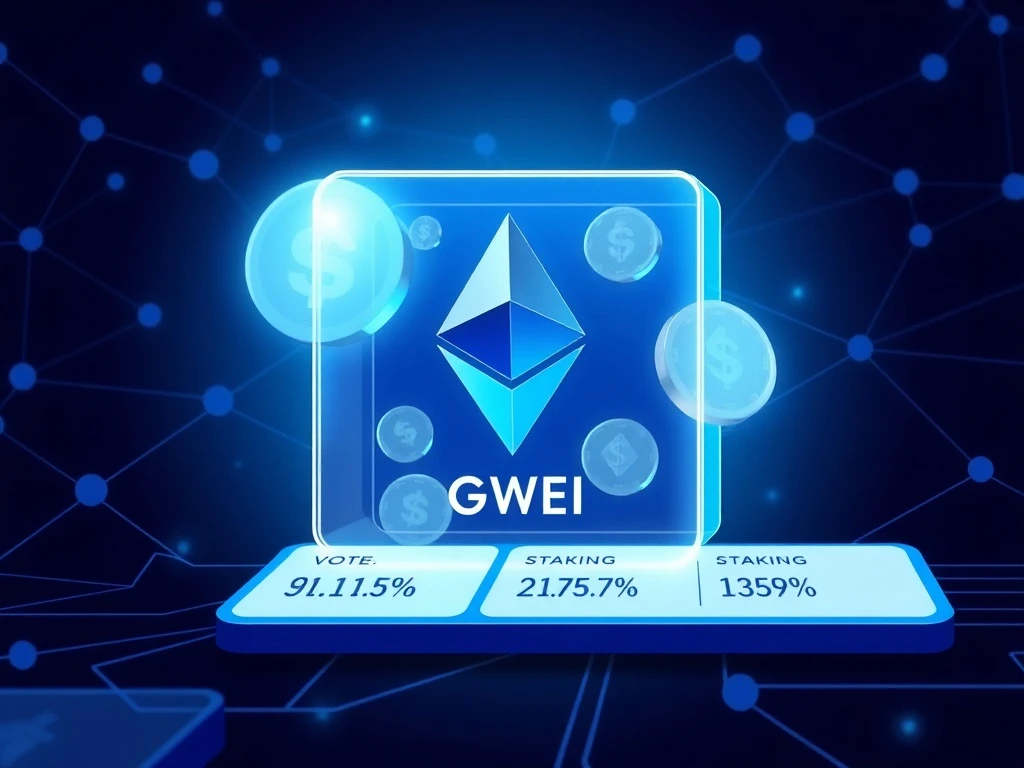
In a significant development for Ethereum’s infrastructure ecosystem, block trading platform ETHGas announced its GWEI token launch on March 15, 2025, marking a pivotal shift toward decentralized governance in specialized trading protocols. This strategic move fundamentally transforms how participants influence platform parameters, treasury management, and upgrade decisions through structured staking mechanisms.
GWEI Token Architecture and Governance Framework
The GWEI token represents ETHGas’s commitment to decentralized decision-making. According to The Block’s verified report, the token specifically grants voting rights that scale with user participation. Furthermore, these rights directly correlate with staking amounts and lock-up durations. Consequently, long-term stakeholders gain proportionally greater influence over protocol evolution.
ETHGas operates as a specialized platform for Ethereum block space trading. This market segment has grown substantially since 2023. The platform enables sophisticated users to trade future block space allocations. Therefore, governance decisions directly impact transaction efficiency and cost structures across Ethereum’s entire network.
Technical Implementation and Voting Mechanics
The GWEI token employs a weighted voting system. Token holders can participate in several key decision categories. First, parameter adjustments include gas price algorithms and fee structures. Second, protocol upgrades involve smart contract enhancements and feature implementations. Third, treasury management covers fund allocation and revenue distribution.
Staking conditions create tiered influence levels. For instance, users locking tokens for longer periods receive voting power multipliers. This design encourages stable, long-term participation. Additionally, it prevents rapid governance changes from short-term speculators.
Comparative Analysis with Existing Governance Models
Industry experts note several distinctive features in ETHGas’s approach. Unlike simple token-weighted voting, the GWEI system incorporates time-based multipliers. This mechanism resembles veToken models but adds platform-specific adaptations. Moreover, the focus remains exclusively on Ethereum block trading parameters rather than broader protocol governance.
The table below illustrates key governance parameters:
| Lock-up Period | Voting Power Multiplier | Minimum Stake |
|---|---|---|
| 3 months | 1x | 100 GWEI |
| 6 months | 1.5x | 100 GWEI |
| 12 months | 2x | 100 GWEI |
| 24 months | 3x | 100 GWEI |
Market Context and Ethereum Ecosystem Impact
ETHGas enters a competitive landscape of Ethereum infrastructure services. The platform’s unique value proposition centers on specialized block trading. This niche has gained importance as Ethereum’s usage continues expanding. Notably, institutional participants increasingly seek predictable transaction execution.
The GWEI token launch coincides with broader Ethereum ecosystem trends. Specifically, multiple infrastructure projects have introduced governance tokens since 2024. However, ETHGas distinguishes itself through its narrow technical focus. The platform avoids broader ecosystem governance, concentrating instead on its specific service layer.
Expert Perspectives on Governance Token Evolution
Blockchain governance researchers emphasize the experimental nature of such systems. Dr. Elena Rodriguez, a tokenomics specialist at Cambridge University’s Blockchain Lab, observes, “Platform-specific governance tokens represent a maturation phase. Projects now recognize that different services require tailored governance mechanisms rather than one-size-fits-all approaches.”
Historical data supports this trend. Infrastructure projects with specialized governance have demonstrated greater stability in parameter adjustments. They also show higher participant retention compared to broader governance models. These findings come from 2024 studies by the Decentralized Governance Research Collective.
Implementation Timeline and Technical Roadmap
ETHGas has outlined a phased implementation schedule for the GWEI token system. The initial distribution phase begins in Q2 2025 through platform usage rewards. Subsequently, the first governance proposals will activate in Q3 2025. These proposals will focus on basic parameter adjustments initially.
The technical architecture ensures several security features. First, multi-signature controls protect treasury management functions. Second, time-locks prevent rapid governance changes. Third, emergency mechanisms exist for critical security issues. These safeguards balance decentralization with operational stability.
Potential Challenges and Risk Considerations
Like all governance systems, the GWEI token model faces several potential challenges. Voter apathy represents a common issue in token-based governance. Additionally, concentration risks could emerge if large stakeholders accumulate disproportionate influence. The platform’s technical team acknowledges these concerns publicly.
ETHGas has implemented specific mitigation strategies. For example, quadratic voting elements reduce large-holder dominance. Also, proposal thresholds ensure sufficient community interest before voting. Furthermore, the platform maintains emergency override capabilities for critical situations.
Conclusion
The GWEI token launch by ETHGas represents a sophisticated evolution in Ethereum infrastructure governance. This specialized approach to block trading platform management demonstrates how niche services develop tailored decentralized governance. Moreover, the staking-weighted voting system encourages long-term alignment between platform users and protocol development. As Ethereum’s ecosystem continues maturing, such focused governance models will likely become increasingly prevalent across specialized service layers.
FAQs
Q1: What is the primary purpose of the GWEI token?
The GWEI token primarily grants voting rights for ETHGas platform governance decisions, including parameter adjustments, protocol upgrades, and treasury management, with voting power determined by staking amounts and lock-up durations.
Q2: How does the GWEI token differ from other Ethereum governance tokens?
Unlike broader governance tokens, GWEI focuses specifically on ETHGas’s block trading platform parameters rather than entire protocol governance, employing time-based voting multipliers that reward long-term staking commitments.
Q3: What are the minimum requirements to participate in GWEI token governance?
Participants must stake a minimum of 100 GWEI tokens, with voting power scaling based on both stake amount and lock-up duration, ranging from 3 to 24 months for multiplier benefits.
Q4: How will the GWEI token affect Ethereum block trading costs?
Governance decisions made through GWEI token voting could influence trading fee structures and gas price algorithms on the ETHGas platform, potentially creating more efficient or predictable cost environments for users.
Q5: What security measures protect the GWEI governance system?
The system incorporates multi-signature treasury controls, time-locks on governance changes, emergency override mechanisms, and quadratic voting elements to prevent concentration risks and ensure operational stability.