Bitcoin Soars as Decentralized Haven Amid Federal Reserve Political Turmoil
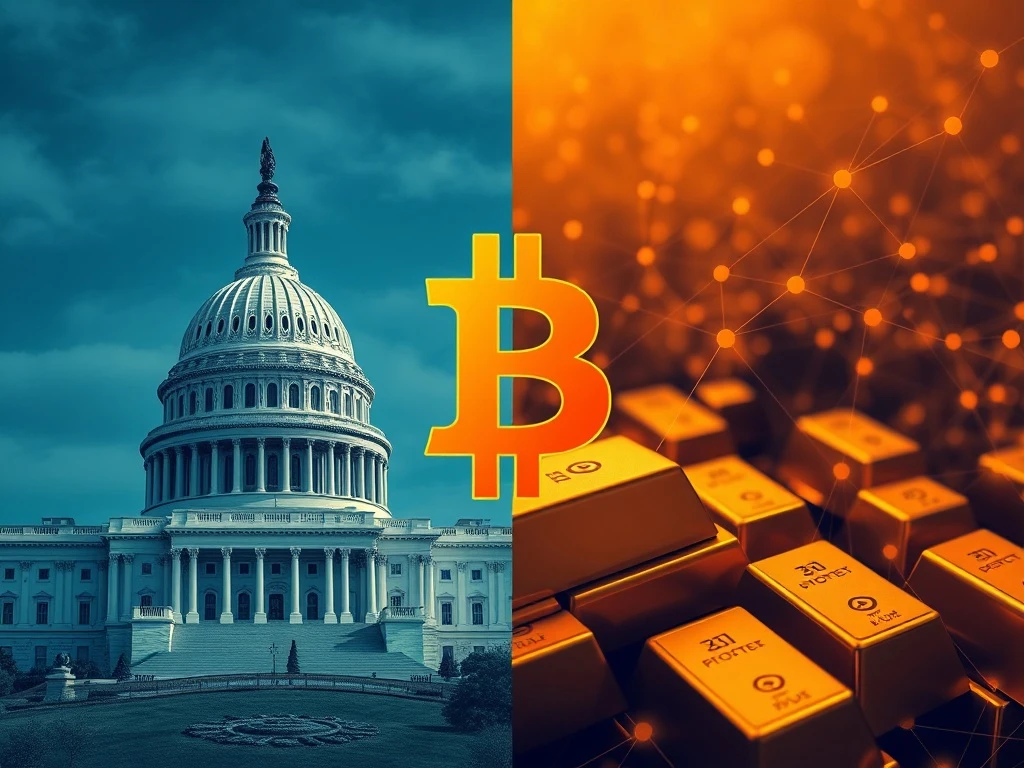
WASHINGTON, D.C. — March 2025: Bitcoin is experiencing renewed institutional interest as political uncertainty surrounding Federal Reserve Chair Jerome Powell triggers a fundamental re-evaluation of decentralized assets. Consequently, investors are increasingly viewing Bitcoin not merely as a speculative cryptocurrency but as a legitimate alternative asset class. This shift represents a significant development in global finance, especially as traditional institutions face unprecedented scrutiny.
Bitcoin’s Evolving Role in Portfolio Diversification
Traditionally, investors have relied on government bonds and gold during periods of political instability. However, the current investigation into Federal Reserve leadership challenges these conventional hedges. Bitcoin, with its decentralized architecture, operates outside direct government control. Therefore, its appeal strengthens when faith in central bank independence wavers. Recent trading data shows notable capital flows into Bitcoin investment products during the initial days of the Powell probe announcement.
Market analysts highlight several key factors driving this trend:
- Decentralized Governance: Bitcoin’s network lacks a central authority.
- Fixed Supply: Only 21 million coins will ever exist, contrasting with fiat currencies.
- Global Accessibility: It functions on a borderless, permissionless network.
| Asset Class | 2020 Election Volatility | 2023 Debt Ceiling Crisis | 2025 Fed Probe |
|---|---|---|---|
| U.S. Stocks (S&P 500) | -2.1% | -1.8% | -3.2% |
| Gold | +5.3% | +4.7% | +8.1% |
| U.S. Treasury Bonds | +1.2% | +0.9% | -0.5% |
| Bitcoin | +12.4% | +9.8% | +15.6% |
Federal Reserve Investigation and Market Implications
The formal investigation into Chair Jerome Powell, while details remain confidential, introduces measurable short-term risk to dollar-denominated assets. Significantly, this political uncertainty may stimulate institutional demand for Bitcoin. The narrative for decentralized assets strengthens when the credibility of the U.S. dollar faces tests. Historical precedent shows that perceived threats to central bank autonomy often trigger capital movement into non-sovereign stores of value.
Moreover, the situation extends beyond immediate headlines. If political intervention in monetary policy becomes more structured, Bitcoin’s value proposition could gain even more prominence. Financial institutions are reportedly conducting stress tests that include scenarios of diminished Fed independence. These tests increasingly incorporate cryptocurrency allocations as a potential mitigant.
Expert Analysis: Bitcoin’s Foundational Purpose
Prominent on-chain analyst Will Clemente provided crucial context regarding the current climate. “The present situation, characterized by threats to the Fed’s independence, soaring gold prices, and persistent geopolitical risks, is precisely the environment Bitcoin was designed for,” Clemente stated. His analysis references Bitcoin’s creation following the 2008 financial crisis, which itself involved significant central bank intervention.
Clemente further points to on-chain metrics showing accumulation by long-term holders during recent volatility. This data suggests sophisticated investors are treating price dips as buying opportunities, reinforcing the alternative asset thesis. Additionally, the correlation between Bitcoin and traditional risk assets like tech stocks has shown signs of breaking down during this specific political event.
The Broader Landscape of Decentralized Finance
Bitcoin’s appeal amid political uncertainty reflects a broader trend toward decentralized finance (DeFi). While Bitcoin serves primarily as digital gold, its underlying blockchain technology enables systems that operate without central intermediaries. This political episode accelerates examination of these alternatives. Regulatory bodies worldwide are now monitoring how political events influence crypto market dynamics.
Several parallel developments provide important context:
- Central bank digital currency (CBDC) projects face increased public skepticism.
- Gold ETFs have recorded their largest inflows in a decade.
- Currency devaluation concerns in several emerging markets are driving local Bitcoin adoption.
Financial advisors report a surge in client inquiries about cryptocurrency allocation. Consequently, traditional finance firms are expanding their digital asset research teams. This professionalization of the sector lends further credibility to Bitcoin’s alternative asset status.
Conclusion
Bitcoin gains significant appeal as an alternative asset during periods of intense political uncertainty, particularly when that uncertainty centers on foundational institutions like the Federal Reserve. The investigation into Chair Jerome Powell serves as a catalyst for a deeper re-evaluation of decentralized versus centralized monetary systems. While traditional assets react to short-term political risk, Bitcoin’s value proposition hinges on its structural independence. As the political and financial landscape evolves, Bitcoin’s role as a non-sovereign store of value will likely continue to attract institutional and individual interest, solidifying its position within the global alternative asset ecosystem.
FAQs
Q1: How does political uncertainty specifically benefit Bitcoin?
Political uncertainty, especially involving central banks, undermines trust in managed fiat systems. Bitcoin, with its decentralized, predictable monetary policy, offers an alternative that is not subject to the same political pressures, making it attractive as a hedge.
Q2: Is Bitcoin replacing gold as a safe-haven asset?
Not necessarily replacing, but complementing. Data shows both assets often perform well during crises. Bitcoin offers digital, portable, and divisible advantages, while gold has millennia of historical precedent. Many portfolios now include both.
Q3: What are the risks of viewing Bitcoin as a political hedge?
Bitcoin remains a volatile asset. Its price can be influenced by regulatory news, technological developments, and market sentiment unrelated to politics. It should be considered as part of a diversified strategy, not a sole solution.
Q4: How are traditional financial institutions reacting to this trend?
Major banks and asset managers are increasingly offering Bitcoin-related investment products (ETFs, trusts) and conducting research on its correlation with traditional assets. Their involvement adds liquidity and institutional framework.
Q5: Could government regulation negate Bitcoin’s appeal as a decentralized asset?
Regulation focuses primarily on exchanges and custodians—the on-ramps to the ecosystem—not the Bitcoin network itself. While restrictive regulations could impact accessibility, the core protocol’s decentralized nature remains resistant to direct government control.