Crypto Futures Liquidations: Short Positions Suffer Staggering $66 Million Blow in 24 Hours
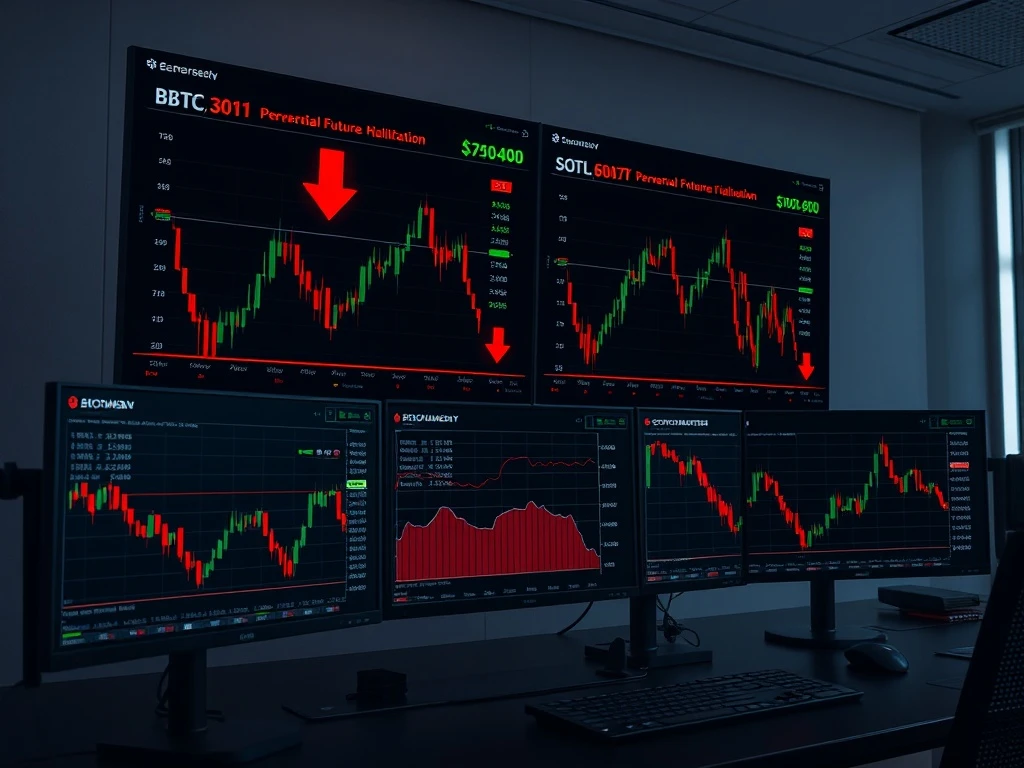
Global cryptocurrency markets witnessed significant turbulence on March 15, 2025, as perpetual futures traders faced substantial liquidations totaling over $66 million within a single 24-hour period. Short positions bore the brunt of this market movement, revealing important insights about current trader sentiment and leverage dynamics across major digital assets. This development follows weeks of relative stability in derivatives markets, marking a notable shift in trading patterns and risk management approaches.
Crypto Futures Liquidations: A Detailed Breakdown of the Damage
The cryptocurrency perpetual futures market experienced concentrated selling pressure during the recent trading session. Bitcoin, the market leader, recorded $29.08 million in total liquidations. Remarkably, short positions accounted for 78.74% of this amount, representing approximately $22.89 million in forced position closures. This data indicates that a significant majority of traders betting against Bitcoin’s price movement faced margin calls as the market moved against their predictions.
Ethereum followed a similar pattern with $27.55 million in total liquidations. Short positions comprised 68.9% of Ethereum’s liquidations, equating to roughly $18.98 million. Meanwhile, Solana’s derivatives market saw $9.97 million in liquidations, with short positions making up 78.59% of the total. These three major cryptocurrencies collectively demonstrated a clear trend: traders with bearish positions experienced disproportionate losses during this volatile period.
Understanding Perpetual Futures and Liquidation Mechanics
Perpetual futures contracts represent derivative instruments that allow traders to speculate on cryptocurrency price movements without an expiration date. These contracts typically incorporate a funding rate mechanism to maintain price alignment with spot markets. When market volatility increases significantly, positions with insufficient margin face automatic closure through liquidation processes. This mechanism protects both traders and exchanges from cascading losses.
Several key factors contribute to liquidation events in cryptocurrency markets:
- High leverage utilization: Many traders employ 10x to 100x leverage
- Rapid price movements: Sudden market shifts trigger margin calls
- Cascading effects: Large liquidations can create additional selling pressure
- Funding rate fluctuations: Changing rates impact position profitability
Market analysts monitor liquidation data closely because it provides valuable insights into trader positioning and potential market turning points. Historically, extreme liquidation events often precede periods of price consolidation or trend reversals.
Historical Context and Market Implications
The recent liquidation event represents the most significant short squeeze in cryptocurrency derivatives markets since January 2025. During that previous episode, Bitcoin short liquidations reached $42 million within 24 hours, followed by a 15% price appreciation over the subsequent week. Current market conditions share similarities with that period, particularly in terms of funding rates and open interest patterns.
Derivatives data from major exchanges reveals important context for the recent liquidations. Aggregate open interest across Bitcoin futures markets increased by 8% in the week preceding the liquidation event, suggesting growing trader participation. Meanwhile, funding rates remained slightly positive for most major perpetual contracts, indicating that long positions were paying shorts to maintain their positions before the market move.
Comparative Analysis Across Major Cryptocurrencies
The disproportionate impact on short positions varied slightly across different digital assets. Bitcoin demonstrated the highest concentration of short liquidations at 78.74%, followed closely by Solana at 78.59%. Ethereum showed a somewhat lower but still significant concentration at 68.9%. This variation likely reflects differences in trader sentiment, leverage utilization, and market structure across these assets.
Exchange-specific data provides additional insights into the liquidation patterns. Binance, the largest cryptocurrency derivatives platform by volume, accounted for approximately 45% of total liquidations. Bybit followed with 28%, while OKX represented 18% of the total. The remaining 9% distributed across smaller exchanges and decentralized platforms. This distribution confirms the continued dominance of centralized exchanges in cryptocurrency derivatives trading.
Expert Perspectives on Market Dynamics
Financial analysts specializing in cryptocurrency derivatives have identified several contributing factors to the recent liquidation event. First, unexpected positive regulatory developments in multiple jurisdictions created buying pressure that caught short sellers off guard. Second, institutional accumulation patterns observed in on-chain data suggested underlying strength that contradicted bearish sentiment in derivatives markets. Third, technical indicators including moving average convergences and volume profiles signaled potential upward momentum that many leveraged traders overlooked.
Risk management professionals emphasize that liquidation events serve as important reminders about proper position sizing and leverage utilization. Historical data indicates that traders employing leverage below 5x experience significantly lower liquidation rates during volatile periods compared to those using 10x or higher leverage. Furthermore, diversification across multiple positions and careful monitoring of funding rates can help mitigate liquidation risks.
Market Impact and Future Considerations
The substantial liquidations have several immediate implications for cryptocurrency markets. First, the removal of leveraged short positions reduces potential selling pressure in the near term. Second, the forced closure of these positions may have contributed to upward price momentum through short covering activity. Third, the event likely prompted exchanges to adjust margin requirements and risk parameters for certain trading pairs.
Looking forward, market participants should monitor several key metrics:
- Open interest recovery rates following liquidation events
- Funding rate normalization across major perpetual contracts
- Leverage ratio adjustments by major exchanges
- On-chain accumulation patterns among large holders
These indicators will help determine whether the recent liquidations represent an isolated event or the beginning of a broader market trend shift. Historical analysis suggests that similar liquidation concentrations have sometimes marked local bottoms before sustained upward movements.
Conclusion
The recent crypto futures liquidations highlight the ongoing volatility and risk inherent in leveraged cryptocurrency trading. Short positions dominated the $66 million in forced closures across Bitcoin, Ethereum, and Solana markets, revealing prevailing bearish sentiment among derivatives traders. This event underscores the importance of risk management, position sizing, and continuous market monitoring for participants in cryptocurrency derivatives markets. As regulatory frameworks evolve and institutional participation increases, understanding liquidation dynamics becomes increasingly crucial for all market participants navigating the complex landscape of crypto futures trading.
FAQs
Q1: What causes liquidations in cryptocurrency futures markets?
Liquidations occur when a trader’s position loses enough value that their remaining margin cannot cover potential losses. Exchanges automatically close these positions to prevent negative balances. High leverage, rapid price movements, and insufficient margin maintenance typically trigger these events.
Q2: Why did short positions dominate recent crypto futures liquidations?
Short positions dominated because prices moved upward against bearish predictions. Traders who borrowed assets to sell, expecting price declines, faced margin calls as prices rose. This created a “short squeeze” where covering positions added buying pressure.
Q3: How do liquidations affect cryptocurrency prices?
Liquidations can create additional volatility. Short liquidations often involve buying to cover positions, potentially boosting prices. Large liquidations may trigger cascading effects as forced selling or buying impacts market depth and liquidity.
Q4: What percentage of traders typically face liquidations during volatile periods?
Exact percentages vary, but during extreme volatility, 15-25% of leveraged positions may face liquidation. Most exchanges maintain liquidation rates below 5% during normal market conditions. Risk parameters and leverage levels significantly influence these percentages.
Q5: How can traders reduce liquidation risks in crypto futures markets?
Traders can employ several risk reduction strategies: using lower leverage (below 5x), maintaining higher margin ratios, setting stop-loss orders, diversifying positions, monitoring funding rates regularly, and avoiding overconcentration in single assets or directions.