Tether Gold Skyrockets: XAUT Surges Over 20% in Dramatic South Korean Exchange Rally
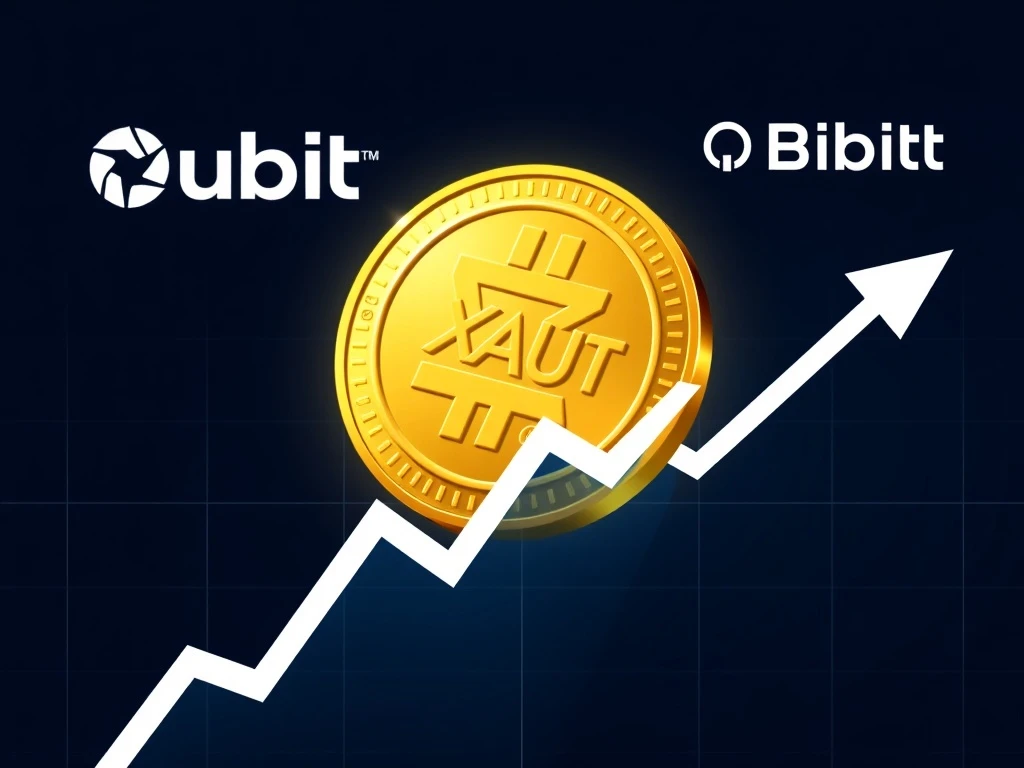
In a dramatic market movement on March 21, 2025, the gold-backed stablecoin Tether Gold (XAUT) experienced a rapid and significant price surge of over 20% on major South Korean cryptocurrency exchanges, highlighting the volatile and unique dynamics of the regional digital asset landscape.
Tether Gold Surges on South Korean Trading Platforms
According to real-time data from Crypto News Insights Market Monitoring, Tether Gold’s value spiked approximately 25% within a mere 30-minute window on exchanges offering Korean won (KRW) trading pairs. Consequently, platforms like Upbit and Bithumb reported intense trading activity for the XAUT/KRW pair. This surge represents a notable divergence from the token’s typically stable performance, which is pegged to the price of one troy ounce of physical gold. Market analysts immediately began scrutinizing the order books and trading volumes to identify the catalyst behind this abrupt movement. The event underscores the often fragmented nature of cryptocurrency pricing across different global jurisdictions.
Understanding the XAUT Token and Its Market Role
Tether Gold (XAUT) is a distinct digital asset issued by Tether Operations Limited. Unlike its sibling USDT, which is pegged to the US dollar, each XAUT token is backed by one fine troy ounce of physical gold held in a Swiss vault. This structure provides a bridge between the traditional gold market and the blockchain ecosystem. Investors often use XAUT for portfolio diversification, as a hedge against inflation, or for efficient settlement of gold ownership. The token trades on numerous global exchanges, but its liquidity and pricing can vary significantly between regions, a factor that became critically apparent during the South Korean surge.
Analyzing the South Korean Crypto Market Context
The South Korean cryptocurrency market, often called the “Kimchi premium” market, is known for its high retail participation and occasionally elevated prices compared to global averages. Exchanges like Upbit and Bithumb dominate local trading. Several factors can create sudden price dislocations, including:
- Limited Arbitrage Opportunities: Capital controls and exchange-specific regulations can hinder the rapid movement of funds to arbitrage away price differences.
- High Retail Demand: Intense, sentiment-driven buying from a large retail investor base can quickly amplify price movements.
- Low Liquidity for Specific Pairs: While XAUT is a recognized asset, its KRW trading pairs may have thinner order books than major pairs like BTC/KRW, making them susceptible to large orders.
A sudden large buy order on a relatively illiquid order book could trigger a cascade of stop-loss orders and algorithmic trades, resulting in the observed parabolic move.
Examining the Price Data and Market Impact
The reported price of 6,742,000 KRW on Upbit, reflecting a 0.96% gain at the time of reporting, indicates that the extreme 25% surge was a transient spike that partially retraced. This pattern is common in illiquid markets where a large market order exhausts the available sell-side liquidity at lower prices, causing the price to jump to a level where sellers are present. The market then typically finds a new equilibrium, often somewhere between the pre-spike price and the peak. This event likely resulted in significant profits for sellers who had limit orders placed at higher levels and potential losses for traders who bought at the peak. The table below illustrates a hypothetical order book scenario that can cause such an event:
| Order Type | Price (KRW) | XAUT Amount | Cumulative Liquidity |
|---|---|---|---|
| Sell Limit | 5,500,000 | 50 | 50 |
| Sell Limit | 5,800,000 | 30 | 80 |
| Sell Limit | 6,200,000 | 20 | 100 |
| Sell Limit | 6,742,000 | 150 | 250 |
A market buy order for 100 XAUT would consume all sell orders up to 6,200,000 KRW, causing the last traded price to jump 12.7% instantly.
Broader Implications for Stablecoin and Gold Markets
This volatility event, while isolated, carries important implications. First, it demonstrates that even asset-backed “stable” cryptocurrencies are not immune to technical market microstructure events on specific exchanges. Second, it highlights the ongoing demand in South Korea for crypto assets perceived as stores of value, especially those with tangible backing. Historically, gold has served as a safe-haven asset during economic uncertainty. The interest in XAUT may reflect broader macroeconomic concerns or a specific regional strategy among Korean investors. Furthermore, regulators and exchange operators may examine such events to improve market robustness and protect investors from extreme slippage.
Expert Perspectives on Market Mechanics
Market structure analysts often point to liquidity fragmentation as a key risk in crypto markets. A senior analyst from a blockchain data firm, who requested anonymity due to company policy, explained the mechanism: “A surge like this on a single regional exchange is typically a liquidity event, not a fundamental revaluation. The global price of gold was stable. Therefore, the arbitrage gap between the KRW price of XAUT and its implied value via USD pairs or the spot gold market became enormous. However, executing that arbitrage—selling XAUT on Upbit, converting KRW to USD, buying XAUT elsewhere, and transferring it—involves friction, cost, and time, allowing the discrepancy to persist briefly.” This expert insight underscores the complex interplay between technology, finance, and regulation that defines modern digital asset trading.
Conclusion
The dramatic surge of Tether Gold on South Korean exchanges serves as a compelling case study in cryptocurrency market dynamics. While the price spike was sharp and notable, it was primarily contained within the KRW trading pairs on specific platforms, illustrating the impact of localized liquidity and high retail trader engagement. The event reinforces the importance of understanding the underlying mechanics of asset-backed tokens like XAUT and the unique characteristics of major crypto markets like South Korea. For investors, it is a reminder that stability in one market does not guarantee stability across all trading venues, and vigilance regarding order book depth is essential. As the digital asset ecosystem matures, such episodes provide valuable data for building more resilient and efficient global markets.
FAQs
Q1: What is Tether Gold (XAUT)?
Tether Gold (XAUT) is a cryptocurrency token where each unit is backed by one troy ounce of physical gold stored in a Swiss vault. It is issued by Tether and allows for blockchain-based trading and ownership of gold.
Q2: Why did XAUT surge specifically on South Korean exchanges?
The surge was likely caused by a large buy order on a relatively illiquid KRW/XAUT order book on exchanges like Upbit and Bithumb. The limited immediate supply of sell orders at lower prices caused the last traded price to jump rapidly until new sellers entered the market.
Q3: Does this mean the price of gold increased by 20%?
No. The global spot price of gold remained stable. The surge was an isolated event on specific cryptocurrency exchanges reflecting local supply and demand dynamics for the XAUT token, not a revaluation of the underlying physical asset.
Q4: What is the “Kimchi premium”?
The “Kimchi premium” is a term describing the phenomenon where cryptocurrency prices on South Korean exchanges are often higher than on global exchanges. This can be due to high local demand, capital flow restrictions, and market segmentation.
Q5: Is my XAUT token still backed by gold after such a price spike?
Yes. The backing of each XAUT token by physical gold is independent of its short-term trading price on any exchange. The issuer’s reserves are what guarantee the backing, not the market’s daily price fluctuations.