Jerome Powell Investigation: Federal Probe into Fed Chair’s Testimony Sparks Market Uncertainty
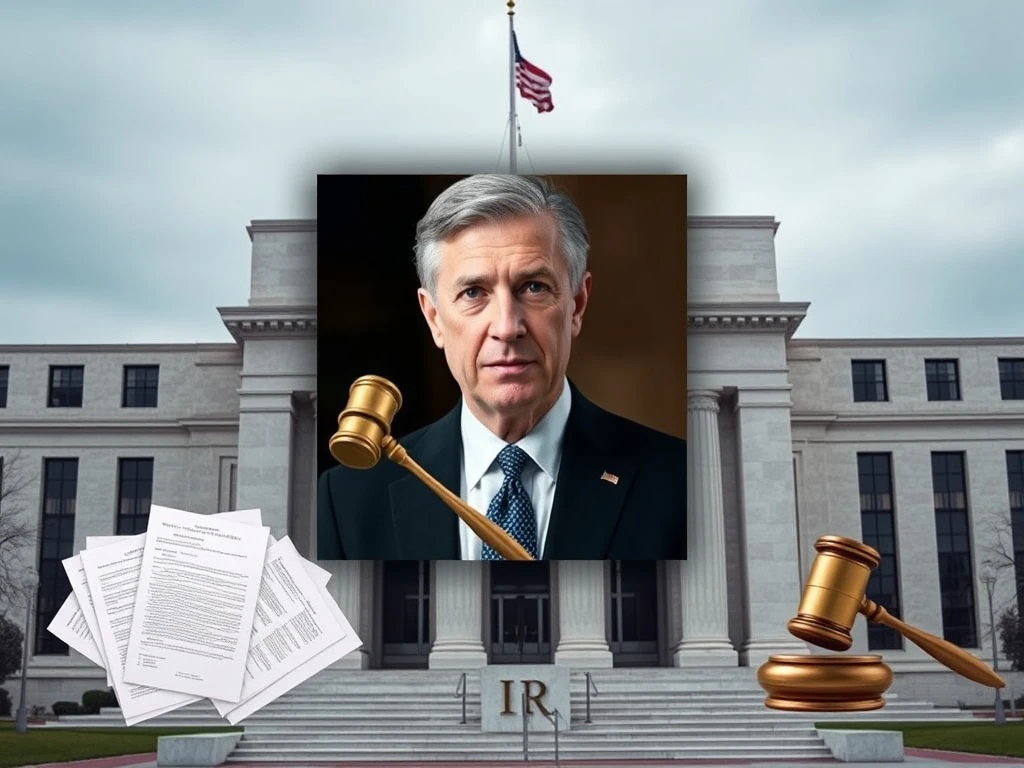
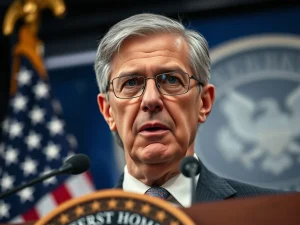
WASHINGTON, D.C. – March 2025: Federal prosecutors have launched a significant investigation into Federal Reserve Chair Jerome Powell, according to exclusive reporting by The New York Times. This probe centers on allegations that Powell provided false testimony to Congress regarding the extensive remodeling of the Federal Reserve’s main building. Consequently, this development creates unprecedented uncertainty for U.S. monetary policy and global financial markets.
Jerome Powell Investigation: Understanding the Federal Probe
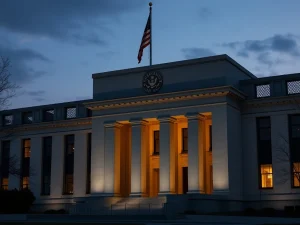
The Department of Justice has initiated this investigation following congressional concerns about testimony accuracy. Specifically, prosecutors are examining whether Powell misrepresented details about the Federal Reserve building renovation project during multiple congressional hearings. The renovation project, which began in 2022, involves substantial upgrades to the Fed’s historic headquarters. Moreover, the investigation represents a rare instance of a sitting Fed chair facing such legal scrutiny.
Federal Reserve officials have acknowledged the renovation’s $500 million budget. However, congressional committees have raised questions about cost overruns and timeline discrepancies. Additionally, lawmakers have requested detailed documentation about contractor selection and oversight processes. The investigation reportedly examines whether Powell’s statements about these matters matched internal Fed records.
Historical Context of Federal Reserve Leadership Challenges
This investigation marks a unique moment in Federal Reserve history. Previously, no sitting Fed chair has faced a federal probe of this nature. Historical precedents show that Fed leaders typically encounter political pressure rather than legal scrutiny. For instance, former Chair Arthur Burns faced congressional criticism during the 1970s inflation crisis. Similarly, Alan Greenspan navigated political challenges without formal investigations.
The Federal Reserve’s independence remains a cornerstone of U.S. economic policy. Traditionally, this independence protects monetary decisions from political interference. Nevertheless, legal proceedings could potentially undermine this crucial separation. Financial experts express concern about investigation timing during economic uncertainty.
Monetary Policy Implications During Transition Period
Market analysts are closely monitoring several key implications. First, the investigation could affect upcoming Federal Open Market Committee decisions. Second, international confidence in U.S. monetary policy might weaken temporarily. Third, congressional oversight of the Federal Reserve will likely intensify regardless of investigation outcomes.
The Federal Reserve currently manages several critical economic challenges. These include moderating inflation while supporting employment growth. Furthermore, the Fed oversees financial system stability amid global uncertainties. Any distraction from these priorities could have substantial economic consequences.
Legal Framework Governing Federal Reserve Testimony
Federal law establishes clear requirements for congressional testimony accuracy. Specifically, 18 U.S. Code § 1001 addresses false statements to government agencies. This statute prohibits knowingly falsifying or concealing material facts. Violations can result in significant penalties including fines and imprisonment.
Congressional testimony procedures involve sworn statements under penalty of perjury. Federal Reserve chairs typically testify before multiple committees annually. These include the House Financial Services Committee and Senate Banking Committee. Committee members receive advance written testimony followed by extensive questioning sessions.
Key legal considerations in this investigation include:
- Materiality of alleged misstatements
- Intent versus inadvertent error
- Documentary evidence consistency
- Witness corroboration possibilities
Federal Reserve Building Renovation Project Details
The renovation project at the center of this controversy involves comprehensive upgrades. Originally approved in 2021, the project addresses aging infrastructure and security requirements. Project scope includes mechanical system replacements and technology modernization. Additionally, the renovation preserves historical elements while improving functionality.
Congressional appropriations committees authorized funding through multiple budget cycles. However, oversight committees have questioned project management and cost controls. Documentation shows initial budget estimates of $450 million with completion scheduled for 2024. Current projections indicate higher costs and extended timelines.
| Phase | Original Schedule | Current Status | Budget Allocation |
|---|---|---|---|
| Planning & Design | 2021-2022 | Completed | $45 million |
| Foundation & Structural | 2022-2023 | Ongoing | $185 million |
| Systems Installation | 2023-2024 | Delayed | $170 million |
| Finishing & Commissioning | 2024-2025 | Pending | $100 million |
Expert Perspectives on Investigation Significance
Former Federal Reserve general counsel Donald Kohn emphasizes institutional implications. “The Federal Reserve’s credibility depends on transparency and accuracy,” Kohn stated recently. “Any questions about testimony accuracy require thorough resolution.” Similarly, congressional scholars note investigation timing during budget deliberations.
Financial market participants express measured concern about policy continuity. “Monetary policy decisions should remain data-driven despite external distractions,” noted Goldman Sachs chief economist Jan Hatzius. “The Federal Reserve has deep institutional strength to maintain focus.” Market reactions have been relatively contained thus far.
Potential Outcomes and Procedural Pathways
Legal experts outline several possible investigation trajectories. First, prosecutors might determine insufficient evidence for charges. Second, they could recommend administrative actions rather than criminal proceedings. Third, the investigation might expand to include additional matters or individuals.
The Justice Department typically follows established protocols for high-profile investigations. These include careful evidence review and consultation with relevant agencies. Furthermore, prosecutors consider broader implications beyond legal technicalities. The investigation timeline remains uncertain but could extend for several months.
Investigation resolution scenarios include:
- Case closure without action
- Referral to congressional ethics committees
- Administrative sanctions or reprimands
- Formal charges requiring judicial proceedings
Conclusion
The Jerome Powell investigation represents a significant development in Federal Reserve oversight. This federal probe into the Fed chair’s testimony about building renovations underscores the importance of congressional accountability. While legal proceedings continue, the Federal Reserve maintains its focus on monetary policy objectives. Ultimately, this investigation will test institutional resilience and governance standards. The financial community watches closely as this unprecedented situation unfolds with potential implications for economic stability.
FAQs
Q1: What specific allegations does the Jerome Powell investigation involve?
The investigation examines whether Federal Reserve Chair Jerome Powell provided false testimony to Congress about the Federal Reserve building renovation project, including potential misrepresentations about costs, timelines, and oversight.
Q2: How might this investigation affect Federal Reserve policy decisions?
While the Federal Reserve maintains operational independence, the investigation could create distractions during policy deliberations. However, the institution’s decentralized decision-making structure helps maintain policy continuity.
Q3: Has any previous Federal Reserve chair faced similar legal scrutiny?
No sitting Federal Reserve chair has faced a federal investigation of this nature. Historical challenges have typically involved political pressure or policy criticism rather than legal proceedings about testimony accuracy.
Q4: What is the timeline for the Federal Reserve building renovation project?
The renovation began in 2022 with initial completion scheduled for 2024. Current projections indicate possible delays, with the project now potentially extending into 2026 based on recent status reports.
Q5: How are financial markets responding to this investigation news?
Initial market reactions have been relatively muted, reflecting confidence in Federal Reserve institutional stability. However, prolonged uncertainty could potentially increase market volatility, particularly around monetary policy announcements.